


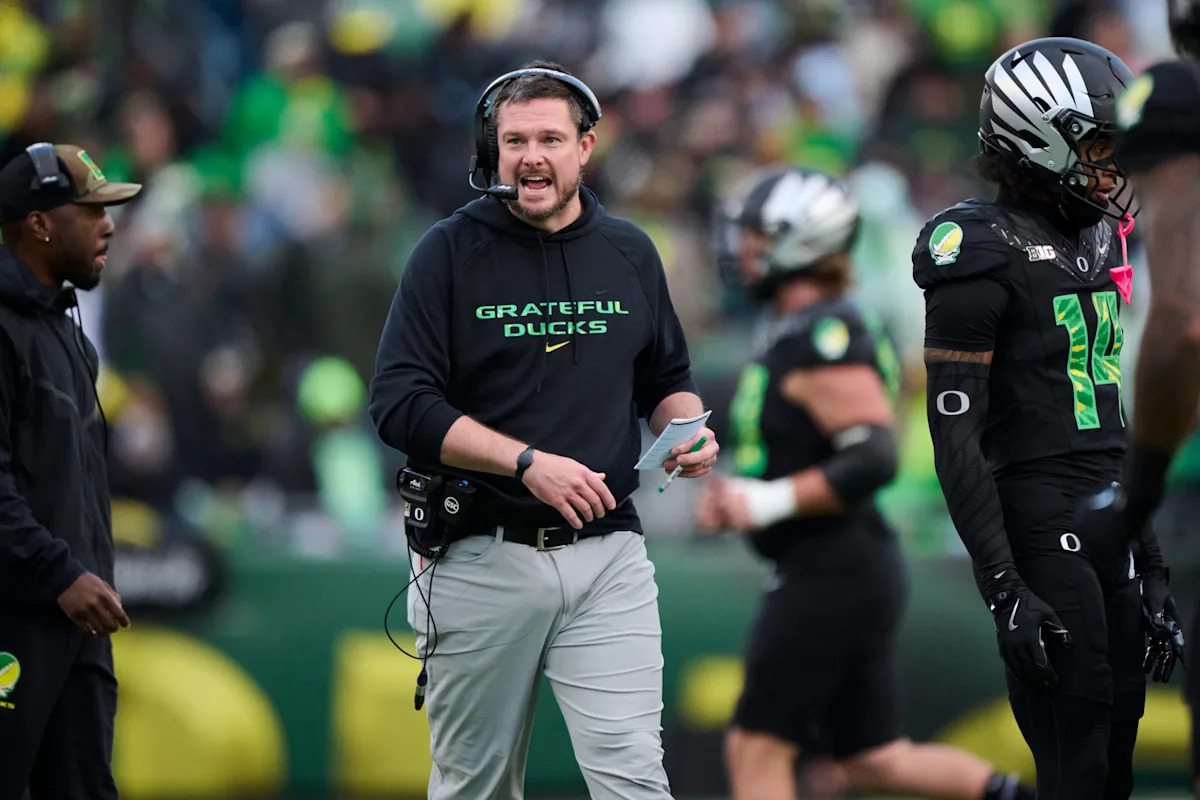
As the college football season enters its crucial late stages, teams face the challenge of solidifying their standings for the College Football Playoff. For the No. 5 Oregon Ducks, this urgency was front and center as they clinched a significant victory against No. 16 USC on November 22, winning 42-27 at home. This win not only bolstered Oregon’s resume but also showcased the team’s resilience under Head Coach Dan Lanning.
In the aftermath of the game, Lanning’s comments stirred conversation across the football community. He seemingly took a jab at teams scheduling non-conference games against less competitive Group of Five or FCS programs, which could diminish the strength of their schedules. “We didn’t play Chattanooga State today, right? Like some other places. We competed,” he declared, emphasizing the competitiveness of the Pac-12 conference and the challenges that come with it.
Lanning highlighted the demanding nature of college football, particularly in leagues like the Pac-12, where teams are often pitted against one another week after week. He noted, “It’s tough playing nine conference games. It’s tough playing in this league,” acknowledging that teams like Oregon thrive on the heightened competition that comes with a rigorous schedule.
This sentiment resonates with the broader conversation around scheduling practices in college football. For instance, during the same Week 13, several SEC teams, including No. 3 Texas A&M and No. 10 Alabama, engaged in “buy games” against FCS opponents, raising questions about the integrity of their playoff aspirations. These seemingly easy wins contribute to a lack of competitive parity across the landscape of college football.
Lanning’s remarks aimed to draw attention to how strength of schedule can impact a team’s playoff chances. While Oregon waged a battle against ranked opponents, other schools seemed to pad their records with less formidable foes. As the Ducks keep their eyes set on a potential berth in the Big Ten championship game, their next challenges include defeating Washington in Week 14 and hoping for an Ohio State loss to Michigan.
The landscape of college football scheduling is intricate; teams balance the need for victories against the imperative of maintaining a competitive slate. Oregon’s latest win against USC is not just a testament to their skill and strategy on the field, but also a reminder of the essential discussions on fairness in scheduling practices that could sway postseason considerations.
With the season unfolding, keeping track of these dynamics becomes crucial for fans, pundits, and analysts alike. The implications of scheduling extend beyond individual games, affecting perceptions, rankings, and futures for programs battling for playoff spots.