


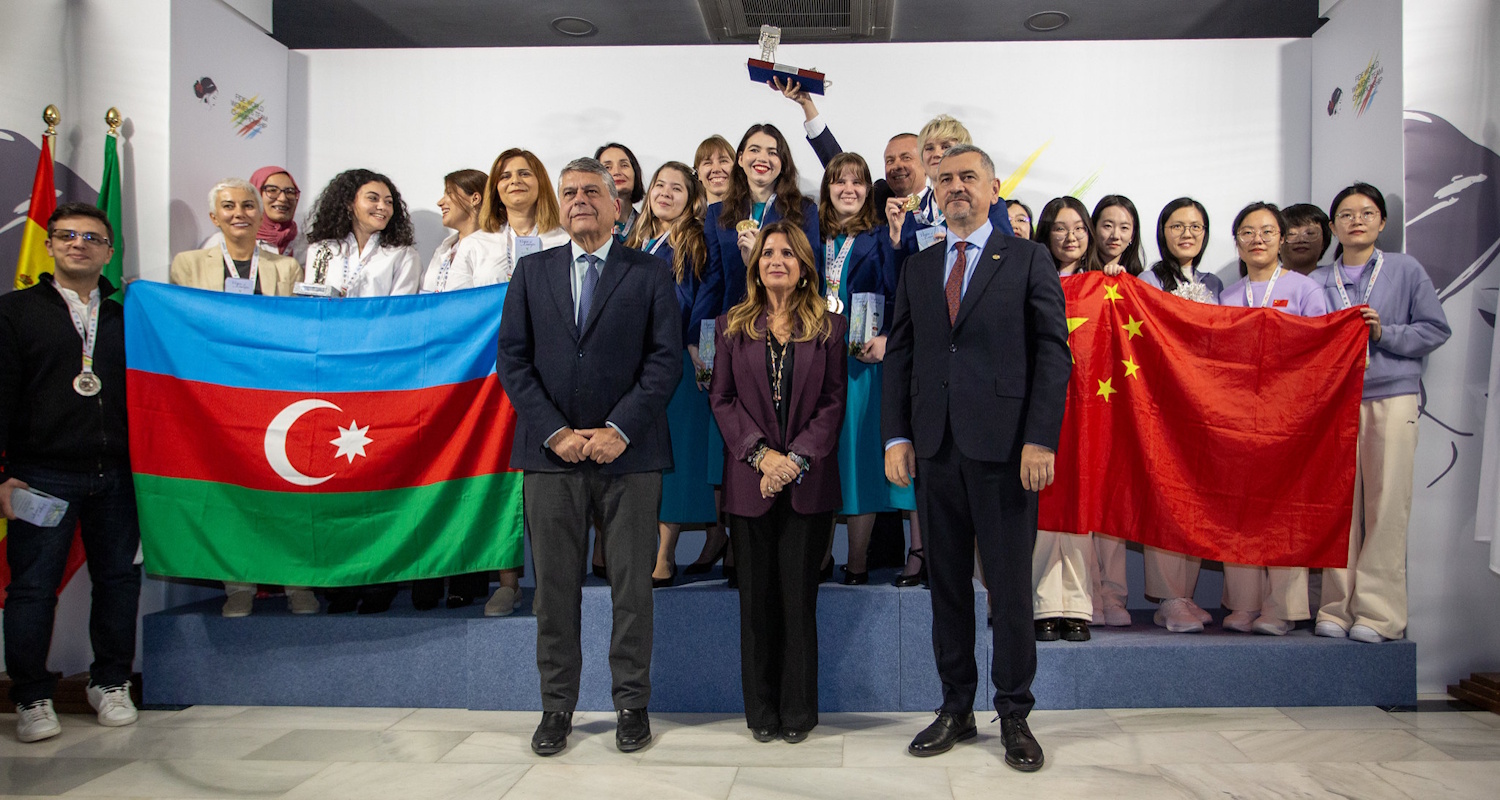
2025 FIDE World Women’s Team Championship: A Showcase of Strategy and Skill
The recent 2025 FIDE World Women’s Team Championship highlighted the pinnacle of women’s chess, with teams from around the world showcasing their prowess in a series of intense matches. This year’s competition featured standout performances, dramatic upsets, and moments of triumph that kept chess enthusiasts on the edge of their seats.
Rise of the FIDE Team
The FIDE team from Russia emerged victorious, decisively defeating the underdog Azerbaijan team in the finals. This championship became a notable chapter not just for the Russian team but for the sport as a whole. Azerbaijan had previously finished fourth in Group A during the Pool Stage, making their journey to the finals particularly impressive.
Photo courtesy FIDE/Raul Martinez
Competitive Bronze Match
In the battle for bronze, China faced Kazakhstan, prevailing in both matches to secure their place on the podium. Team USA demonstrated their competitive edge by challenging China to a tiebreaker in the quarterfinals, although they ultimately fell short, losing 3½–½ in the blitz playoff.
Irina Krush watches Carissa Yip’s game during the quarterfinals. (Photo courtesy FIDE/Pavel Dvorkovich)
Knockout Stage Format
The excitement reached new heights during the knockout stage, which followed a unique format. Matches consisted of two four-player games at a “fast classic” time control of G/45, with a 30-second increment starting from move one. This event also served as part of a pilot program aimed at introducing fast classic games for classical FIDE ratings.
During these pivotal quarterfinals, Team USA achieved an emphatic 3–1 victory in their first matchup against China. The success hinged on impressive victories from IMs Anna Sargsyan and Tatev Abrahamyan on Boards 2 and 3, showcasing a combination of strategy and skill.
Anna Sargsyan (L) and Tatev Abrahamyan were pivotal in USA’s upset of China. (Photo courtesy FIDE/Pavel Dvorkovich)
Highlighted Matches and Performances
Abrahamyan’s win stood out as a miniature after her young opponent made a critical error. Meanwhile, Sargsyan outplayed her adversary in a complex middlegame. These victories marked an encouraging start for the USA team.
In the return match later that day, China responded with vigor, clinching early wins on Boards 3 and 4. However, on Board 1, IM Carissa Yip put in an incredible performance, upsetting former Women’s World Champion GM Hou Yifan, demonstrating the depth of talent in the competition.
Carissa Yip’s upset of Hou Yifan was an individual highlight despite China’s match win. (Photo courtesy FIDE/Pavel Dvorkovich)
The Tiebreak Drama
With a 2–2 tie in the second match, the USA could have clinched overall victory. Sargsyan appeared to be en route to another win but was unable to convert her advantage, pushing the match into blitz tiebreaks. Here, China regained control.
Hou, eager for revenge, faced Yip once again and turned the tables, allowing her teammates the opportunity to take risks in a bid to even the score.
Strategic maneuvers defined the tense tiebreaker. (Photo courtesy FIDE/Pavel Dvorkovich)
Semifinals Showdown
In the semifinals, Russia maintained their dominance by defeating China in both matches, while Azerbaijan managed to upset the Pool B winner Georgia in their quarterfinal clash.
The final match saw Russia again defeat Azerbaijan decisively, confirming their status as the top team in this championship.
Hou Yifan congratulates Azerbaijan’s Ulviyya Fataliyeva on her individual gold medal. (Photo courtesy FIDE/Pavel Dvorkovich)
Individual Achievements
A significant highlight was Azerbaijan’s IM Ulviyya Fataliyeva, who captured the individual gold medal for Board 1. With a performance rating that surpassed Hou Yifan’s, Fataliyeva’s achievement added another layer of excitement and recognition to her impressive career.
For those interested in further details, the individual medals and performances can be explored here.
This tournament not only showcased elite-level competition but also underscored the growing prominence of women in chess, setting an inspiring example for future generations of players.