


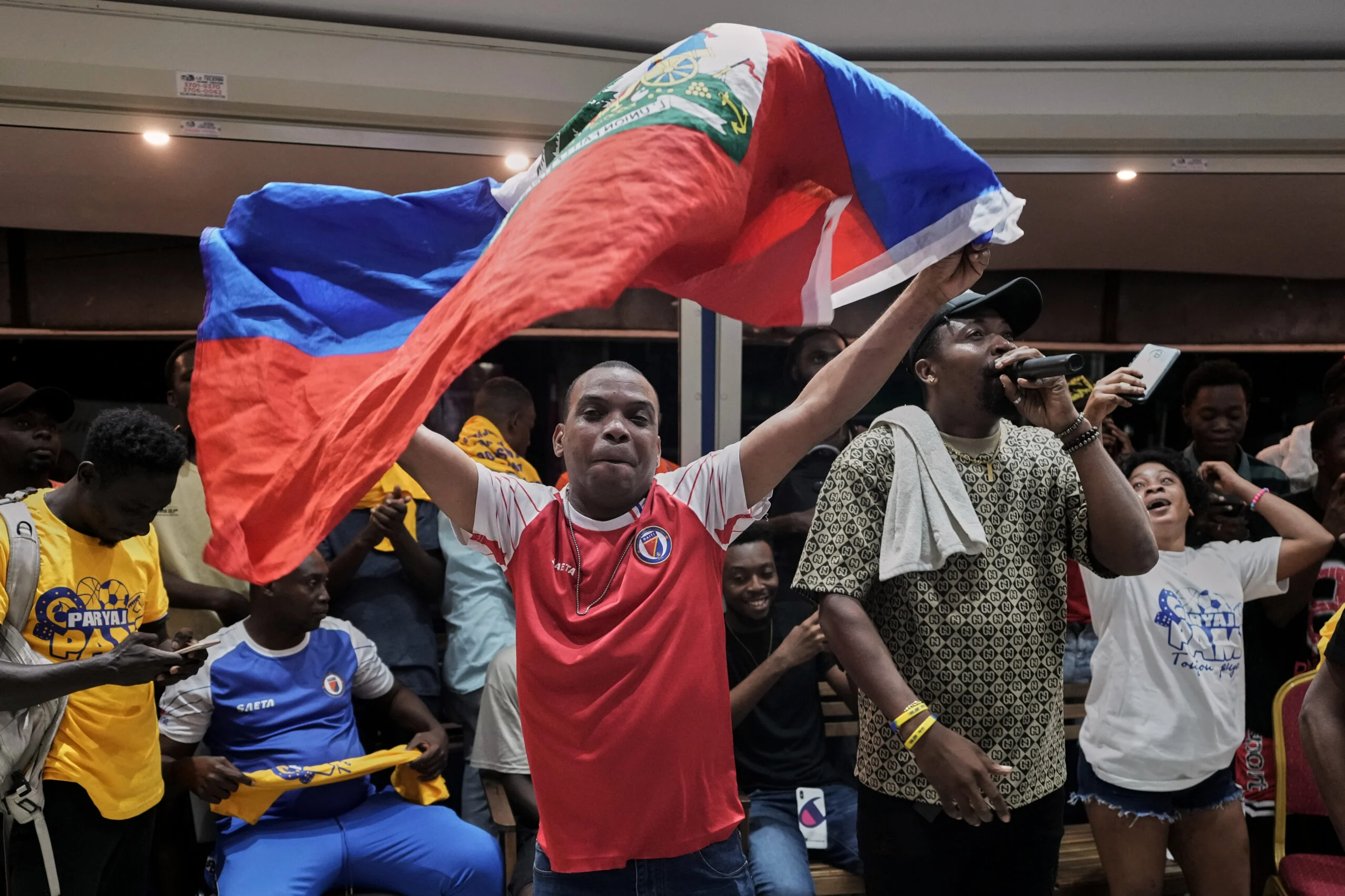
The unmistakable pulse of Konpa, Rara, and Rabòday is echoing across the globe as Haitians everywhere celebrate a moment more than half a century in the making: Haiti is headed to the 2026 World Cup.
Last night, Haiti defeated Nicaragua (2-0) in the FIFA World Cup Concacaf qualifiers, securing the country’s direct qualification for the global soccer tournament. The victory marks the country’s first World Cup appearance since 1974, a return the soccer-loving country has long dreamed of.
“Fifty-two years! We are back,” said Dr. Joseph Durandis, a Haiti-born physician and South Florida resident, in an interview with the Miami Herald. “Can you believe it? A country that is going through hell right now, we found the resources to be back on the world stage… After all of the odds, Haiti is back in the World Cup.”
This historic win feels especially significant for the island, as it took place on a day steeped in Haitian history. Each year on November 18, Haiti commemorates the 1803 Battle of Vertières, the climactic battle that secured the nation’s independence from France. This pivotal military victory set the stage for Haiti to become the world’s first free Black republic.
“November 18, 220 years after the Vertières battle, Haiti is back,” Dr. Durandis declared, voice rising with excitement. “We have won another battle, this time on the soccer field… This country cannot die, this country just cannot die. Haiti is back! We are back in the World Cup.”
Joyous celebrations erupted among Haitians worldwide following this momentous win. From the streets of Port-au-Prince to the neighborhoods of Miami, New York, Montreal, and beyond, Haitians filled public spaces and their homes, waving flags, dancing, and exuding pure, unfiltered relief.
For many, whether they were born on the island or part of communities shaped by Haitian culture, this victory serves as a long-awaited breath of fresh air. Years marked by political instability, natural disasters, and relentless gang violence have made the prospect of a return to the World Cup feel almost surreal. The national team, in particular, has not been able to play at home since 2021 due to the unsafe condition of the country’s main stadium, making this victory even more poignant.
“What the people of Haiti have been through for decades… this is going to bring life to a nation that needs that ounce of hope,” former soccer player Charlie Davies said on a CBS Sports Golazo segment. “The happiness that brings people together, that allows you to forget some of the things you’re going through—this is what the game does for people. I am so moved by Haiti and what they have been able to accomplish in this World Cup campaign.”
Cheers resonated throughout the diaspora as other countries like Curaçao and Cape Verde also qualified for their first-ever World Cup. These small nations alongside Haiti in the tournament signify a diverse representation, underscoring the transformative power of sport.