


Updated November 25, 2025 at 7:17 PM CST
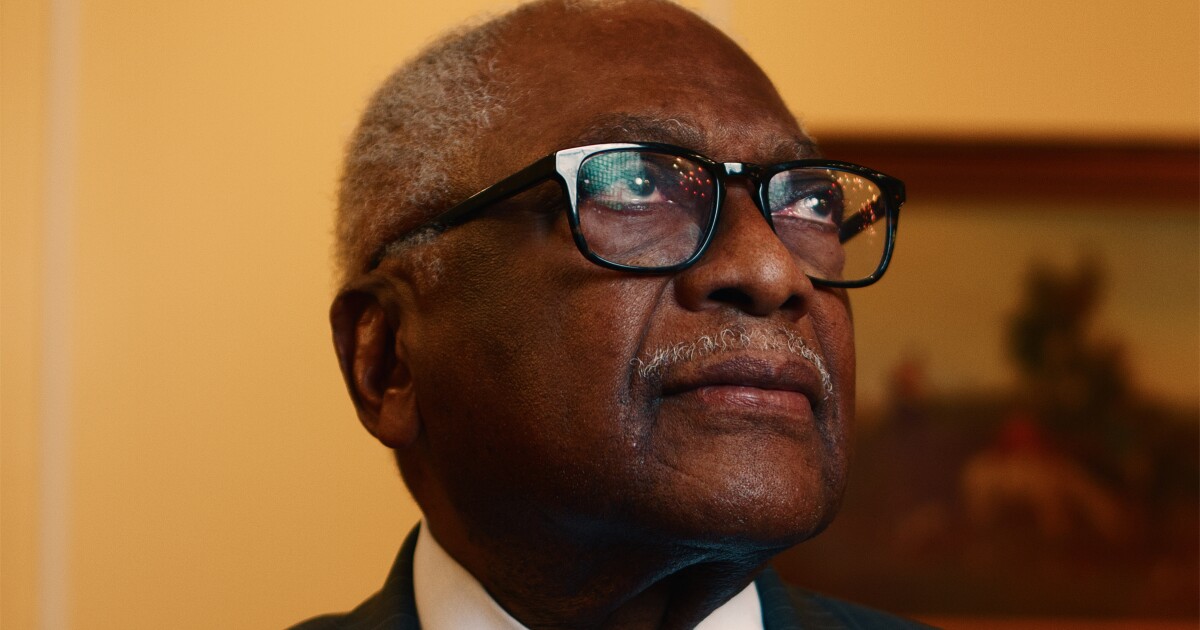
Democratic Rep. Jim Clyburn of South Carolina, a seasoned veteran with over three decades in Congress, emphasizes a significant point: he is not the first Black congressman from his state. Historically overlooked, eight others served during and after the Reconstruction era, laying the groundwork for his own political journey. A framed collection of their portraits graces his office—a constant reminder of their contributions and sacrifices.
This compelling narrative inspired Clyburn to pen The First Eight: A Personal History of the Pioneering Black Congressmen Who Shaped a Nation, released this month. The book aims to restore these historical figures to the public consciousness, offering valuable lessons from their experiences.
In an interview with Morning Edition host Michel Martin, Clyburn shared insights about his book and the legacies of these groundbreaking politicians.
1. The Remarkable Arc of Robert Smalls’ Ascent

One of the book’s central figures is Robert Smalls, who was born into slavery in Beaufort, South Carolina. In 1862, while working on the Confederate transport ship Planter, Smalls seized a historic opportunity. He smuggled his family aboard and commandeered the vessel, delivering it to Union forces in Charleston Harbor.
“While he was on that waterfront, people noticed that he had leadership skills,” Clyburn noted. “This led to Smalls being entrusted with the crew on the nights when the Confederate men who ran the ship left to go into town.”
Clyburn recalled the daring escape: “One day when they were gone, Smalls smuggled his wife onto the ship and took off. His reward was freedom for himself and his crew, along with $1,500 in cash.” Smalls subsequently became the first African American captain in the U.S. Navy, a pivotal moment in his political career.
2. George Washington Murray’s Impact

Another pivotal character is George Washington Murray, who served as the only Black representative in the 53rd and 54th Congresses. He faced numerous challenges, including congressional redistricting and pervasive voter fraud aimed at disenfranchising African Americans. Clyburn emphasized that Murray’s experiences redirected his focus while writing the book.
“When I saw what was happening after the 2020 elections, someone had taken the playbook from the 1876 election,” Clyburn explained. Originally intended to inform, the book evolved into a cautionary narrative filled with instructive insights drawn from past injustices.
3. Clyburn’s Political Future
As discussions surrounding redistricting continue, Clyburn’s political future remains uncertain. Recently, Jordan Pace, chairman of the S.C. Freedom Caucus, unveiled a “race-agnostic” proposal for reshaping the district Clyburn has long represented. However, the congressman does not view factors like age—he is now 85—as hindrances.
“I feel great. I still can play 36 holes of golf in one day,” he shared. Importantly, he noted that constituents are eager for his continued presence in office, emphasizing, “In fact, just the opposite, they want the benefit of that experience.”
4. A Cautionary Tale from History

For Clyburn, the legacy of these first eight congressmen extends beyond inspiration; it serves as a stern reminder of cyclical challenges in American politics. “Anything that’s happened before can happen again,” he cautioned. “You cannot allow this [Trump] administration, with its majority in Congress, to lead you to react thoughtlessly, as history has shown could happen.”
He recounted his conversations with former President Joe Biden regarding the worrying rise of African American men voting Republican. “I used to say, ‘there’s no substitute for substance,’ but I don’t say that anymore because people seem to be more attracted by style these days than substance. And so that’s one of the things that I talk about in this book.”
The digital version of this interview was edited by Majd Al-Waheidi.
Copyright 2025 NPR