


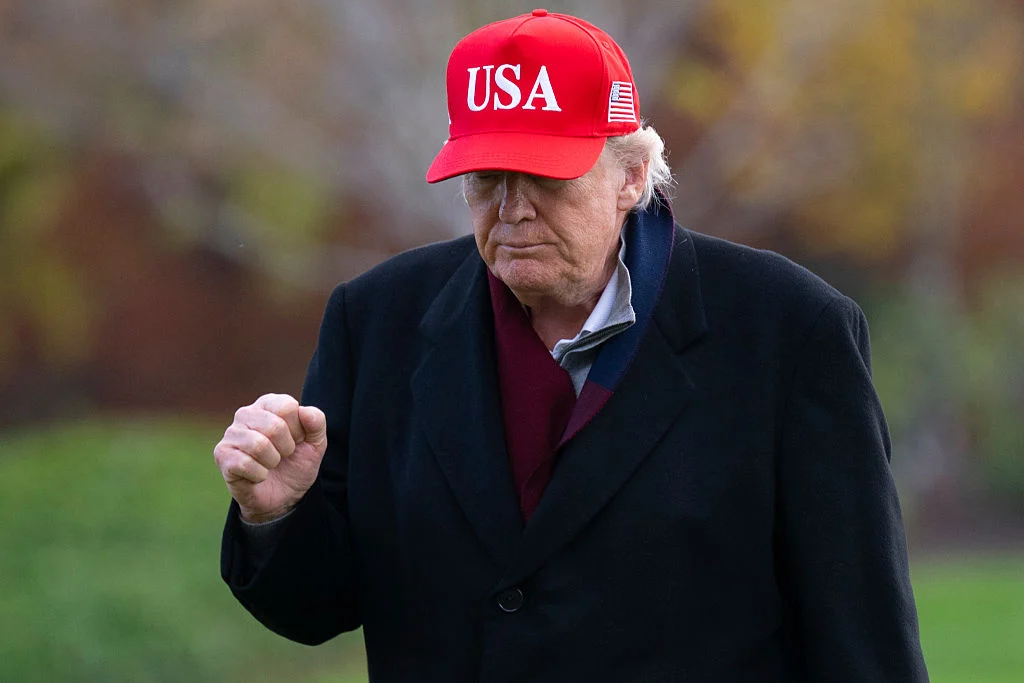
Trump’s Age and Energy: A Polarizing Conversation
In a bold social media outburst, President Donald Trump took aim at a recent New York Times article highlighting concerns about his age and energy as he navigates the complexities of his presidency at 79 years old. This response encapsulates his characteristic combative style, as he dismissed the criticisms with the fervor of a politician who still very much believes in his vigor and relevance.
The Report’s Findings
The Times report raised alarms about Trump’s apparent fatigue during public appearances, citing incidents such as a moment when he seemingly dozed off during an Oval Office press conference. The article also noted that he has scaled back on public events and domestic travel, contrasts starkly with his high-octane first term. Additional concerns about Trump’s health were fueled by his own admission of having undergone a mysterious MRI, igniting speculation about his well-being.
Trump’s Response
In his response via social media, Trump labeled the New York Times as “failing” and attacked White House Correspondent Katie Rogers directly, labeling her as a “third-rate reporter.” His post serves to underscore a dual strategy: while he vehemently defends himself against claims of dwindling energy, he simultaneously points to his achievements in office—especially his economic policies—even as challenges continue to mount.
He wrote passionately about the intensity of his work, stating, “To do this requires a lot of Work and Energy, and I have never worked so hard in my life.” Trump’s brash insistence that he is not losing energy contrasts sharply with the report’s observations, encapsulating a recurring theme in his leadership style: defiance against any narrative that might undermine his image.
Polling and Public Perception
In his tirade, Trump cited his “highest Poll Numbers, ever,” despite evidence suggesting declining approval ratings in the wake of various controversies. This claim illustrates how he often spins statistics to serve his narrative, revealing his reliance on a dedicated base that remains fiercely loyal. His assertion that he has aced recent cognitive and physical exams aims to quell doubts about his capability, asserting that such assessments reflect his current state rather than hinting at any decline.
The Irony of Age and Power
Democratic strategist Ameshia Cross highlighted the “bittersweet irony” in the heightened scrutiny of Trump’s aging. She noted that at 79, it’s reasonable to expect some decline in physical and cognitive vigor. This point bears particular weight in the broader context of political discourse, considering how similar arguments have been made against his political opponents, notably President Joe Biden.
Cross pointed out that Trump’s persona—rooted in hyper-masculinity and strength—makes this scrutiny particularly poignant. He has spent years crafting an image of invincibility, often employing doctored images to project an athletic, robust silhouette that starkly contrasts with the realities of aging.
Political Fallout and Future Implications
As Trump grapples with the realities of his age, he finds himself in a precarious position within the Republican Party. Despite having dominated the party for years, signs indicate that his hold may be loosening. Recent events, such as the voting to release the Jeffrey Epstein files and internal Republican dissent, highlight a gradual distancing from firmly Trump-aligned figures, including Rep. Marjorie Taylor Greene.
With midterm elections on the horizon, potential Democratic gains could further threaten Trump’s political legacy and ability to influence the party in the years to come. As political analyst Cross articulated, the perception of Trump’s declining capabilities poses a significant challenge to the larger-than-life image he aims to project.
The Future of the MAGA Movement
Cross emphasized that this perceived decline extends beyond Trump himself; it symbolizes a larger transition in the MAGA movement. As the Republican landscape shifts, the future of Trump’s brand of politics hangs in the balance. The essence of his message appears to advocate for resilience against age-related decline, yet public perception may dictate otherwise, portraying him as a figure grappling with the typical signs of aging.
The conversation around Trump isn’t merely about one man’s age; it reflects broader societal attitudes toward aging, capability, and ideal leadership qualities in a rapidly changing political landscape.