


Marjorie Taylor Greene’s Cryptic Warning to Trump: A Shift in Allegiance
Introduction to the Friction
In recent months, tensions have escalated between Representative Marjorie Taylor Greene and former President Donald Trump. Once seen as fervent allies in the Republican landscape, Greene’s recent social media activities suggest a potential rift. Her cryptic warnings and public feuds over critical issues indicate a shifting dynamic that could have significant repercussions within the party.
The Warning
It all began with a post from Greene on X (formerly Twitter), in which she cryptically cautioned Trump about “one of the worst mistakes” he could make. While the specifics of her warning were vague, the timing is crucial, occurring amidst Trump’s vocal critiques of various political and social issues, particularly surrounding immigration policy and economic conditions.
Greene’s Public Discontent
Greene has expressed growing dissatisfaction with the political landscape in Washington, culminating in her announcement to resign from Congress, effective January 2026. In a poignant statement, she remarked that she refuses to be a “battered wife” waiting for change that may never come. This declaration isn’t just about her career; it reflects her broader frustrations with the political establishment and her evolving relationship with Trump.
Empty Promises
In her social media post, Greene emphasized the dangers of over-promising and under-delivering, warning that such actions could lead to public disappointment to the extent that people might overlook any genuine achievements. Her comments imply a belief that the Trump administration may have set expectations that, if unmet, could alienate supporters.
The Immigration Battle
On immigration, Trump and Greene find themselves at odds, despite sharing hardline views. Greene recently announced intentions to introduce a bill aimed at phasing out H-1B visas, a program that she claims leads to the “mass replacement” of American workers. Trump’s stance on these visas contrasts sharply with Greene’s; he has defended their necessity for attracting skilled talent to the U.S.
A Call for Rethink
Amidst this discord, Trump’s recent social media comments regarding immigration reflect his commitment to stringent policies, especially in light of recent violent incidents involving immigrants. He ordered a “rigorous reexamination” of Green Cards issued to individuals from “countries of concern,” a move that aligns with his longstanding hardline stance on immigration.
The Backdrop of Their Disagreement
The backdrop of Greene’s warning lies in the broader context of political promises and party unity. She has been vocal about issues like foreign wars and transparency concerning the Epstein files, areas where her views diverge from Trump’s. This divergence hints at deeper ideological divides and a potential re-alignment within the Republican Party that could reshape its future.
Greene’s Resignation Statement
In her resignation announcement, Greene articulated her steadfast commitment to her campaign promises, emphasizing her few but significant disagreements with Trump, notably regarding immigration policy. Her willingness to publicly state her differences highlights a new chapter in her political journey, one that could lead to a greater degree of dissent within the GOP.
Visual Narratives
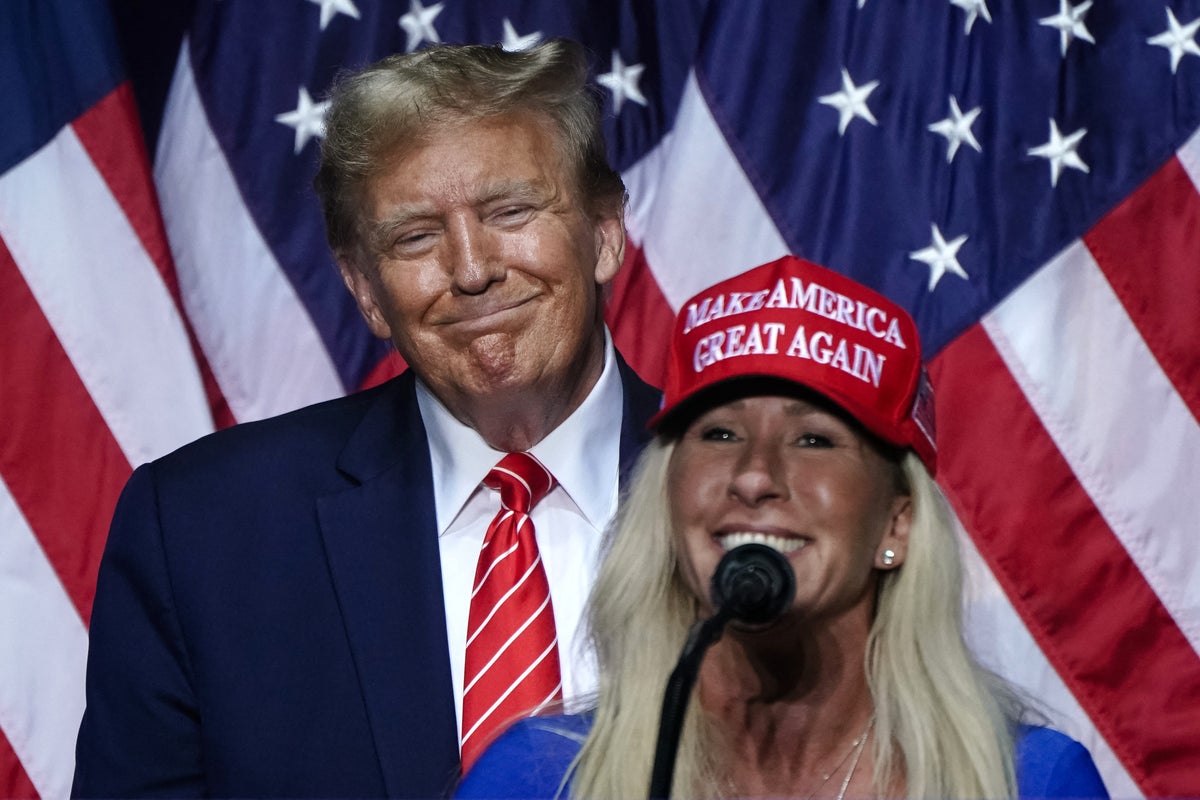
As the story unfolds, the public’s interest has been captured not just by words but also by images that depict each personality in the political fray. Greene’s proclamations and Trump’s bold assertions are punctuated by visuals that convey both their political personas and the gravity of their unfolding battle.
Seeking Consensus
While Greene and Trump may still share key beliefs, the growing friction suggests that they are navigating increasingly divergent paths. Their contrasting approaches to pressing issues like immigration, alongside Greene’s criticisms of Trump’s handling of expectations, highlight an emerging complexity in their relationship.
Overall, the political landscape is shifting, and Greene’s evolving stance presents an intriguing possibility for a realignment within the Republican Party. This dynamic could pave the way for new factions and alliances as the GOP grapples with its identity in a rapidly changing political environment. The question remains: What will this mean for their followers and the future Republican agenda?