


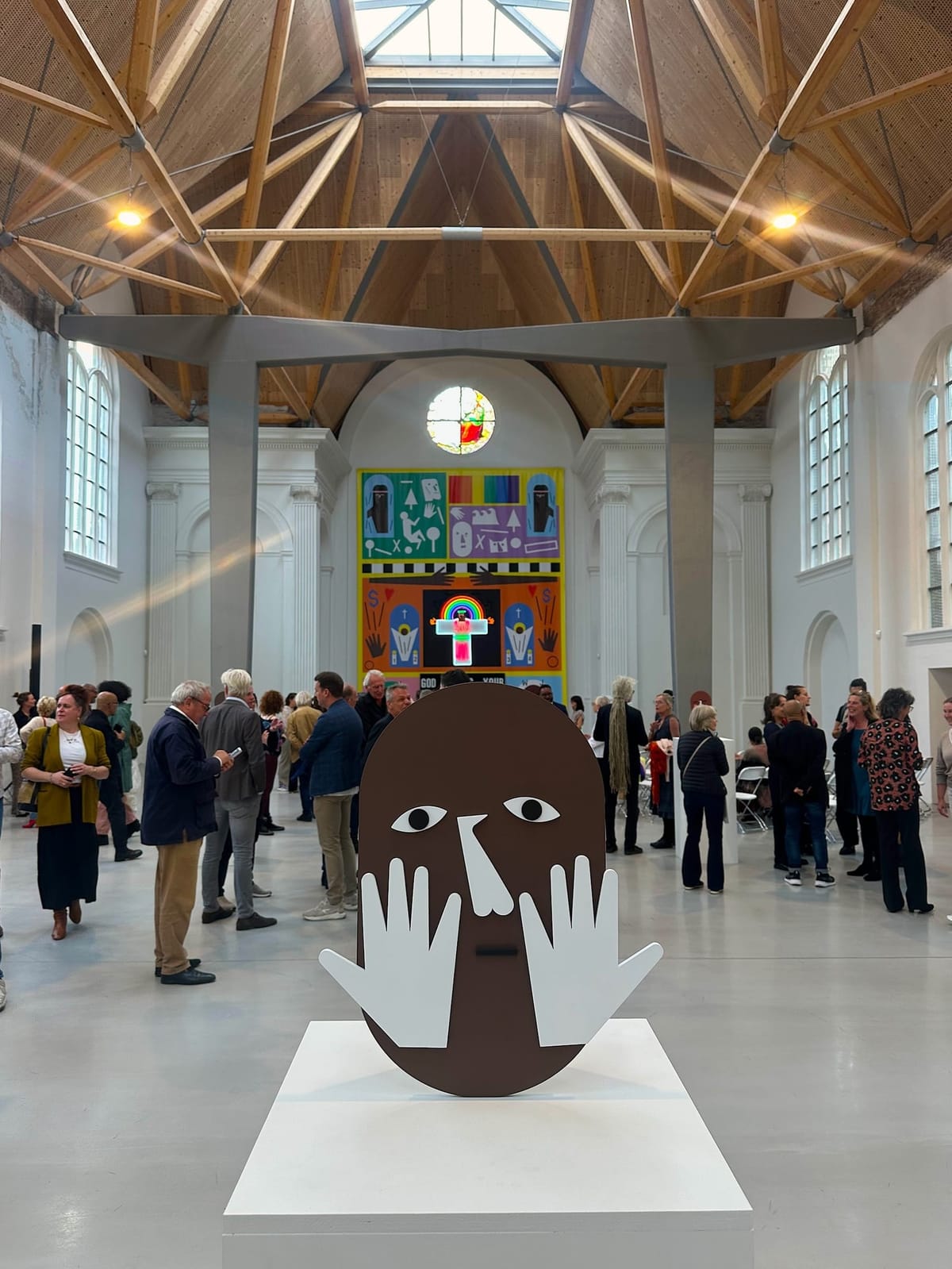
A Moment of Shift at Elbow Church
In September, I stepped into the Elbow Church art space in Amersfoort, Netherlands, and felt an immediate shift. It was during a compelling lecture by journalist Nikole Hannah-Jones, nestled beneath the striking installations of artist Nina Chanel Abney. The atmosphere was charged with urgency, as Hannah-Jones tackled crucial issues related to Black American life—narratives increasingly sidelined or distorted in the United States.
A Historic Exhibition
On that very night, two significant exhibitions opened: Jacob Lawrence: African American Modernist and Nina Chanel Abney: Heaven’s Hotline. Together, these shows created an immersive experience that laid bare the vast spectrum of Black American artistry. Lawrence’s detailed historical narratives and Abney’s bold critiques demanded attention, offering a clarifying lens through which to view the complexities of this artistic vision. The exhibitions were not mere gallery displays; they were bold institutional commitments, with entire floors dedicated to challenging narratives about Black life—encompassing love, resistance, and joy, without apology or diminishment.
The European Spotlight
Kunsthal KAdé in Amersfoort marked a pivotal moment. This was Jacob Lawrence’s first European overview exhibition, featuring commissioned portraits of him by contemporary artist Barbara Earl Thomas, a former student. Such extensive focus on Black American artists in Europe oddly contrasts with the diminishing platforms available to them at home. The unique attention and institutional backing these artists receive abroad create a dissonance, particularly as American art institutions are hampered by funding cuts and censorship.
An Unfolding Crisis
In the U.S., the landscape faces challenges. Recent instances of censorship, such as Amy Sherald’s controversial withdrawal from the Smithsonian National Portrait Gallery, underscore a worrying trend. The American Alliance of Museums reported that one-third of U.S. museums have experienced funding losses, leading to slashed programs benefitting underserved communities. Such conditions amplify the significance of Kerry James Marshall’s exhibition at London’s Royal Academy, which became a monumental testament to the necessity of recognizing Black perspectives within the Western art canon.
Visibility in Art
Marshall’s expansive show, showcasing over 70 works, centers Black identity and presence amidst increasingly violent erasures in American society. Pieces like “School of Beauty, School of Culture” serve as pivotal affirmations—reminders that visibility and permanence are critical, even as the community faces significant trials.
Mickalene Thomas’s European Impact
Equally notable are Mickalene Thomas’s exhibitions in Europe. Her show All About Love at Les Abbatoirs marked her first major exhibition in France, followed by an upcoming groundbreaking show at the Grand Palais in Paris—the first of its kind for an African American artist. Thomas’s work, featuring rhinestone portraits of Black women, radiates empowerment while simultaneously drawing attention to the harsh realities faced by Black women in the U.S., where employment rates have plummeted due to systemic biases.
Confronting Religious Capitalism
Abney’s Heaven’s Hotline continues this theme by confronting the intertwining of religious themes and capitalism through striking sculptures. Her work critiques the rising tide of White Christian nationalism in America, reflecting a broader cultural discourse. These exhibitions collectively offer nuanced interpretations of Black American histories, amplifying voices that challenge simplifications and stereotypes.
Competing Narratives
In a broader context, the simultaneous commitment from European institutions to feature Black American narratives speaks volumes about the current state of storytelling and representation in the arts. The reality of erasure and exclusion is counterbalanced by powerful expressions of joy, resistance, and individuality. This juxtaposition prompts essential reflections: how do audiences in Europe perceive the duality of these experiences amid an intensifying political climate in the U.S.?
The Significance of Remembering
Black Americans have historically sought refuge in Europe from the harsh realities of home, as seen with figures like James Baldwin and Richard Wright. Yet today’s moment signifies something different—a collective, institutional acknowledgment of Black artistry and storytelling that stands in stark contrast to the contemporary attempts at neutralization happening in the U.S. This moment sets a precedent regarding which narratives will endure and resonate moving forward.
Witnessing and Remembering
As I walked through these exhibitions, I was struck by the tension between the complex realities presented by these artists and the ongoing attempts at containment back in the U.S. It raises essential questions about visibility and agency, inviting spectators to consider their roles in which stories are celebrated, which are silenced, and the implications of those choices for the future of cultural narratives.