


The Complicated Dynamics of Trump’s Venezuela Strategy
President Donald Trump’s efforts towards regime change in Venezuela are mired in a complex web of political, strategic, and legal challenges. What initially appeared to be a bold move to reshape the turbulent landscape of Venezuelan politics is now slipping from his grasp, both in Caracas and Washington.
The Oval Office Meeting
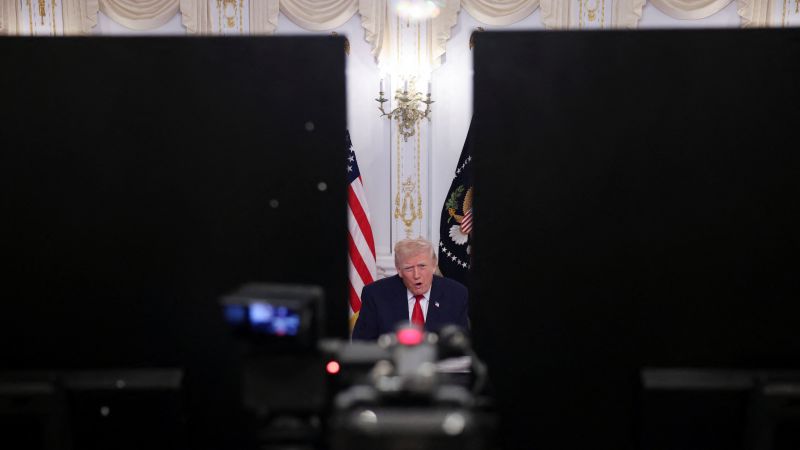
In a recent Oval Office meeting, Trump convened top national security officials to strategize on the escalating crisis. Amidst the backdrop of geopolitical strains, the situation in Venezuela has become increasingly volatile, challenging Trump’s grip on an issue that he had hoped would be a hallmark of his foreign policy.
Venezuelan President Nicolás Maduro remains defiantly entrenched in his power. In a striking display of defiance, he danced for supporters at a massive rally in Caracas, openly rejecting U.S. pressures to resign. Maduro’s statement, “We do not want peace of slaves, nor do we want peace of colonies,” echoed loudly, underscoring his unwavering grip on the narrative and his position.
Domestic Political Pressures
Back in Washington, the domestic political landscape is shifting. The White House faces a growing controversy over a recent U.S. military strike that reportedly killed crew members on a drugs trafficking vessel in the Caribbean. As Trump’s Democratic adversaries cry foul, suggesting potential war crimes, even some Republicans are showing signs of dissent and calling for investigations into the administration’s actions.
The increasing scrutiny falls heavily on Defense Secretary Pete Hegseth, whose controversial military decisions compound Trump’s difficulties. Critics point to Hegseth’s inexperience and questionable communication within the military ranks, arguments that are becoming more significant with the intensifying debates over legality and military ethics.
The Military Build-Up and Its Implications
The U.S. military buildup near Venezuela, highlighted by the deployment of the USS Gerald R. Ford aircraft carrier, aims to intimidate. Still, it raises serious questions about the administration’s ultimate strategy. Trump’s saber-rattling is in stark contrast to the reality on the ground, where Maduro’s regime persists. Trump’s recent threats about impending strikes against drug cartels in Venezuela add drama but lack tangible follow-through, leading to skepticism about the credibility of his warnings.
Caught in a web of his own making, Trump’s initially aggressive rhetoric now necessitates a reconsideration of tactics. If previous negotiations fail, he may be compelled to deploy military solutions, but the potential consequences could be dire—both for Venezuelan civilians and for Trump’s political future back at home.
Maduro’s Stubbornness and U.S. Calculations
Maduro’s ability to withstand U.S. pressures raises critical questions about Trump’s calculations. The regime’s resilience may suggest an underestimation by U.S. officials regarding Maduro’s power base and influence among Venezuelans. As time progresses, Maduro’s strategy of delaying negotiations poses a dual threat, continually testing Trump’s resolve.
If military action becomes the administration’s default mode of response, it could lead to more significant regional instability. The ramifications of such decisions are profound, inviting questions about complicity in international law and escalating violence.
The Legal Quagmire
The administration’s legal justifications for military actions are under scrutiny. After a controversial double-tap strike with questions regarding its legality emerged, the fallout called the current narrative into question. The disclosures around this incident, particularly regarding potential violations of international law, could levy broader implications on Trump’s governance.
Concerns are growing among lawmakers, with accusations that the legal frameworks underpinning these military actions are inadequate. Democratic and even some Republican voices are urging thorough inspections of the orders surrounding military engagement in Venezuela, creating more tension within the ranks.
Trump’s Crossroads
As the narrative of events unfolds, Trump faces a crossroads. On one hand, a peaceful end to Maduro’s reign could transform U.S.-Latin American relations while signaling strength to foes like China and Russia. Conversely, a botched operation that fails to topple Maduro could severely undercut Trump’s authority and credibility internationally.
Strategic assessments suggest the potential for Trump to consider a tactical retreat or negotiation, saving face while avoiding a deeper involvement in Venezuelan affairs. The dilemma stands paramount: push forward at a significant risk or recalibrate to mitigate potential fallout, a choice both daunting and crucial.
Historically Rooted Resistance
Historically, dictatorial regimes have shown remarkable durability against external pressures. The Venezuelan regime, often operating akin to a structured criminal organization, relies on deep-rooted financial interests among its leaders to maintain power. With the complex political landscape at play, the U.S. must weigh its options carefully—escalation or strategic withdrawal could either lead to the collapse of an oppressive regime or unleash chaos.
In this high-stakes environment, the outcomes remain uncertain, hinging on decisions made in the Oval Office and the fortitude of a regime that continues to push back against immense odds. Trump is undoubtedly in turbulent waters as he navigates the intricate dynamics of Venezuela’s political arena.