


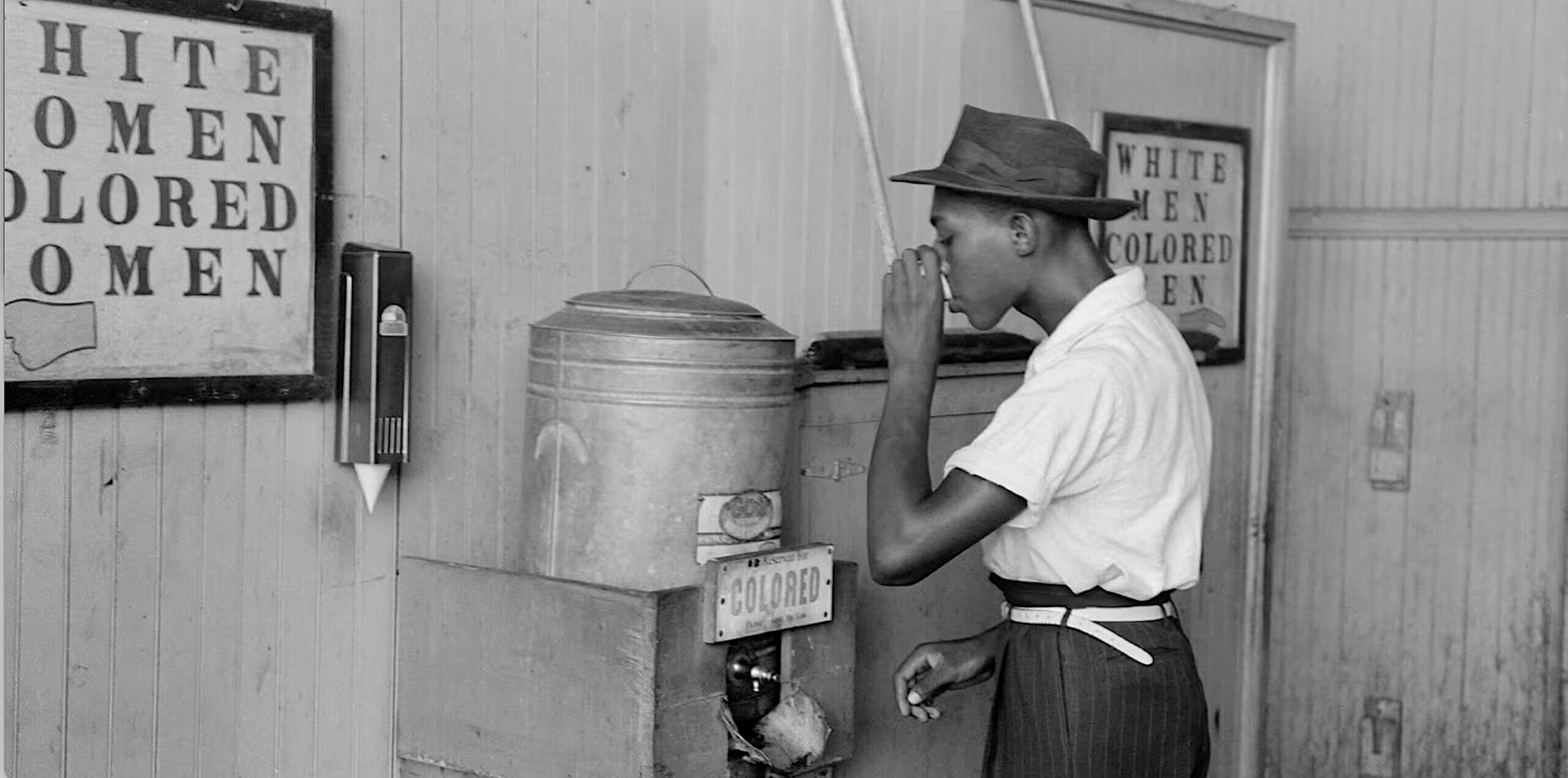
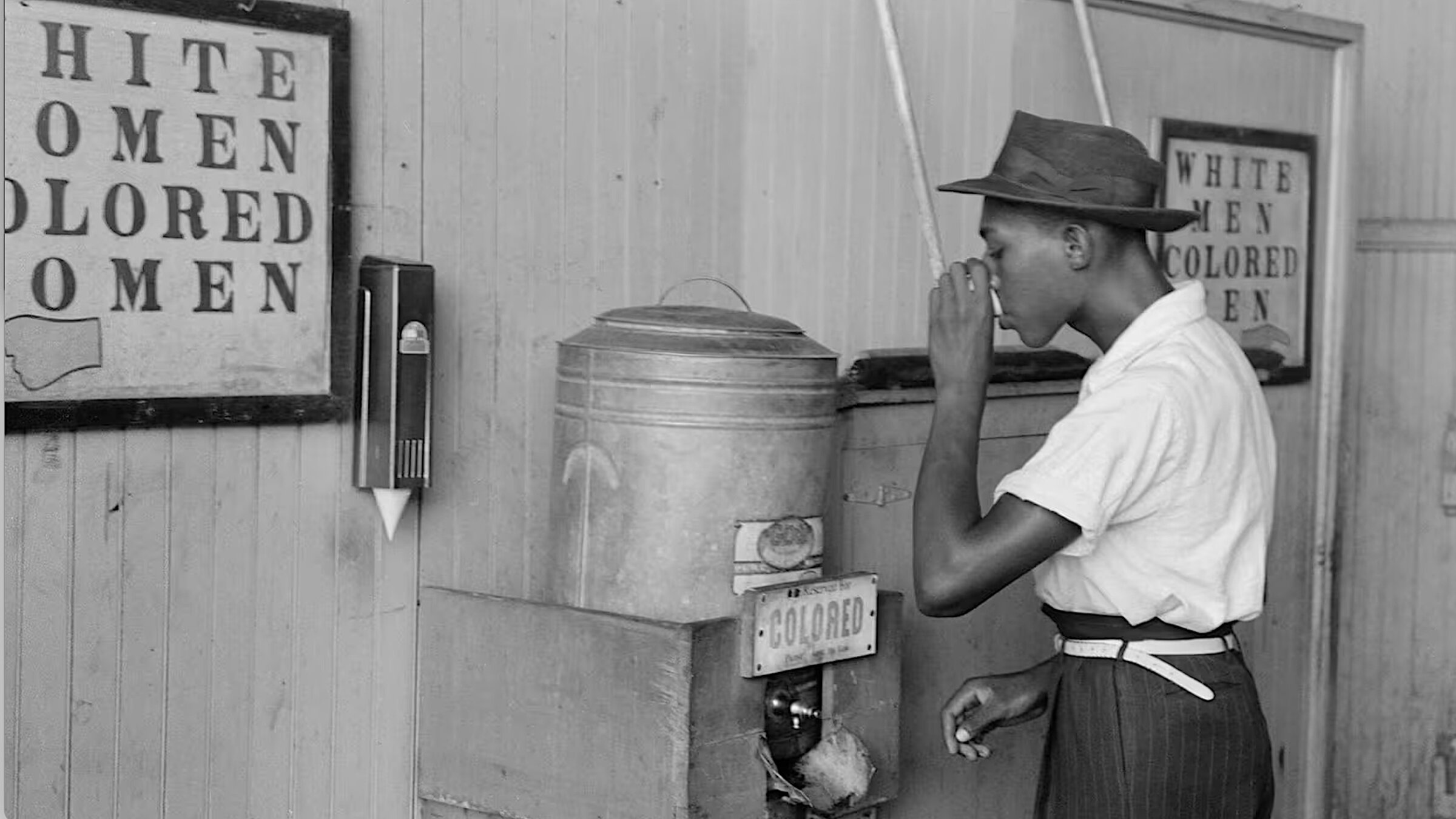
A man outside a segregated bathroom, 2018 Photo by Universal History Archive/Universal Images Group via Getty Images
This article initially appeared in Yiddish and can be read here.
America presented Jewish immigrants with a tapestry of surprises when they first arrived on its shores over 150 years ago. Among these surprises, the encounter with African Americans stood out as both peculiar and unfamiliar. This interaction often conjured feelings of bewilderment and alienation, as illustrated by the literary works of the time.
In Sholem Aleichem’s Motl, Pesye the Cantor’s Son, the protagonist, Motl, is depicted on a subway ride when he first spots a Black couple. His reaction is one of shock; he describes them using terminology that would be considered outrageously racist today—terms like “crude creatures” with “horribly thick lips” and “large white teeth.” This stark representation ignites a debate: who should be held responsible for such portrayals—the author or the character?
Gil Ribak, a scholar from the University of Arizona, boldly delves into this complex issue in his latest publication, titled Crude Creatures: Confronting Representations of Black People in Yiddish Culture. Ribak notes that the English translation of Sholem Aleichem’s works, done by Hillel Halkin, deliberately omits this deeply problematic phrase, revealing modern discomfort with racist language.
While not the first to explore this sensitive terrain, Ribak’s work stands apart because he confronts the long-ignored subject of racist stereotypes in Yiddish literature. Historically, scholars have favored highlighting positive narratives while downplaying negative attitudes towards African Americans, even among the more progressive factions of Yiddish writers and activists.
Ribak’s thorough research illustrates that the horrifying images and words that sound offensive today held different connotations for early 20th-century readers. The stereotype of Black people as “wild animals” first emerged within Hebrew and Yiddish culture during a time when most Ashkenazi Jews in Eastern Europe lacked direct contact with Africans. This image was perpetuated through literature, including adaptations of the Yiddish Bible like Tsenerene, which inaccurately depicted the descendants of Noah’s son Ham as “dark” and “black” due to divine punishment.
When American Yiddish journalists addressed the race issues in America, they often framed African Americans through an Eastern European lens, likening them to Russian peasants. This analogy painted a picture of both groups as products of similar oppression, particularly since both had recently been emancipated in the 1860s. Ribak highlights how, in the American Jewish psyche, the African American became an embodiment of the Russian peasant, an analogous existence in the struggle for dignity.
Ab Cahan, the editor of the influential Yiddish newspaper Forverts, made his own comparisons between Southern whites and Polish noblemen—applications of their respective privileges and cruelties. Despite progressive rhetoric against anti-Black violence, Cahan was not immune to the allure of racist stereotypes, often depicting Black individuals in derogatory terms in his journalism.
As Jewish immigrants settled in bustling urban centers, their proximity to African Americans did not foster mutual understanding. For instance, Harlem became a neighborhood where Jews were largely the only white residents surrounded by a predominantly Black population, but meaningful interactions were rare. By 1930, this demographic reality had shifted, with most Jews leaving the area.
Though Yiddish socialists espoused the value of racial equality, their lack of direct engagement with African American communities often led them to view Black individuals through a paternalistic lens. They saw African Americans as “weaker and younger brothers” in a broader human struggle for rights.
This discordant relationship can be seen in the writings of prominent Yiddish authors like Sholem Asch and Joseph Opatoshu. Though they opposed racism, their narratives frequently echoed the very stereotypes they sought to dismantle—most notably in their depictions of Black physicality. Opatoshu’s story A Lynching stands as a poignant illustration of this contradiction.
By juxtaposing these conflicting positions, Ribak reveals a dichotomy within the writings of these early Yiddish authors. Their literary expressions often contradicted their ethical standpoints—reflecting a deeper ambivalence about race and identity.
Ribak’s book pulls from a rich array of Yiddish, Hebrew, and English texts, providing a panoramic view of immigrant attitudes towards race. Unlike some of his contemporaries in Yiddish Studies who focus predominantly on “high” culture, Ribak brings to light the multifaceted perspectives within Yiddish popular culture, showcasing the contradictions that existed within the immigrant experience.
In summary, Ribak emphasizes that Jewish immigrants were not devoid of racial biases, challenging the current trend in Yiddish scholarship that often presents an overly sanitized view of American Yiddish culture. By engaging with these uncomfortable truths, Ribak sheds light on the complexities of identity and race as Jewish immigrants navigated the turbulent waters of American society in the early 20th century.