


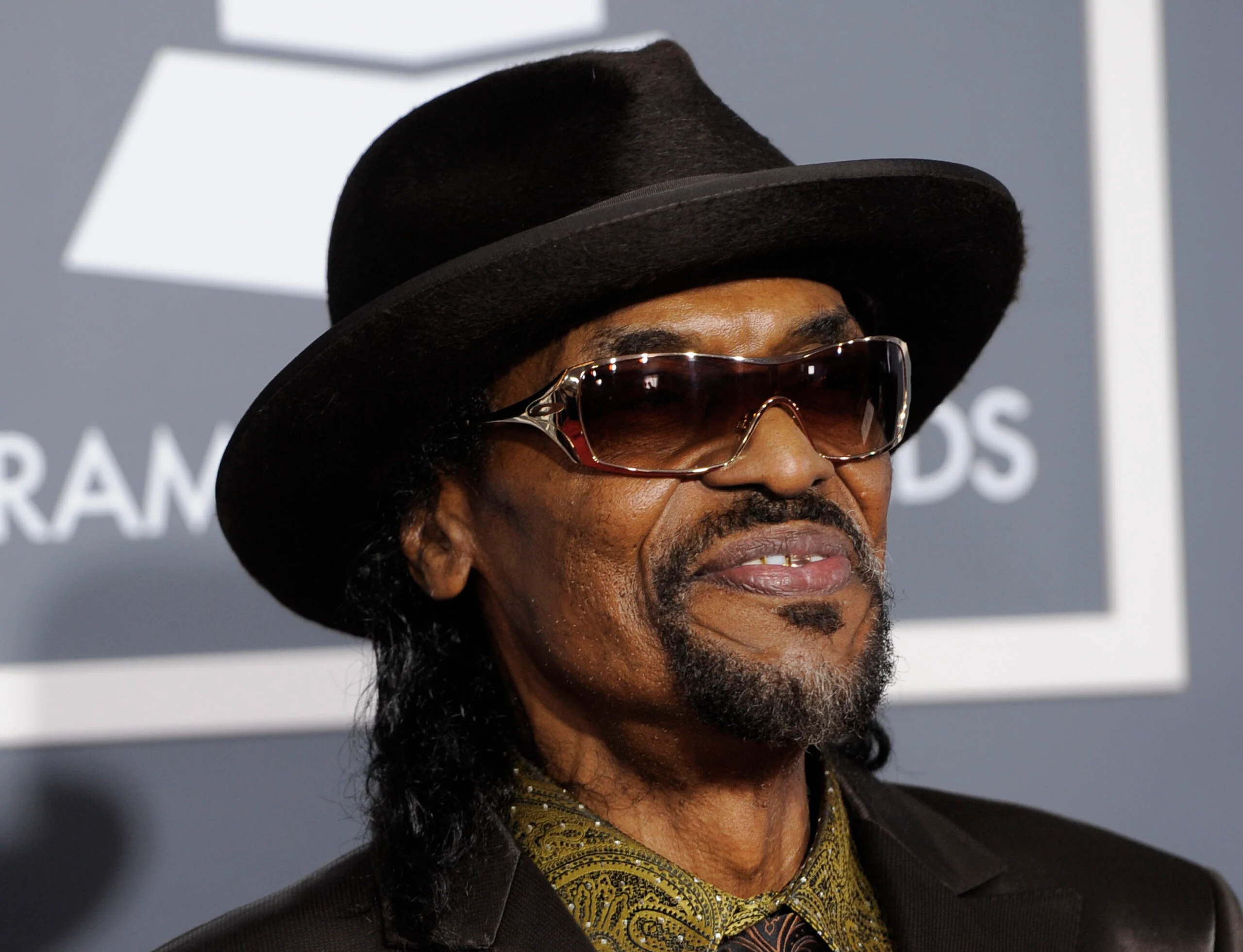
Washington D.C., often regarded as the nation’s capital, is affectionately dubbed “Chocolate City” by its locals, a term that captures the vibrant, rich culture of the area. This nickname is closely tied to its musical heritage, particularly the infectious Sounds of Go-Go music, a genre that has become synonymous with the city. At the forefront of this musical movement was Chuck Brown, the man hailed as the “Godfather of Go-Go.” In a move to honor this legendary musician, Democratic non-voting Delegate Eleanor Holmes Norton aimed to rename a local post office in his honor, encapsulating the spirit of a community that reveres its artistic contributors.
However, Norton’s efforts hit a snag on Tuesday when Republican members of the House Oversight Committee removed her bill from the agenda, effectively halting its progress. The reason cited by committee members revolved around concerns regarding Chuck Brown’s past, particularly his conviction for murder, which cast a shadow over the honor intended for him. A spokesman for the Oversight Committee Republicans articulated these concerns, highlighting the complexities surrounding public perceptions of individuals with criminal records.
In a sharp counter to the committee’s move, Norton expressed her profound disappointment. She emphasized that Chuck Brown’s legacy as a Washingtonian who helped define the sound of the city should not be overshadowed by his troubled past. “Chuck Brown was a Washingtonian for most of his life. He created Go-Go, the official music of D.C.,” she argued, suggesting that Brown’s contributions to the cultural identity of Washington D.C. far outweighed his youthful mistakes.
The incarceration that raised eyebrows was primarily from his younger years, stemming from a mid-1950s aggravated assault charge, later upgraded to murder following the victim’s death. Chuck Brown has maintained that he acted in self-defense. His time at Lorton, Virginia’s former prison complex played a formative role in his life. As he recounted in a 2010 interview with the National Endowment for the Arts, it was during this time that he truly found himself and committed to music, an endeavor that gave him purpose after a lifetime of challenges.
Chuck Brown’s legacy is already commemorated in various ways across the city, with landmarks such as parks and a street named in his honor. Norton’s initial proposal to name the post office at 340112th Street NE after him is a testament to his influence on D.C.’s cultural fabric. Brown devoted his life to Go-Go music, earning a Grammy nomination in 2010—a recognition of his lasting impact on the arts. “Chuck Brown gave D.C. a unique hometown sound that was distinctly our own,” Norton reflected, further emphasizing the pride that D.C. residents have in Brown’s contributions.
D.C. Council Chairman Phil Mendelson also weighed in, finding it ironic that Brown’s past—as a young man who served his time—should hinder recognition for his significant artistic contributions. “It’s completely appropriate to honor him,” Mendelson asserted, reinforcing the sentiment that one’s past should not define their legacy, especially when the individual has shown considerable growth and contribution to society. Urging committee members to reconsider, he highlighted a tension between acknowledging past mistakes and recognizing transformative contributions to culture.
In conjunction with the bill’s cancellation, the committee advanced a separate bill led by Wyoming Republican Rep. Harriet Hageman. This proposed legislation seeks to amend a D.C. law that mandates local courts to follow executive agency guidance when interpreting city laws. D.C. Mayor Muriel E. Bowser, along with other local leaders, voiced their firm opposition, characterizing the move as an intrusion of federal authority into local governance. They warned that such overreach disrespects the rights of D.C. voters and undermines democratic principles.
This unfolding situation illustrates a broader conflict surrounding governance in Washington D.C. As debates continue, the quest to honor cultural figures like Chuck Brown remains intertwined with the complexities of political maneuvering, illustrating the delicate balance between heritage, representation, and the realities of a city navigating its identity against the backdrop of national politics.