


The New Focus of the DOJ: A Second Amendment Office and Its Implications
The U.S. Department of Justice (DOJ) has recently made headlines with the establishment of a dedicated Second Amendment Rights Section within its Civil Rights Division. This decision has sparked widespread criticism from civil rights and racial justice advocates, who argue that prioritizing gun rights undermines the department’s original mission of addressing systemic inequalities and social justice issues.
A Shift in Priorities
This new focus on the Second Amendment is particularly notable given the broader context of the DOJ’s activities. Since President Donald Trump returned to the White House, reports suggest that the Civil Rights Division has largely shifted its attention away from issues such as voting rights and racial discrimination. Investigations into these crucial areas appear to have been set aside in favor of initiatives that align closely with Trump’s political agenda, including recent efforts targeting LGBTQ+ rights and religious bias.
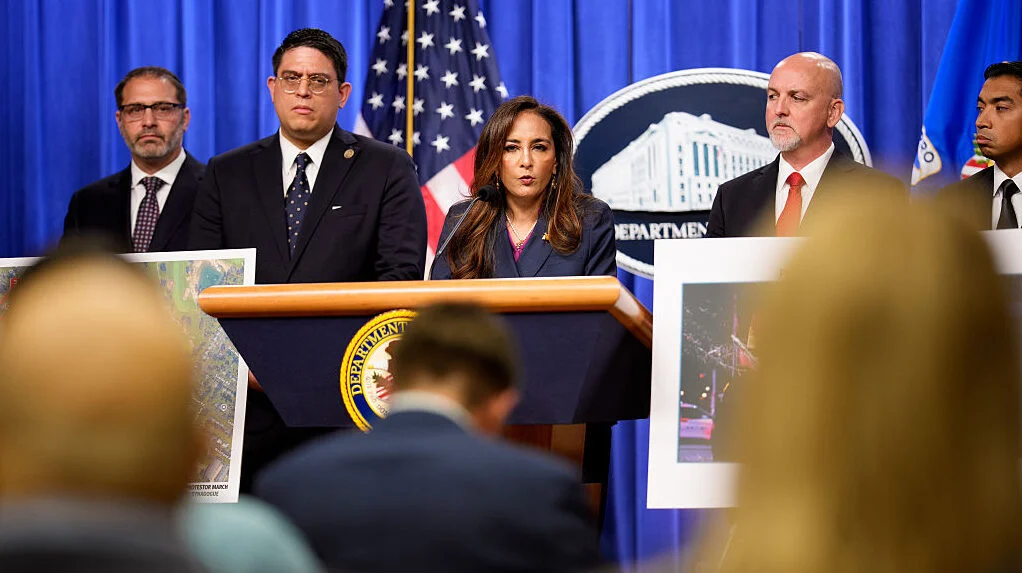
Under the leadership of Harmeet Dhillon, the division is now concentrating on issues deemed more favorable to conservative constituents. This transition raises important questions about the purpose and priorities of a division historically dedicated to safeguarding against discrimination and inequality.
Criticism from Civil Rights Leaders
Prominent civil rights figures have expressed outrage over the DOJ’s pivot toward protecting gun rights at the expense of addressing ongoing social justice concerns. Angela Angel, a senior advisor for Black Lives Matter PAC, articulated a fundamental criticism: the Civil Rights Division was never intended to serve as a “customer service desk for constitutional amendments.” Its core mission should be to protect individuals from discrimination, voter suppression, and other forms of government abuse.
Angel emphasizes that to justify the creation of such an office, there should be clear evidence of systematic rights violations directed at gun owners. However, she points out that the courts— including the Supreme Court— have been actively expanding Second Amendment protections, suggesting that lawful gun owners are not facing actual threats to their rights.
The Gun Violence Dilemma
The establishment of the Second Amendment office also arrives at a precarious moment, as the U.S. continues to grapple with a gun violence epidemic that has resulted in substantial loss of life over the past decade. Critics argue that this emphasis on gun rights distracts from addressing the urgent need for policies that genuinely protect communities from gun violence.
Derrick Johnson, CEO of the NAACP, highlighted the stark reality that in America, obtaining a firearm can often be easier than accessing critical healthcare. As the Trump administration seeks to maintain favor with its political base, there remains a pressing need to focus on pressing societal issues rather than engaging in what some regard as political theatrics.
Political Debt to the Gun Lobby
Angel contends that the establishment of the Second Amendment office is little more than a “payment on a political debt” to the National Rifle Association (NRA) and other influential elements of the gun lobby. These organizations have historically backed Trump’s administration with substantial campaign contributions. Critics argue that rather than implementing policy changes that would genuinely assist gun owners, the DOJ’s new office serves mainly as a symbolic gesture— a “shiny new office” without real substance. Such moves appear designed more for optics than for meaningful governance.
The Legal Justification of the Office
The legality and justification of this new office remain in question. As Angel noted, Congress established the Civil Rights Division with a specific mandate that does not encompass the Second Amendment. Without appropriate congressional authorization, critics fear the office may ultimately lack the legal foundation necessary to operate effectively.
Angel draws a vivid analogy, suggesting that the office might resemble “one of those shiny holiday gifts” that promises much but fails to deliver—appealing in theory but practically ineffective.
A Call for Real Solutions
Advocates for civil rights emphasize the need for genuine concern for the rights of Americans across various sectors. They argue that rather than establishing a new division focused on gun rights, the administration should allocate resources where they are genuinely needed— addressing the myriad crises affecting everyday Americans.
As many citizens seek relief and stability amidst rising costs and economic uncertainty, the new focus on the Second Amendment appears to divert attention away from the urgent issues that require immediate action. Instead of concrete solutions, critics argue that what has emerged is a political distraction that does little to serve the needs of the American populace.
With this ongoing evolution within the DOJ, questions linger not just about the impact of this new office, but about the broader implications of politicizing civil rights in a country that continuously battles systemic inequality and injustice.