


New Insights into Rosa Parks and the Civil Rights Movement
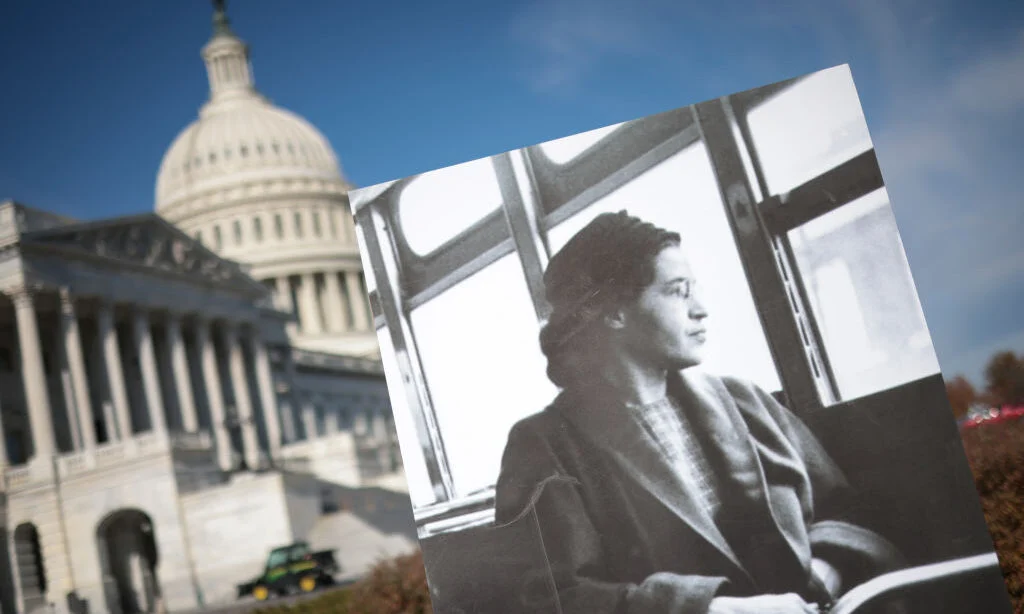
MONTGOMERY, Ala. (AP) — Seven decades after Rosa Parks made her pivotal stand by refusing to give up her bus seat, recent revelations illuminate lesser-known facets of her legacy. New photographs, unveiled for the first time, provide a fresh perspective on Parks and the broader Civil Rights Movement.
Rediscovered Photos from a Crucial March
The recently revealed images were captured by the late Civil Rights photographer Matt Herron during the historic Selma to Montgomery march in 1965. This significant event, a five-day journey covering 54 miles, played a vital role in galvanizing the political momentum that led to the U.S. Voting Rights Act of 1965. While history often highlights Parks’ courageous act of civil disobedience on December 1, 1955, these photos remind us that her activism extended far beyond that moment, enriching our understanding of her role in the struggle for civil rights.
Commemorating the Montgomery Bus Boycott
On a recent Friday, participants of the Montgomery Bus Boycott and descendants of its organizers gathered to commemorate 70 years since the 381-day struggle that drew national attention to racial segregation in public transportation. This gathering underscored the enduring impact of the boycott and the figure at its center—Rosa Parks. According to Donna Beisel, director of the Rosa Parks Museum, the newly released photos serve to illustrate both Parks as an individual and her unwavering dedication to activism.
Untold Stories Captured in Time
While numerous images exist of Parks alongside prominent leaders of the Civil Rights Movement, many of the newly discovered photographs remained unpublished during Herron’s lifetime due to issues like blurriness or focus on lesser-known individuals. Among these images, Parks can be seen within crowds, often unaware that her moments of quiet observation were being documented.
Jeannine Herron, the photographer’s wife, revealed that these newly surfaced photos were discovered from a contact sheet stored at Stanford University, and their release is part of a broader effort to reconnect these historical pieces with the communities they depict. “It’s so important to get that information from history into local people’s understanding of what their families did,” she stressed.
A Joyous Reunion at Lincoln Normal School
Among those captured by Herron was Doris Wilson, a 20-year-old from Marion, Alabama, who participated in the Selma to Montgomery march. In an emotional reunion, attendees at an auditorium in Lincoln Normal School reminisced while looking at Herron’s work, some encountering images that highlighted their own struggles—specifically Wilson, who found herself in photos she had never seen before.
One poignant image showed Wilson receiving medical attention for blisters on her feet, a reminder of the physical challenges endured during the march. The doctor who tended to her injuries, June Finer, traveled from New York to reunite with Wilson, leading to an endearing exchange between the two women. Finer, now 90 years old, reflected on how her primary concern at the time was the safety of the marchers, unaware of the lasting impact of the photographs she was a part of.
A Lifelong Journey for Recognition
For Cheryl Gardner Davis, recalling the evening her family hosted marchers on their farmland during the civil rights protests was bittersweet. At just four years old then, she had a vague sense of the historical significance of the event, but it wasn’t until adulthood that she appreciated the risks her family took, including threats and repercussions faced due to their hospitality.
Davis had been on a quest for years, trying to find evidence of her family’s involvement in the movement, including photographs of their home during that pivotal time. Among the freshly returned images were depictions of the campsite at her childhood home, reinforcing her family’s legacy and validating their experiences. “It’s, in a sense, validation. This actually happened, and people were there,” she remarked.
Bridging Past and Future
Through these newly unveiled photographs and reunions, we gain not only a clearer picture of Rosa Parks’ legacy but also a broader acknowledgment of the many individuals who contributed to the Civil Rights Movement. These snapshots provide not just a glimpse into history, but serve as a powerful reminder of collective resilience and the fight for justice that continues to this day.