


Senate Divides Over Health Care: Partisan Votes Loom
In a rapidly evolving political landscape, the U.S. Senate is gearing up for contentious votes this week regarding health care. This showdown arises as Republican lawmakers have united around a plan that seeks to allow COVID-era health care subsidies to lapse.
The Competing Plans
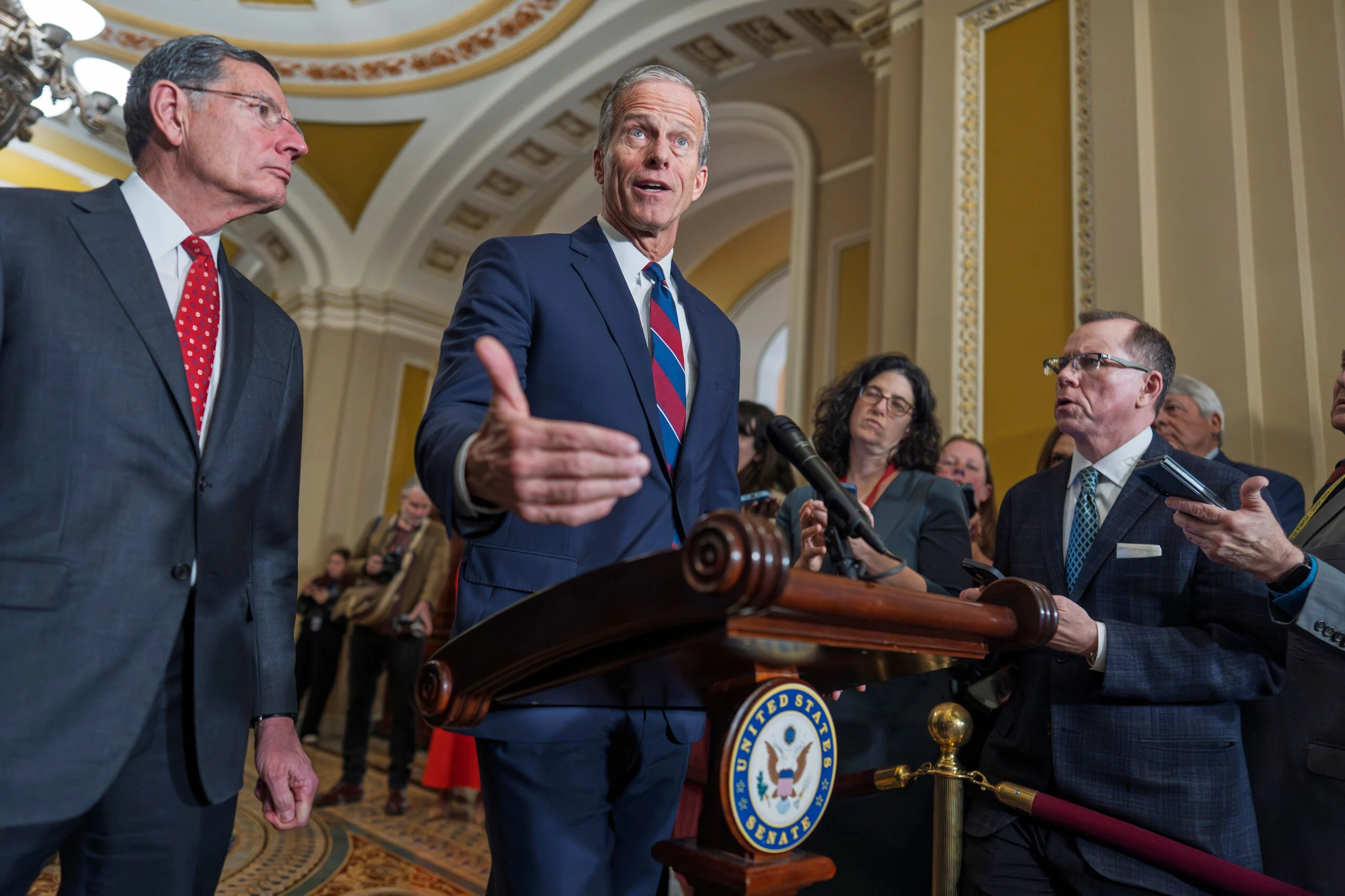
Two major proposals have emerged: a Republican plan aimed at replacing existing COVID-era subsidies with new health savings accounts, and a Democratic initiative seeking to extend the enhanced Affordable Care Act (ACA) tax credits for an additional three years. Neither of these plans appears to have garnered the bipartisan support necessary for passage in the Senate. Senate Majority Leader John Thune, R-S.D., criticized the Democratic bill, asserting it fails to implement sufficient reforms to combat fraud or to limit benefits for high-income earners. He unequivocally declared, “That legislation will fail.”
In contrast, Democratic Leader Chuck Schumer deemed the Republican plan “phony” and insisted that it is “dead on arrival,” highlighting the deep partisan discord characterizing the current legislative session. Schumer urged Republicans to collaborate with Democrats, emphasizing the urgency of their situation after a prolonged 43-day government shutdown spurred by the same issue.
Impending Consequences
As negotiations stall, millions of Americans could face rising premium payments if tax credits are allowed to expire come January. With both parties exchanging blame for the ongoing impasse, the topic is bound to resurface as a central issue in the upcoming midterm elections, filled with conflicting talking points yet scant evidence of compromise.
A Moment of GOP Unity
Republican senators have recently experienced a rare moment of consensus, banding together around a single plan after years of internal division over how to address the ACA, commonly known as Obamacare. Spearheaded by Louisiana Sen. Bill Cassidy and Idaho Sen. Mike Crapo, the legislation consolidates various Republican proposals into one coherent effort. This newfound unity illustrates the party’s commitment to presenting a unified front as they navigate the difficult terrain of healthcare policy.
Notably, Ohio Sen. Bernie Moreno recently shifted his focus entirely to Cassidy and Crapo’s legislation after having proposed his own alternative. Meanwhile, Missouri Sen. Josh Hawley expressed willingness to support the consensus bill even amid personal misgivings, stating, “I just think that Republicans can’t do nothing.” His sentiment reflects the urgency felt by many within the party to act decisively on healthcare issues.
The Proposed Health Savings Accounts
The centerpiece of the Cassidy and Crapo plan is the establishment of health savings accounts to replace the expiring subsidies initially launched during the pandemic. Under this proposal, individuals earning below 700% of the federal poverty level could receive payments to these accounts for a two-year period. Younger enrollees aged 18 to 49 would receive $1,000 annually, while those between 50 and 64 would be eligible for $1,500.
These funds are designed to assist individuals with out-of-pocket healthcare costs, such as copays and deductibles, rather than covering monthly premiums. Advocates of the plan argue that it empowers individuals by providing direct financial support, allowing them to choose how to utilize these funds. The messaging echoes sentiments previously voiced by former President Donald Trump, who has highlighted a similar approach in recent discussions.
Points of Contention
Despite the Republican framing of their proposal as favorable, health analysts project that the plan may inadequately support lower-income people who depend on subsidies for insurance affordability. Critics argue that the requirement for enrollees to select higher-deductible plans may lead to significant out-of-pocket expenses, particularly for those who frequently access medical services.
Senator Ron Wyden of Oregon, the top Democrat on the Senate Finance Committee, lambasted the GOP proposal, claiming that it would leave middle-class Americans grappling with exorbitant premiums while benefitting “Big Insurance.” He criticized the plan as a “snake oil” solution, expressing frustration over the lack of collaborative efforts to tackle the healthcare cost crisis.
The House’s Dilemma
The situation is further complicated in the House of Representatives. Moderate Republicans facing reelection have been advocating for a balanced approach—proposing to extend the subsidies while introducing necessary reforms, contrasting with the more hardline positions of the party’s right flank, which demands deeper reforms to the ACA. House Majority Leader Steve Scalise indicated that GOP leadership would present members with various options, setting the stage for potentially contentious votes in the weeks ahead.
In this charged environment, the fate of health care reform hangs in the balance, with millions of Americans’ futures contingent upon the outcome of an increasingly polarized legislative process. As both parties dig in their heels, the urgency of the matter remains palpable, setting the stage for an intense political showdown.