


Tragic Collision: Government Admits Role in Deadly Air Disaster
On a stark January night near Washington, D.C., the skies bore witness to a catastrophic collision that would mark the deadliest plane crash on American soil in over two decades. The U.S. government recently acknowledged that critical mistakes made by both an air traffic controller and an Army helicopter pilot contributed to this calamitous event, resulting in the loss of 67 lives.
A Fateful Encounter
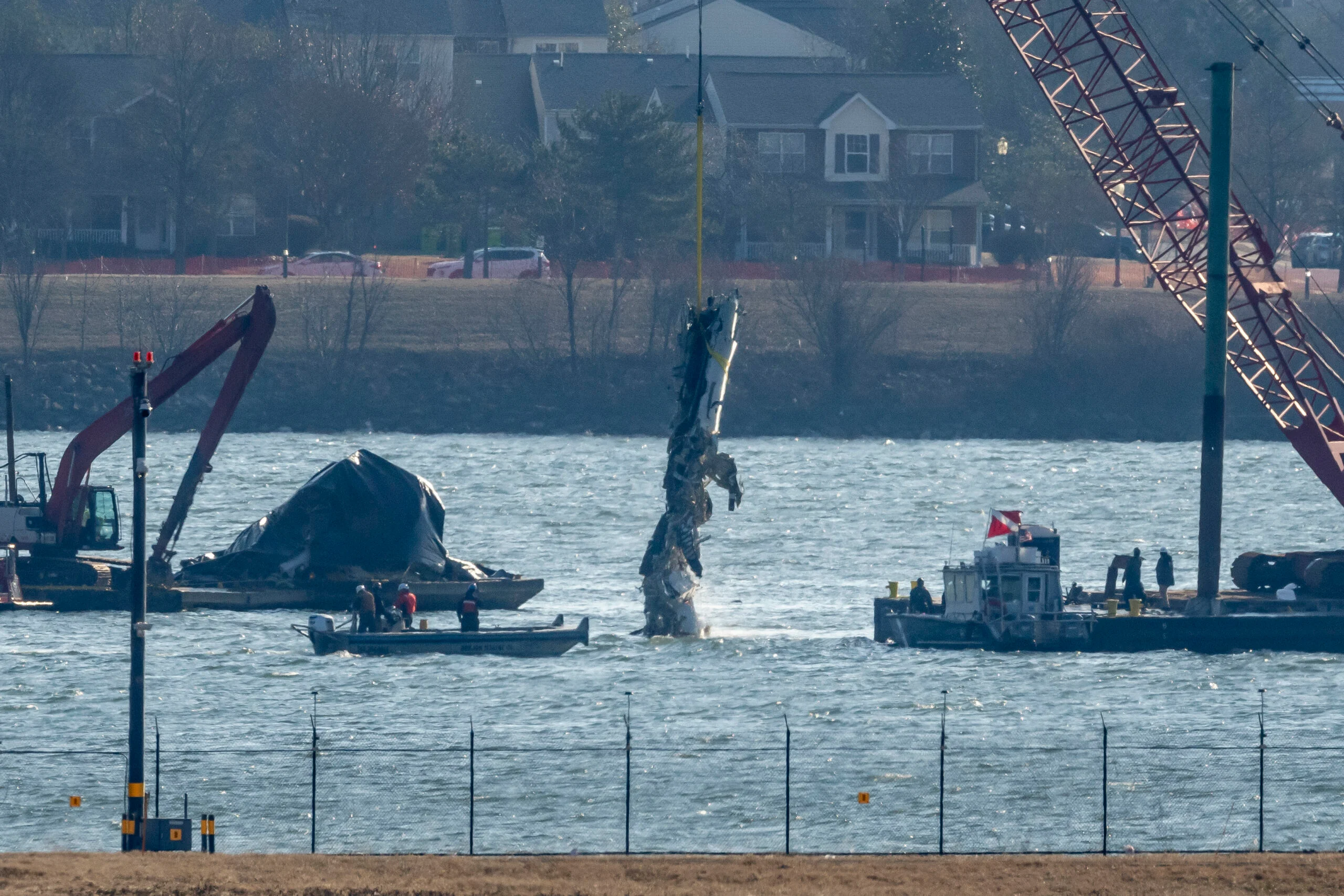
The incident occurred when a Black Hawk helicopter collided with an American Airlines regional jet while it was approaching Ronald Reagan National Airport. The tragedy unfolded as the aircraft was preparing to land, and the chilling aftermath saw at least 28 bodies recovered from the icy waters of the Potomac River.
The jet was carrying 60 passengers along with four crew members, and in stark contrast, only three soldiers were aboard the helicopter. A grim reminder of the fragility of life and the enormous responsibilities resting on aviation professionals.
Legal Repercussions
As investigations unfolded, the official response to a lawsuit filed by one of the victim’s families became a focal point of accountability. The government admitted to liability, citing a breach in duty of care due to the air traffic controller’s failure to adhere to visual separation procedures that night. Furthermore, the lawsuit noted that the helicopter pilots did not maintain adequate vigilance to avoid the approaching jet, which also implicates the Army.
However, the filing does not place blame solely on government entities. It also points fingers at American Airlines and its regional partner, PSA Airlines, for alleged negligence that contributed to the tragic event. The airlines, seeking dismissal from the lawsuit, argue that the appropriate legal recourse lies with the federal government.
Emotional Toll and Societal Impact
The aftermath of the crash has left families devastated. Robert Clifford, an attorney representing Casey Crafton’s family, emphasized the gravity of the situation. He indicated that the government’s acknowledgment of its responsibility highlights the senselessness of the tragic loss. The heartache experienced by the victims’ families remains palpable, as they grapple with their grief and the glaring absence left by their loved ones.
American Airlines, while declining to comment on ongoing litigation, has expressed its focus on supporting the victims’ families in this difficult time. Their motion to dismiss underscores a complex interplay of accountability amid the sorrow that envelops those affected.
Investigative Findings: A Pandora’s Box
The National Transportation Safety Board (NTSB) is set to release a comprehensive report detailing the crash’s causes early next year, yet early findings have already illuminated various contributing factors. The helicopter was reported to be flying significantly higher than the prescribed altitude, straying from the established 200-foot limit. This violation was compounded by the FAA’s previous laxity in recognizing the inherent risks associated with operations around the busy airport, having logged 85 near-miss incidents in the three years leading up to the tragedy.
The NTSB’s inquiry highlights an alarming trend: the FAA had allowed air traffic controllers to rely excessively on visual separation—a practice now reconsidered due to its implications for safety.
The Human Element
Witness testimonies have sparked critical questions about the helicopter crew’s ability to identify the aircraft amidst the chaos. Did they miss the jet due to the night vision goggles they were wearing, or were their hands tied by the challenging circumstances? These inquiries require profound scrutiny as the investigation unfolds.
Another layer of complexity emerges, suggesting that the pilots may have misread their altitude due to inaccurate barometric readings, leading them into dangerous circumstances without sufficient awareness.
The Unusual Admission
Experts in aviation law note that the government’s quick acknowledgment of liability is remarkable, particularly given the potential financial stakes involved. Richard J. Levy, a retired pilot and aviation litigation expert, underscored the rarity of such swift liability admissions, especially within a year of a disaster that carries significant ramifications.
Levy’s insights point to a deeper understanding within governmental agencies of the onus of responsibility that accompanies their operations, particularly in the face of tragic outcomes.
The Victims’ Stories
Among the 67 victims, there were stories that tug at the heartstrings: young aspiring figure skaters alongside their coaches were en route from a competition, alongside four local steamfitters from the D.C. area. Each life lost added another layer of tragedy to an incident already steeped in unimaginable grief.
As further investigations take shape, the memories of those who perished continue to be honored, even as families navigate the tumultuous journey of seeking justice in the face of overwhelming loss. The unfolding narrative serves as a somber reminder of the intricate dance of aviation safety and human oversight.