


The Ongoing Legal Battle Over Trump’s Presidential Immunity: A Closer Look
Background Context
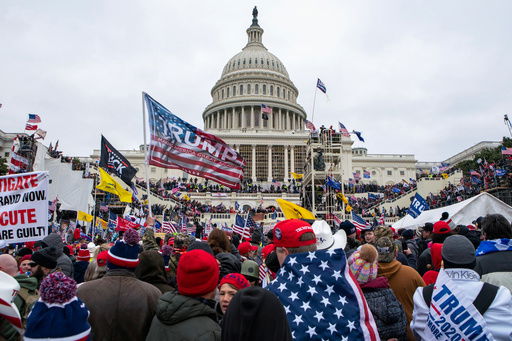
In a remarkable legal effort, attorneys representing former President Donald Trump recently appeared before a U.S. District Judge to argue that he should be granted presidential immunity. The crux of the case revolves around his actions leading up to January 6, 2021, when a mob stormed the U.S. Capitol in a bid to disrupt the certification of the 2020 election results. This unprecedented moment in American history continues to resonate in courtrooms as legal battles unfold.
Challenge of Immunity Claims
During a hearing in Washington, Trump’s legal team contended that he was acting in his official capacity when he spoke to his supporters at a “Stop the Steal” rally shortly before the Capitol assault. They assert that offering him immunity is crucial to allow a president the ability to communicate freely during critical moments. Joshua Halpern, one of Trump’s attorneys, articulated this perspective, insisting that “the entire point of immunity is to give the president clarity to speak as the commander-in-chief.”
On the opposing side, lawyers representing a group of Democratic lawmakers challenged this notion. They argue that Trump cannot definitively show that he was solely acting in his official role rather than pursuing personal political interests. This legal dispute is further complicated by established precedents from the U.S. Supreme Court, which maintain that actions taken while seeking office fall outside the protections of presidential immunity.
Judge’s Consideration
Judge Amit Mehta, noted for being exceptionally deliberative in his legal approach, did not make an immediate ruling following the arguments presented. Instead, he indicated that he has significant considerations to weigh and would come to a decision “as soon as we can.” The extended deliberation underscores the complexity and high stakes of the case, which involves contentious questions about the limits of presidential power and accountability.
Implications of January 6th
The events of January 6 have left an indelible mark on American politics. Following the violent clash, several lawmakers, including Rep. Bennie Thompson from Mississippi, initiated litigation against Trump, his legal adviser Rudy Giuliani, and members of extremist groups such as the Proud Boys and Oath Keepers. These lawsuits seek to hold Trump and his associates accountable for their alleged roles in instigating the violence that day.
Moreover, the civil claims associated with this case survived despite Trump’s sweeping clemency measures, delivered during the early hours of his second term. These actions encompassed pardons and sentence commutations for a significant number of individuals connected to the Capitol attack, demonstrating his administration’s intent to shield his allies from the consequences of that day.
Defense of Presidential Immunity
The defense emphasizes that the concept of immunity exists to protect the president’s actions and prerogatives. Halpern argued passionately that immunity allows a sitting president to act “boldly and fearlessly.” This argument raises important questions about how we define the boundaries of presidential conduct, particularly during a crisis.
Assessing Context and Circumstances
Lawyers representing the plaintiffs caution against focusing solely on the content of Trump’s speeches without considering the broader context and implications. They maintain that understanding what transpired in the lead-up to January 6 is vital in assessing whether Trump can be held liable. Their stance underscores the importance of analyzing not just the words spoken, but the environment and motivations behind them.
In this intricate legal dance, both sides have underscored the necessity of a thorough examination of presidential actions in relation to their official duties, especially in moments that profoundly affect the fabric of democracy.
Continuing Developments
As this case progresses, it will have far-reaching implications for the legal principles surrounding presidential immunity and accountability. The deliberative process in the courtroom reflects broader societal questions regarding the responsibilities and limits of executive power in the United States. The outcome will be closely monitored by legal scholars, political figures, and the public alike, as it provides a litmus test for the intersection of law, politics, and accountability in a democratic society.