


The Department of Education has announced that the Trump Administration will begin garnishing the wages of student loan borrowers whose debts are currently in default. This significant move is set to take effect on January 7, when the department will notify approximately 1,000 borrowers about their default status. Reports indicate that this decision aligns with the administration’s earlier commitment to resume student loan repayments after the prolonged pause during the COVID-19 pandemic.
Under current federal regulations, the government has the authority to garnish up to 15% of a borrower’s wages if they are in default. However, specifics regarding the exact financial impact on borrowers remain unclear. As previously noted, the Education Department has issued warnings regarding financial consequences for those failing to repay their loans, which may also include withholding federal payments such as Social Security and tax refunds.
Importantly, the Education Department has affirmed that no wage garnishments will be implemented until borrowers have been adequately informed of their status, allowing them sufficient time to respond. Unfortunately, the Trump Administration has made it evident that its policies differ significantly from those of the Biden administration, particularly regarding student loan forgiveness initiatives that were introduced in recent years.
Currently, over 5 million borrowers are reported to be in default, raising concerns about the widespread implications this garnishment policy may have on their financial well-being. Shockingly, only about 38% of all borrowers are up to date with their student loan payments, illustrating a significant crisis in the landscape of student debt.

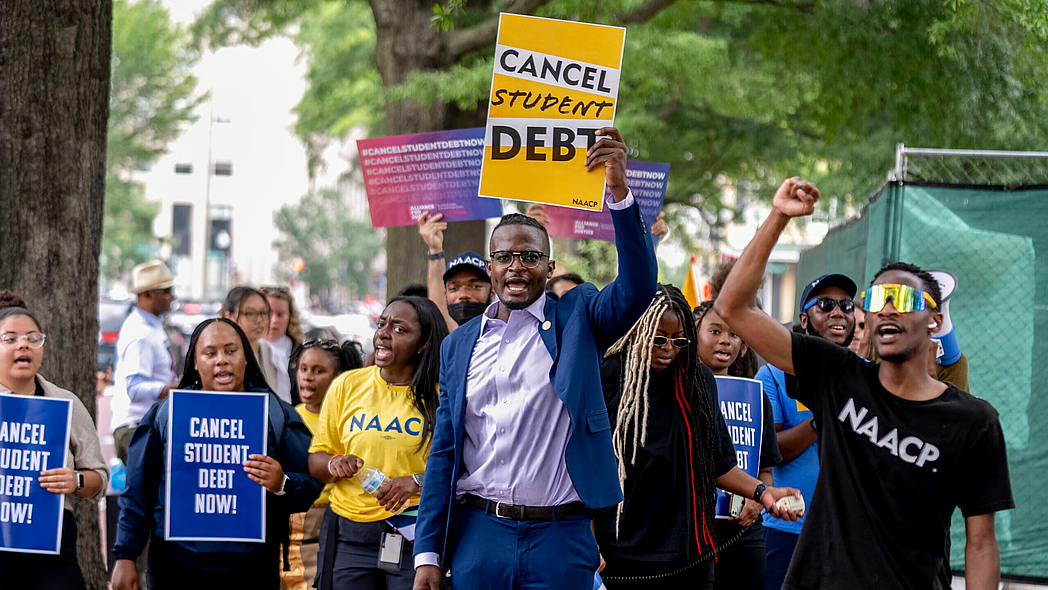
Reactions to this garnishment policy have been overwhelmingly negative among student loan advocates. Persis Yu, Deputy Executive Director and Managing Counsel for Protect Borrowers, voiced strong opposition to the plan. She stated, “At a time when families across the country are struggling with stagnant wages and an affordability crisis, this Administration’s decision to garnish wages from defaulted student loan borrowers is cruel, unnecessary, and irresponsible.” This sentiment underscores the panic many borrowers are feeling as they see the specter of wage garnishment looming over them.
The ramifications of this wage garnishment policy extend beyond just financial strain; they touch on issues of equity and systemic barriers faced by marginalized groups. Black student loan borrowers, in particular, encounter unique challenges, including higher borrowing rates and increased difficulty with repayment, ultimately exacerbating the existing racial wealth gap in America.
For those borrowers looking to avoid default or wage garnishment, the Trump Administration is still offering Income-Driven Repayment programs. Yet, concerns remain regarding the efficacy of these options. Yu highlighted that nearly a million applications for Income-Driven Repayment remain unprocessed, noting that many borrowers have encountered mass denials when seeking affordable payment options through the U.S. Department of Education.
In light of these circumstances, Yu emphasized the potential dangers of utilizing wage garnishment as a debt collection method. She recalled that during the last Trump Administration, many borrowers had their wages improperly deducted at the height of the pandemic due to the Department of Education’s inability to manage this tool effectively. “It is irresponsible to turn on a debt collection tool that the Administration cannot turn off,” she stated, highlighting the risks involved in reverting to aggressive debt collection practices without adequate safeguards in place for borrowers.