


What is Kwanzaa?
Kwanzaa is a vibrant, non-religious holiday that spans seven days, celebrating the rich tapestry of African and African American history and culture. Created with a vision of unity and cultural awareness, Kwanzaa is a time for reflection, community gathering, and the reaffirmation of heritage. While it shares elements with traditional festive periods, it stands out as it was deliberately designed to foster a sense of identity and purpose among Black Americans.
When is Kwanzaa?
Kwanzaa is celebrated annually from December 26 to January 1, placing it immediately following Christmas and leading into the New Year. This timing allows families to embrace the spirit of togetherness during the holiday season, reflecting on both the past and hopes for the future.
When was Kwanzaa created?
Founded in 1966 by activist and scholar Maulana Ron Karenga, Kwanzaa emerged from the civil rights and Black Power movements of the time. Karenga aimed to create a holiday that would unite Black Americans, enabling them to reconnect with their cultural roots and heritage. Drawing inspiration from various African harvest festivals, he sought to create a symbol of pride and self-awareness. The term ‘Kwanzaa’ itself originates from the Swahili phrase “matunda ya kwanza,” which translates to “first fruits,” highlighting themes of abundance and gratitude.
How do you celebrate Kwanzaa?
Celebrations during Kwanzaa are infused with cultural significance and communal activities. Each day of the holiday, families gather to share meals that often include traditional African diaspora foods, varying from jollof rice to collard greens. A beautiful ritual involves reciting the works of prominent Black writers and thinkers, bridging past and present by celebrating their contributions to culture and society.
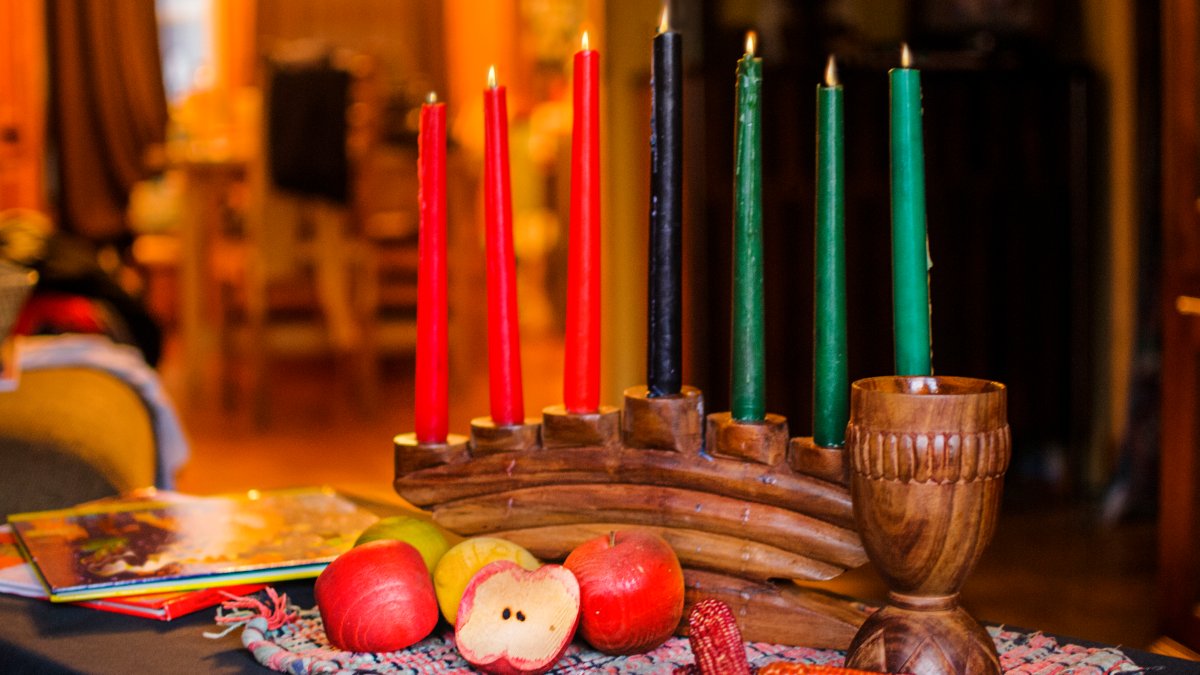
Central to the celebrations is the kinara, a seven-branched candelabra that features one black candle, three red candles, and three green candles. Each of these colors carries deep meaning, echoing the colors of the Pan-African flag. The red candle symbolizes the struggles overcome by Black individuals worldwide, while the green candle represents the hope for a better future, and the black candle signifies the people themselves.
Decorations during Kwanzaa reflect African heritage, including a woven mat called a Mkeka, an ear of corn for every child (symbolized by Muhindi), fruits representing the harvest (Mazao), and gifts (Zawadi) exchanged to reinforce bonds of community and familial love.
What are the seven principles of Kwanzaa?
At the heart of Kwanzaa lie the seven principles known collectively as Nguzo Saba. Each day corresponds to one principle, with families lighting a candle on the kinara to symbolize their commitment to these values:
- Umoja (Unity): Emphasizes the importance of togetherness and community.
- Kujichagulia (Self-Determination): Encourages individuals to define themselves, build self-confidence, and speak for themselves.
- Ujima (Collective work and responsibility): Inspires cooperation and working together towards shared goals.
- Ujamaa (Cooperative economics): Promotes supporting and building businesses owned by members of the community.
- Nia (Purpose): Urges individuals to strive to make their community better and fulfill their responsibilities.
- Kuumba (Creativity): Highlights the importance of creativity in improving their communities and lives.
- Imani (Faith): Encourages belief in oneself, one’s family, and the community.