


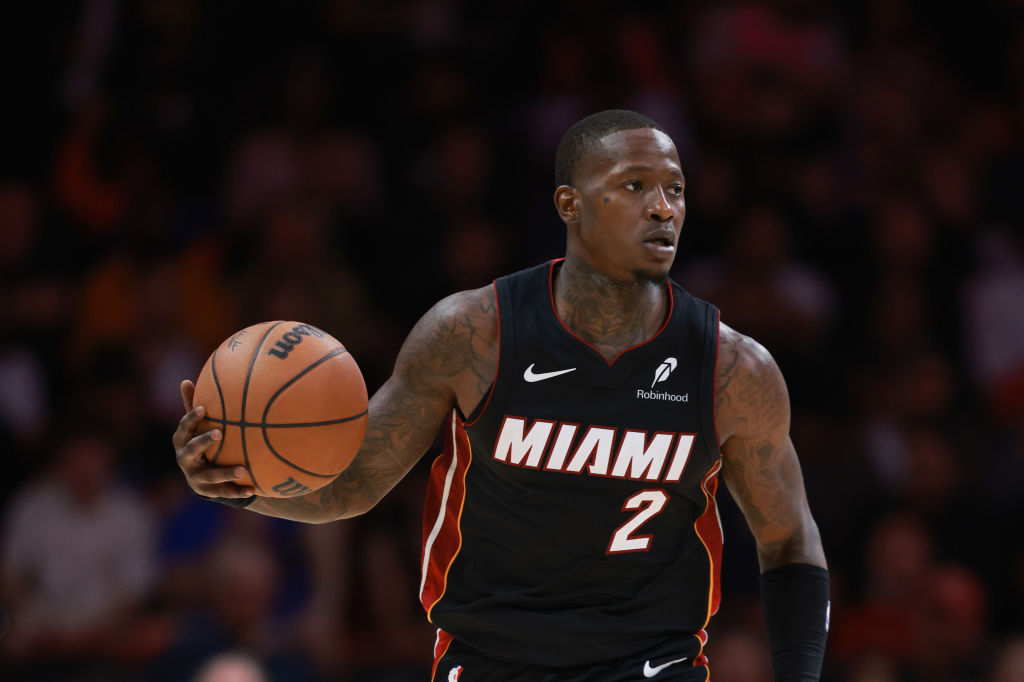
Miami Heat’s Terry Rozier Faces Sports Gambling Charges: A Deep Dive
Miami Heat guard Terry Rozier finds himself embroiled in a legal battle following sports gambling charges that have sidelined him this season. His legal team is making a staunch case for dismissal, asserting that the government has overstepped by transforming a private dispute into federal allegations.
The Legal Context
In a recent motion to dismiss filed in court, Rozier’s lawyers argue that the government’s accusations—that he impeded sportsbooks’ ability to make informed wager decisions—contradict a U.S. Supreme Court ruling from 2023. This ruling has effectively narrowed the scope of the federal wire fraud statute, challenging the legal foundations of the charges against him.
The Allegations
Federal prosecutors claim that Rozier, 31, provided insider information to a friend regarding his early exit from a March 2023 game, which was purportedly due to injury. This friend, Deniro “Niro” Laster, is also facing charges for allegedly disseminating this non-public information to other bettors. They reportedly placed wagers exceeding $250,000 based on the insider tip, thus raising concerns about the integrity of sports betting practices.
Misinterpretation of Insider Betting
Rozier’s legal team points out that the government has misclassified the situation, referring to it as “insider betting” and “rigging” of professional basketball games. They contend that the indictment reflects a less egregious scenario: certain bettors allegedly violated sportsbooks’ terms of service by wagering on non-public information and engaging in “straw betting.” This distinction is critical, as it highlights that no actual manipulation of the game occurred.
Injury Reports and Transparency
At the time of the incident, Rozier was a player for the Charlotte Hornets. His early exit from the game against the New Orleans Pelicans was not noted on the official injury report and was not disclosed publicly or to the sportsbooks. This lack of transparency in injury reporting has fueled discussions about how this situation ties into broader issues of gambling integrity within the NBA.
Implications of Supreme Court Rulings
The motion to dismiss also invokes the Supreme Court’s decision in United States v. Ciminelli, arguing that federal prosecutors lack the authority to pursue crimes based solely on alleged contractual violations related to economic decision-making. Rozier’s lawyers emphasize that the responsibility of enforcing betting regulations lies at the state level, not federally.
The Nature of the Charges
Rozier has pleaded not guilty to charges of wire fraud conspiracy and money laundering conspiracy. He was released on a $3 million bond and is scheduled for a hearing with U.S. District Judge LaShann DeArcy Hall. Notably, the charges against him were part of a larger crackdown involving over 30 individuals associated with various gambling operations, illustrating the expansive nature of the investigation.
Career at Stake
With a decade-long NBA career—and earnings totaling approximately $160 million—Rozier’s situation has generated considerable concern not just for him personally, but also for the reputational implications it could have on the league itself. He was originally drafted by the Boston Celtics in 2015 after a successful stint at the University of Louisville and was recently traded to the Heat from the Hornets.
The Specific Game Incident
In the March game in question, Rozier played only 9 minutes and 36 seconds before citing a foot issue as the reason for his departure. This injury has been corroborated by multiple witnesses and medical professionals, effectively countering claims that he was fabricating the injury to leverage a gambling advantage.
The Defense’s Position
Rozier’s defense argues that nothing in the indictment suggests he ever placed any bets or was even aware that Laster intended to profit from the information by selling it to others. They maintain that Rozier’s actions did not constitute wrongdoing and that he simply suffered from an injury, which creates a critical angle in his defense strategy.
This ongoing case not only highlights the complexities surrounding modern sports gambling but also raises pertinent questions about the legal landscape and the potential for overreach in prosecuting athletes involved in such disputes.