


US-Venezuela Relations: A Turning Point After Military Operations
Almost a week after a high-stakes US military operation in Venezuela, a significant shift is unfolding in diplomatic relations between the two countries. On Friday, a delegation of US diplomats and security personnel made their way to Caracas, marking the first step towards potentially restoring operations in the country. This visit comes after a prolonged period of tension, with the US State Department confirming the trip aimed at conducting an “initial assessment for a possible gradual resumption of operations.”
Historical Context: The Diplomatic Breakdown
To fully appreciate the current situation, it’s essential to understand the historical backdrop. Relations between Washington and Caracas soured dramatically in 2019 when the US withdrew its diplomatic staff and closed its embassy. This action was partly a response to Venezuelan President Nicolás Maduro’s decision to sever diplomatic ties with the United States.
The US had taken a vocal stance against Maduro, supporting his political rival, Juan Guaidó, in his bid to claim the presidency. Furthermore, Maduro’s controversial re-election in 2018 was met with widespread international criticism, leading many countries to question the legitimacy of his leadership.
The Recent Military Operation
The recent military operation has raised eyebrows and intensified the already fraught atmosphere. Reports suggest that US special forces conducted a mission that resulted in the capture of Maduro and his wife, Cilia Flores. This operation has been framed as part of broader efforts to combat alleged drug trafficking networks linked to the Venezuelan government.
Subsequent to their capture, both Maduro and Flores were transported to the United States, where they now face serious drug charges. During their initial court appearance, Maduro pleaded not guilty, setting the stage for an arduous legal battle ahead.
The Diplomatic Delegation’s Goals
The US delegation’s visit to Venezuela represents a tentative step toward normalizing ties. Sources indicate that the team aims to assess the feasibility of reopening the US embassy and resuming diplomatic functions that were halted years ago. Given the complexity of the current situation, this assessment could have significant implications for both nations.
It’s important to note that the US interim diplomatic representation had been operating from Bogotá, Colombia, since the embassy’s closure. This relocation emphasized the deepening divide between the two countries, further complicating interactions and negotiations.
Public Sentiment and Political Reactions
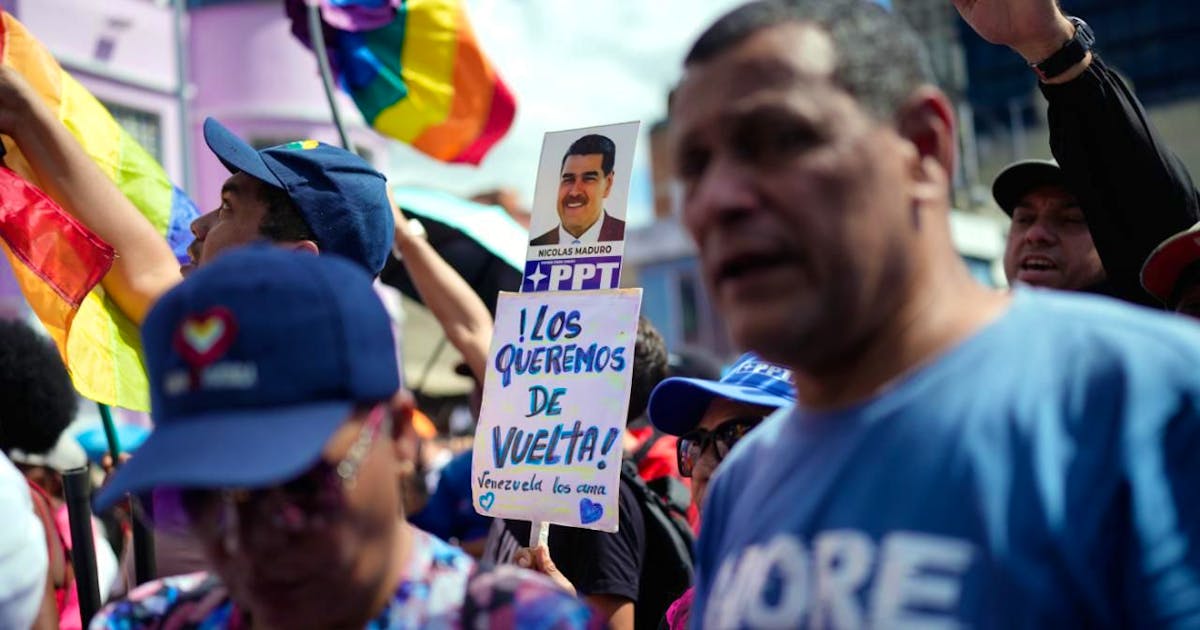
In Venezuela, the public reaction has been mixed. Government supporters have rallied against the US actions, framing them as a violation of national sovereignty. Images of supporters demanding the release of Maduro, as seen in the featured image, illustrate the fervor among those who believe in the current regime, despite its controversies and challenges.
Conversely, opposition figures and some segments of the population may view US involvement as a necessary intervention in the face of what they consider oppressive governance. The polarity in public sentiment adds another layer of complexity to the challenges facing both the Venezuelan government and the returning US delegation.
Looking Ahead
As the political landscape continues to evolve, the eyes of the international community are fixed on Venezuela. The potential gradual resumption of US operations could pave the way for renewed dialogue or, conversely, escalate tensions further if diplomatic efforts falter.
This unfolding narrative illustrates the intricate web of local and international politics, with consequences that will likely ripple through Latin America and beyond. The developments in Caracas will serve as a litmus test for future US foreign policy in the region and for the Maduro administration as it navigates its precarious standing both domestically and internationally.