


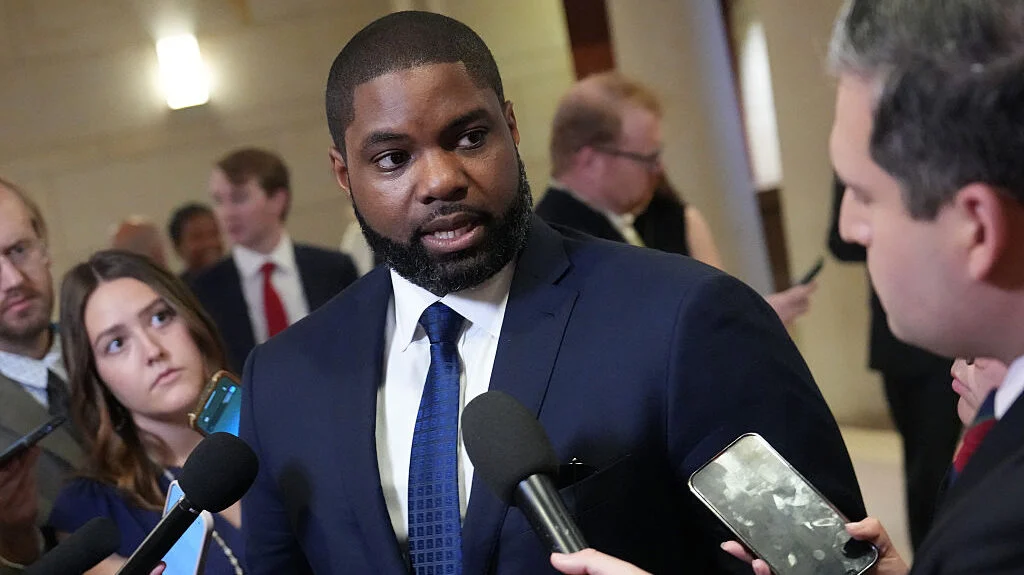
Racial Attacks in Florida’s Gubernatorial Race: A Closer Look at Byron Donalds
U.S. Representative Byron Donalds is currently navigating a turbulent political landscape as he vies for the Florida gubernatorial seat. Recently, his opponent in the Republican primary, James Fishback, aimed a provocative and racially charged attack at Donalds in a social media post. This incident shines a light on the underlying tensions in Florida’s political environment.
Fishback’s Controversial Remarks
In a post on X (formerly Twitter), Fishback not only mispronounced Donalds’ name as “By’rone” but also made the alarming claim that Donalds, who has the endorsement of former President Donald Trump, would turn Florida into a “Section 8 ghetto.” This inflammatory remark not only misrepresents Donalds’ stance and capabilities but also evokes racial stereotypes about low-income housing and what it represents in societal terms.
The Significance of Language in Politics
Fishback’s strategic choice to mispronounce Donalds’ name is notable as it seeks to diminish his identity and, by extension, his political credibility. Linguistic misrepresentation can often serve as a subtle tool for marginalization. The term “mog,” mentioned by Fishback in reference to Donalds, means to outclass someone in a humorous context. However, paired with his derogatory comment, it becomes part of a more troubling narrative aimed at undermining a fellow candidate by leveraging racial and socioeconomic stereotypes.
Reactions to the Attack
The response to Fishback’s post was swift. Rev. Jordan Wells, a pro-MAGA Black pastor, vocally condemned the remarks as racist, emphasizing, “He will never win. He ended his hopes with this. Trump nor DeSantis are racist or will support this type of behavior.” This highlights a significant aspect of the Republican base’s response to intra-party attacks, particularly those that leverage racism. The pushback indicates a call for unity and a rejection of divisive tactics.
Polling Dynamics and Political Strategy
Donald’s campaign finds itself in a strong position according to recent internal polling data. Reports suggest that Donalds has a commanding lead among Republican primary voters, especially once they are informed of his endorsement by Trump. The Tallahassee Democrat cites that when voters learn of Trump’s backing, Donalds receives a staggering 76% support, skyrocketing from an initial 47% against his main opponents, former Florida House Speaker Paul Renner and Fishback.
Trump’s Endorsement and Its Implications
In early 2025, Trump publicly expressed his enthusiasm for Donalds’ potential run. His endorsement emphasized Donalds’ qualities and asserted that he would function as a strong ally in advancing the America First Agenda. This kind of prominent backing not only elevates Donalds’ status within the party but also connects him to the larger political movements that resonate with many Florida voters.
Cultural Context and Historical Significance
If Donalds secures victory in the primary and eventual general elections, he stands to make history as Florida’s first Black governor. This potential milestone adds a layer of complexity to the current race, setting expectations for representation and inclusivity in Florida’s political landscape. The stakes are high not just for Donalds but for the narrative of Black representation within the Republican Party.
Upcoming Challenges
As the primary election approaches on August 18, the political landscape will likely continue to evolve, particularly as candidates react to each other’s tactics and the sentiments of their voter bases. Donalds’ campaign strategy needs to be both resilient to personal attacks and responsive to the broader issues of race and representation within Florida and beyond. The upcoming months will test the candidates’ abilities to navigate these contentious waters and ultimately shape the future of governance in Florida.