


Black Americans Harmed When ICE Can’t Do Its Job
The current civil unrest surrounding Immigration and Customs Enforcement (ICE) reflects a broader societal challenge; many American citizens are voicing their concerns about law enforcement’s ability to adequately uphold immigration laws. This dynamic signals a disconcerting message: that lawlessness and unaccountability might be tolerated. Understanding the implications of this scenario, especially for Black Americans, is crucial to fostering informed dialogue.
The Impact of Immigration Policy on Minority Communities
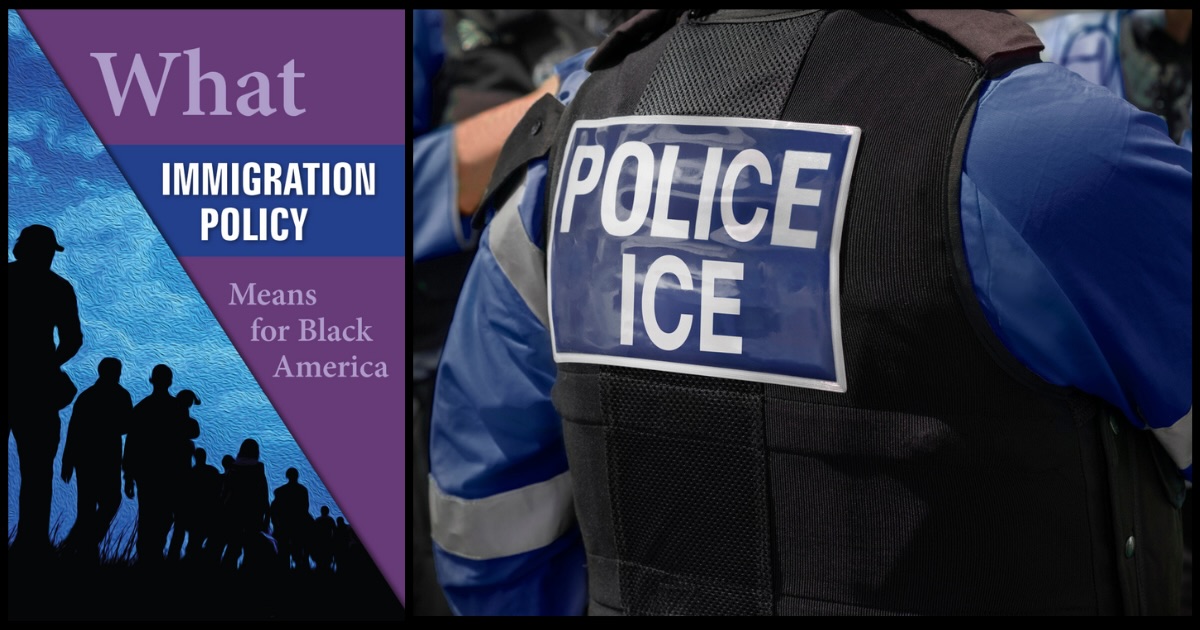
Project 21, a black leadership network, has been vocal about the need for fair immigration policies. The organization emphasizes that such policies are not merely about legality but about the socioeconomic realities that impact minority communities. Through their monograph, “What Immigration Policy Means for Black America,” Project 21 highlights how open-border policies disproportionately disadvantage those living in urban areas, primarily affecting Black Americans.
Dr. Linda Lee Tarver, a Project 21 ambassador, articulates that public discourse often misrepresents immigration enforcement as intrinsically hostile. She underscores that this framing neglects the tangible impacts on Black communities, which have historically supported legal immigration as a means to uphold fairness and public order.
The Strain on Economic Opportunities
Dr. Tino Smith, another Project 21 ambassador, reiterates that immigration policy is not an abstract debate; it has direct consequences for economic stability, labor markets, and community resources. He points out that weak immigration enforcement leads to oversaturated labor markets, which invariably slows wage growth and heightens job competition. This is particularly poignant for Black working families striving for upward mobility.
For Dr. Smith, effective immigration policy is synonymous with lawful order and protection for economic prospects, particularly for historically disadvantaged communities. By ensuring enforcement, the policies reinforce the rule of law, an essential principle that supports civil rights and economic opportunities.
Concerns Over Political Manipulation
Dr. Emery McClendon emphasizes the political dimensions of immigration discussions. He suggests that when immigration policies are manipulated to benefit specific political agendas, it often comes at the expense of Black Americans. McClendon warns that uncontrolled immigration can lead to a loss of tax revenue and increased competition for jobs within minority communities.
The absence of accountability for those obstructing ICE affects public safety as well. When unlawful actions are tolerated, it sends a message that such behavior is acceptable, which may exacerbate tensions and underline the vulnerabilities faced by communities most impacted.
Historical Context and Ongoing Struggles
Dr. April Chapman points towards a historical narrative that often intersects with today’s immigration debates. She argues that the implications of illegal immigration can destabilize communities and mislead public perception. Chapman contends that the idea of supporting lawlessness due to historical injustices oversimplifies complex issues that continue to affect Black Americans.
Her perspective is that unchecked immigration suppresses wages, undermines public safety, and results in communities bearing the brunt of careless political experiments. As the discourse surrounding immigration evolves, Black Americans are becoming more discerning, recognizing when narratives attempt to manipulate emotions for political gain.
A Call for Accountability and Clarity
Dr. P. Rae Easley invokes a powerful historical reminder from Frederick Douglass, illustrating that the challenges faced by Black Americans due to immigration are not new. Douglass’ insight underscores a long-standing struggle against economic disenfranchisement.
Easley argues that the fight against ICE is not just a stance against law enforcement but a manifestation of deeper issues that resonate within the Black community. He believes that lawful immigration enforcement is essential for alleviating financial pressures faced by these communities. The assertion that society is heading towards a failed state because of lax immigration policies resonates strongly among Project 21 advocates.
Political Accountability in Immigration Discussions
Dr. Kendall Qualls shifts the focus towards political responsibility, particularly in relation to recent presidential administrations. He asserts that the challenges posed by illegal immigration are symptomatic of broader failures in policy-making, rather than an inherent issue with ICE itself.
Qualls positions this narrative within the context of upcoming elections, suggesting that fixing these immigration issues is essential for restoring economic stability, especially for Black Americans who are navigating an increasingly competitive labor market.
By delving into the multifaceted realities surrounding immigration policy, the Project 21 ambassadors present a cohesive argument: strong, fair immigration enforcement is not merely a bureaucratic responsibility; it is vital for the socioeconomic well-being of Black Americans and the integrity of the broader society. This ongoing dialogue invites all stakeholders to reevaluate the narratives that shape public perceptions and policies regarding immigration in America.