


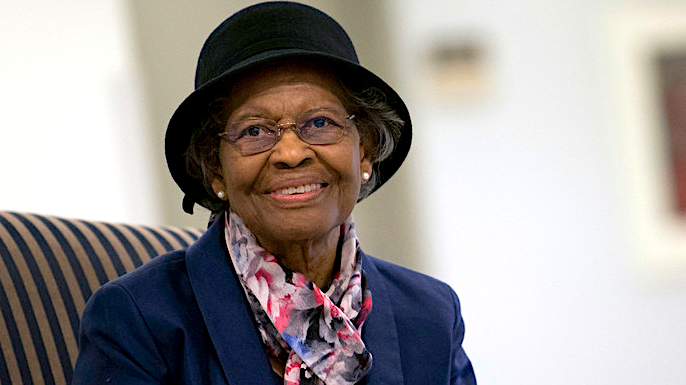
The Unsung Hero Behind GPS: Dr. Gladys Mae West
By Chaffin Mitchell, AccuWeather Staff Writer
Introduction to GPS Technology
Billions of people use GPS technology every day, yet many remain unaware of the fascinating figures behind its creation. Central to this advancement is Dr. Gladys Mae West, a pioneering mathematician whose contributions have made navigating our world far easier than ever before.
The Global Positioning System (GPS) was initially developed for military applications; today, it plays a crucial role in civilian life, influencing everything from navigation apps on smartphones to the systems that guide aircraft and ships. Dr. West, one of the key developers of GPS, is a remarkable figure whose innovative mind helped shape the technology we often take for granted.
Early Life and Motivation
Born and raised in Dinwiddie County, just south of Richmond, Virginia, West grew up in a farming family earning their living through hard labor. Motivated to escape the arduous life of sun-soaked farming, she dedicated herself to her education. “I told myself I did not like being out in the sun working sunrise to sunset,” she recalled in an interview.
West’s early educational experiences were marked by segregation; she attended a “separate school” for Black students, which often received outdated books and supplies. Nonetheless, she credits this challenging background for instilling a strong work ethic in her. “You know you are behind the eight ball to start with so you had to work harder,” she reflected.
Academic Pursuits and Early Career
When it was time to pursue higher education, West followed the advice of mentors who recognized her aptitude for mathematics. She majored in math, finding satisfaction in setting and achieving new goals. “I tend to think for myself,” West remarked. “I’m a little impatient with others who don’t think the way I do.”
In 1956, West joined the U.S. government’s Naval Proving Ground in Dahlgren, Virginia, becoming one of only a few Black employees and only the second Black woman at the base. There, she met Ira West, a fellow mathematician who would later become her husband.
A Trailblazer in Computing
Initially working as a mathematician verifying tables and computing data by hand, West soon transitioned to programming. The arrival of a new computer at the Naval Surface Warfare Center Dahlgren Division revolutionized her work. “That was the biggest computer in the Navy at the time… it was so fast,” she recalled, full of enthusiasm.
West’s programming skills became invaluable as she managed large-scale computers designed to process satellite data, a field that was still in its embryonic stages. This significant shift not only advanced her career but also laid the groundwork for GPS technologies.
The Birth of GPS
West’s role in developing GPS centered around ensuring the accuracy of satellite positioning. She expertly crafted algorithms that would verify satellite data, checking the precise location of these orbiting bodies by analyzing their geoid heights, or surface elevations. “I feel like I made a real good contribution to the accuracy of the Global Positioning System,” she stated in a 2011 interview.
The pioneering work she did in connection with satellite data verification and computational algorithms created a robust foundation upon which the GPS we rely on today would eventually be built.
Life Beyond Retirement
After 42 years at Dahlgren, West retired in 1998, but her journey was far from over. Just months after retirement, she suffered a stroke that severely impacted her health, affecting her hearing, vision, and mobility. Yet, her resilient spirit led her to pursue further education. “You can’t stay in the bed,” were the words that motivated her to aim for a Ph.D.
In a remarkable turn of events, West earned her doctorate at Virginia Tech at the age of 88 and was inducted into the Air Force Space and Missile Hall of Fame, reflecting her significant contributions to the field.
A Legacy of Innovation
Dr. Gladys Mae West’s journey from the fields of Virginia to becoming a cornerstone of GPS technology is a testament to resilience, intellect, and innovation. As GPS continues influencing our daily lives in myriad ways, her legacy serves as an inspiring reminder of the vital role women have played in shaping modern technology.