


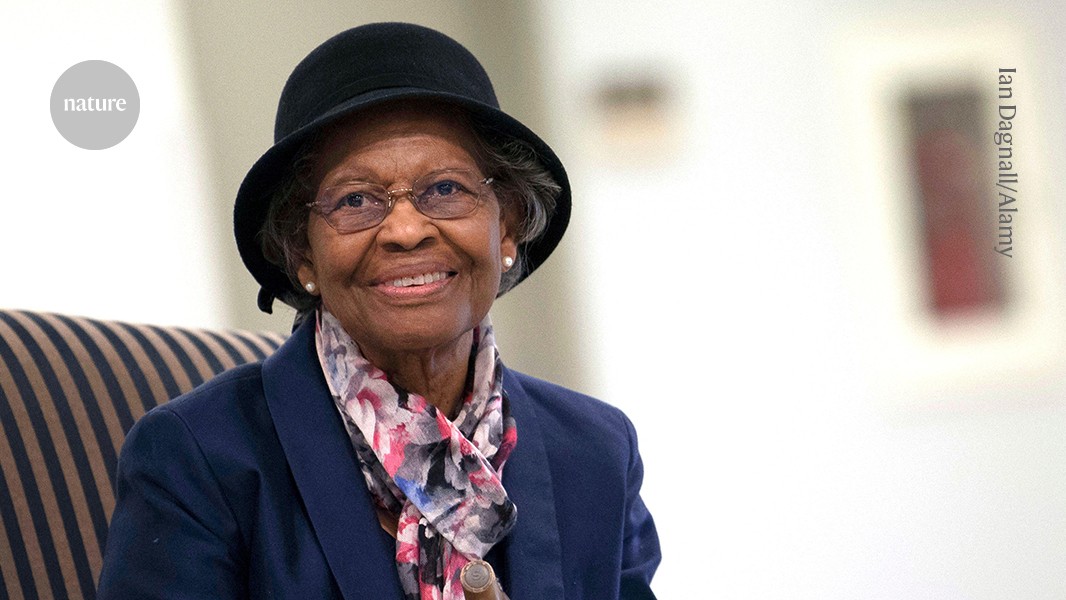
Gladys Mae West: Pioneering Mathematician and GPS Innovator
Early Life and Education
Gladys Mae West was born in a farming family in rural Virginia, a place where opportunities were limited, especially for African Americans due to the oppressive Jim Crow laws. Despite facing systemic barriers, West distinguished herself academically. Instead of attending well-funded schools, she found herself in a vocational-training institution. This challenge did not deter her spirit; she worked diligently and earned a scholarship to Virginia State College, a historically Black university. Here, she was one of the few women in the mathematics program and graduated with a master’s degree in 1955.
Breaking Barriers in the Workforce
West’s academic achievements led her to a position at the Naval Proving Ground in Dahlgren, Virginia. This was a groundbreaking step, as she was one of the only two Black women in the facility and amongst a total of just four Black professionals. The workplace environment was fraught with challenges, compounded by the realities of discrimination. West often felt isolated, as conversations would fall silent when she entered the room, highlighting the racial tensions and biases present.
She navigated not only gender discrimination but also the social ramifications of her race. Segregation laws prevented her from traveling with her colleagues, resulting in missed opportunities and professional isolation. West knew she had to tread carefully, often suppressing her ideas to avoid rocking the boat. This dual-layered struggle made her achievements even more noteworthy.
Informal Impact and Military Research
Despite the secrecy surrounding military projects, West’s contributions were significant. Many tasks were shrouded in confidentiality, limiting her understanding of the broader impact of her work. Yet, she embarked on research that would lay the groundwork for her future success. One pivotal moment came in 1962 when she worked on Project 29V, tasked with calculating Pluto’s orbit concerning Neptune.
Her role involved programming a computer to carry out over five billion calculations, utilizing an unprecedented amount of machine time. The project culminated in 1964, where the team confirmed the regularity of Pluto’s orbit, a feat that earned them a merit award for group achievement.
Advancements in Earth Science
West’s career progressed as she moved to the Defense Mapping Agency at Dahlgren, where she managed the SEASAT radar altimetry project. This innovative system was crucial for collecting and processing data regarding Earth’s environmental and oceanographic features. The SEASAT satellite’s operation from June to October 1978 marked monumental advancements in measuring sea levels and the topography of the Earth’s oceans, serving as an essential tool for environmental research.
Following SEASAT’s success, West and her team utilized data from the GEOSAT satellite launched in 1985. They created a geodetic Earth model with improved accuracy by analyzing gravitational and tidal variations using an intimidating IBM 7030 Stretch supercomputer. This robust machine filled the first floor of a house, showcasing the remarkable technological capabilities of the time.
Legacy and Influence
Gladys Mae West’s contributions extend beyond the technical achievements in mathematics and computer science; she serves as an inspiring figure, particularly for women and minorities in STEM. Her life and career highlight the importance of perseverance and innovation against significant odds. West’s work not only shaped the technological landscape of her time but also laid critical groundwork for the development of the Global Positioning System (GPS), which has revolutionized navigation and data processing in the modern world.
Her story is emblematic of the many women of her generation who transformed the mid-twentieth-century technology sector during the Cold War, proving that barriers can be overcome through dedication and resilience.