


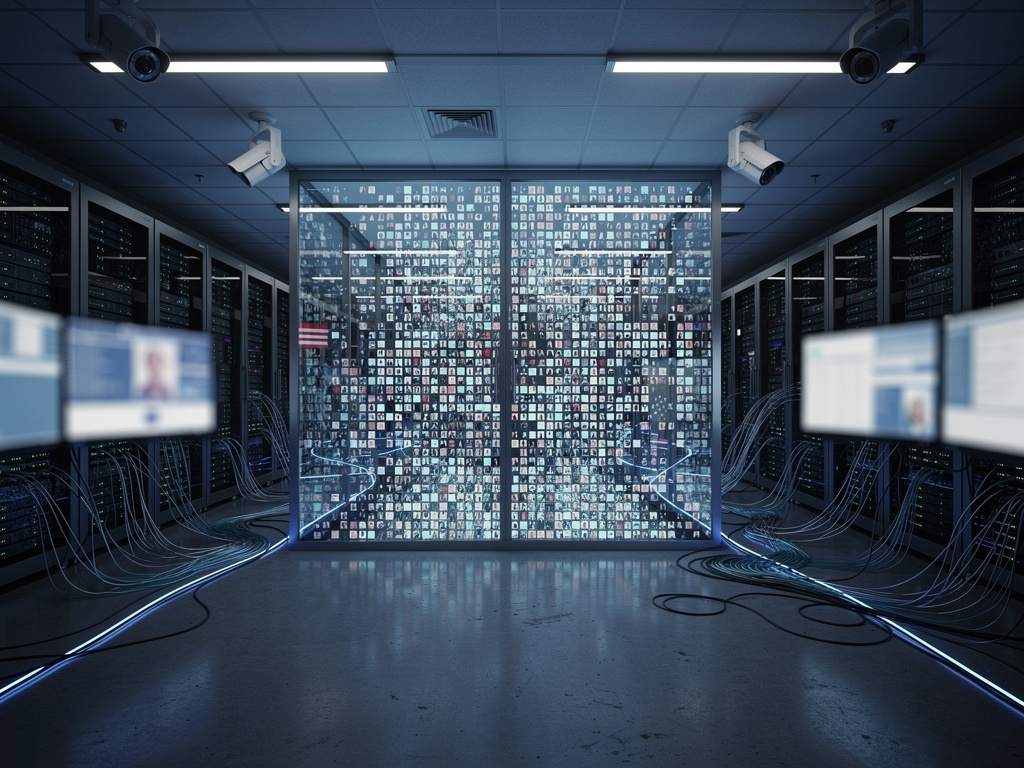
The Hidden Surveillance Network: How ICE Transformed Driver’s License Databases
Introduction to Digital Surveillance
In an era where technology intertwines with daily life, U.S. Immigration and Customs Enforcement (ICE) has initiated a controversial practice that raises fundamental concerns about privacy and civil liberties. The agency has accessed state Driver’s License databases without warrants, creating a massive facial recognition system that effectively places millions of adults in a digital line-up. This reliance on a complex web of state agreements for federal surveillance has sparked a debate on consent and the expansive reach of law enforcement in our increasingly digital world.
The Mechanics of the System
At the core of this surveillance mechanism lies a straightforward yet alarming exchange: ICE requests access to the Department of Motor Vehicles (DMV) data from willing states. By analyzing high-quality driver photos, ICE transforms these identification records into a formidable tool for identifying suspects. Unlike less reliable methods used by private companies like Clearview AI, ICE draws from a rich reservoir of government-issued IDs, significantly enhancing the accuracy of facial recognition searches.
Research from the Center on Privacy & Technology at Georgetown Law reveals that at least a dozen states have acquiesced to federal requests, often bypassing public debate or legislative scrutiny. This alarming trend diverges from traditional law enforcement practices, where a driver’s license was a civil contract for operating a vehicle. Now, for many, it unwittingly serves as a gateway into a federal biometric database.
The Impact on Vulnerable Populations
The ramifications of this system are especially dire for undocumented immigrants. In states that issue licenses regardless of immigration status, individuals may soon discover that these very records are being exploited by ICE to locate and apprehend them. Civil liberties advocates argue that this policy reflects an overreach of government power, creating a digital dragnet where innocent individuals become susceptible to surveillance merely by registering their vehicles or obtaining necessary identification.
A System Built in the Shadows
This sprawling surveillance network wasn’t erected overnight; it evolved through incremental agreements over years. Documents obtained by Georgetown Law showcase ICE praising access to state DMV photos as a “gold mine” for investigative leads. This access underlines the dual purpose of the technology: it’s not just for immigration enforcement but also tied to broader federal law enforcement strategies.
The scale of ICE’s operation is staggering. States such as Utah, Vermont, and Washington were among the first to grant access, with ICE submitting over 1,600 facial recognition requests in Utah alone from 2015 to 2017. While the agency claims to focus on individuals with criminal backgrounds or public safety threats, critics highlight that its broad scope inevitably encompasses law-abiding citizens as well.
Transparency and Accountability Issues
What complicates matters further is the lack of transparency surrounding the program. State publics remain largely uninformed about the frequency and nature of these searches. This obscurity extends to the accuracy of the technology itself and raises critical questions about mission creep—where a tool designed for a specific purpose expands into broader applications that were never publicly debated.
Facilitating this covert operation are technology vendors and data brokers, such as Thomson Reuters, which provides ICE with databases that aggregate huge volumes of information. The CLEAR database, combined with facial recognition software, allows for comprehensive profiling that operates largely outside public scrutiny.
State Responses: Compliance versus Resistance
State responses to these developments are strikingly uneven. While some states have eagerly participated, others have resisted vehemently. In reaction to public outcry, states like Washington and Utah have suspended ICE’s access, and several others, including Oregon and New Jersey, have passed laws prohibiting use of DMV data for facial recognition searches without a warrant.
Advocates from various civil liberties organizations, including the ACLU, assert that these searches violate the Fourth Amendment’s protections against unreasonable searches. They argue that such extensive surveillance without probable cause mirrors mass, suspicionless searches of the general populace, chill engagement with public institutions, and deter vulnerable groups from seeking essential services.
The Tension of Federalism
This situation underscores a growing tension within U.S. federalism. State lawmakers grapple with the dilemma of whether to align themselves with federal immigration enforcement or uphold the privacy rights of their constituents. Without a comprehensive federal privacy law governing the use of facial recognition technology, states craft their own regulations, resulting in a patchwork of privacy protections that can differ radically from one state to another.
Concerns Over Algorithm Bias
The implications of this surveillance system extend beyond civil rights dilemmas to issues of accuracy and bias inherent in facial recognition technologies. Studies—including a significant analysis from the National Institute of Standards and Technology (NIST)—demonstrate that such systems tend to misidentify women, people of color, and the elderly at higher rates. For instance, the NIST report indicated that Asian and African American individuals were up to 100 times more likely to be misidentified than their white counterparts.
Such inaccuracies pose severe risks when a false identification leads to an investigation or even deportation. Those misidentified might never realize that facial recognition algorithms triggered law enforcement interest, and there is often no straightforward way for them to challenge erroneous matches or correct their records.
Conclusion: The Ongoing Debate
As ICE continues to utilize this potent technology, the discourse surrounding its implications intensifies. While bipartisan efforts to introduce regulations governing facial recognition technologies are underway in Congress, progress remains sluggish. The struggle over the use of DMV photos reflects broader societal questions about surveillance, privacy, and the future of civil liberties in America. As citizens navigate the complexities of becoming increasingly monitored, there remains a critical need for dialogue on maintaining the integrity of everyday citizens’ rights in an age of persistent oversight.