


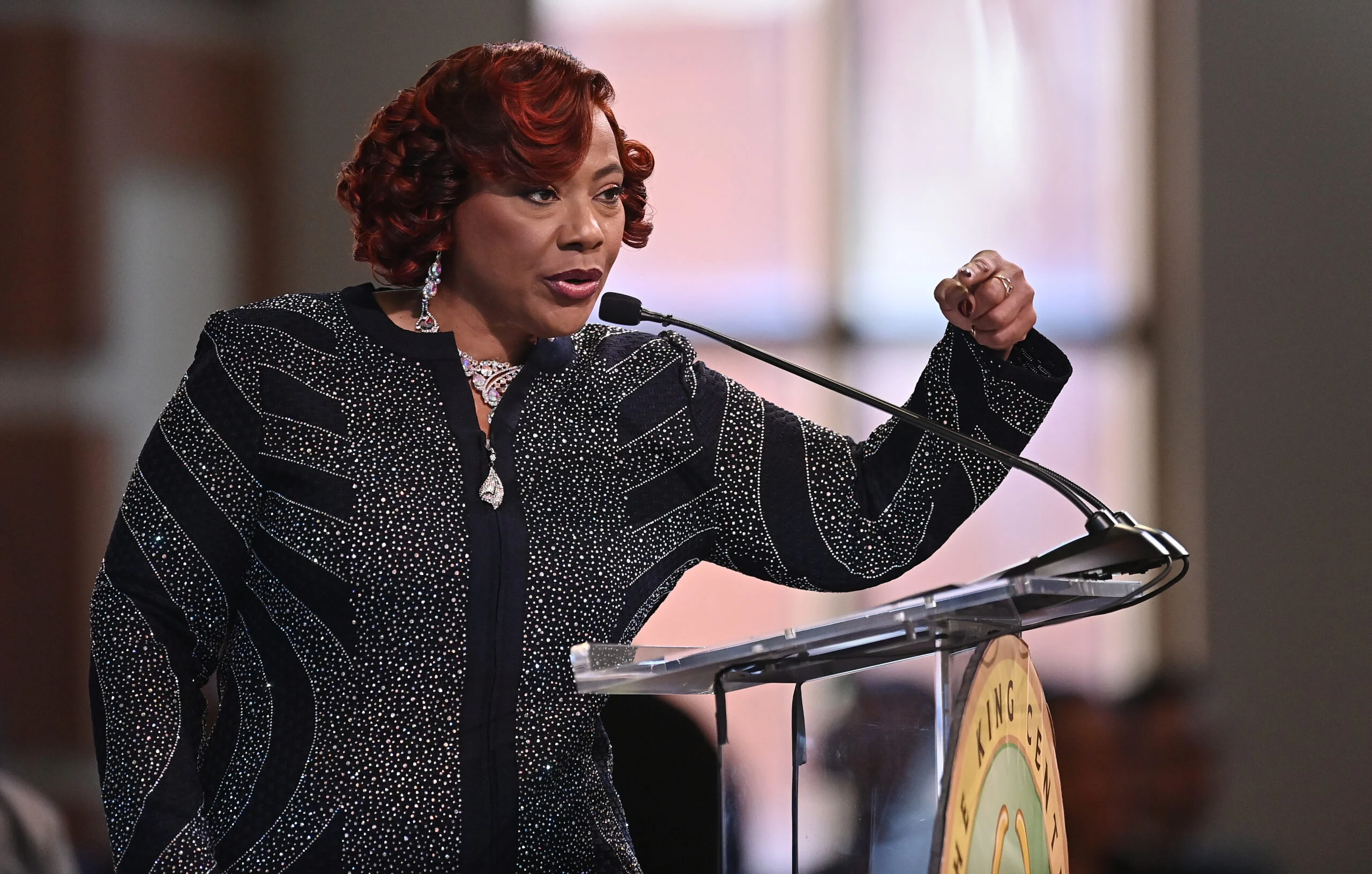
Continuing the Legacy: Bernice King’s Advocacy Against ICE Violence
As the daughter of the renowned civil rights leader Martin Luther King Jr., Bernice King embodies the spirit and commitment of her father’s legacy. Known for her powerful voice on social justice issues, she has not hesitated to engage in contemporary complexities, particularly those revolving around the actions of Immigration and Customs Enforcement (ICE) and their impact on communities.
The Catalyst: A Tragic Event in Minnesota
The recent outrage in Minnesota, marked by protests against the increased presence of border control agents, has gained nationwide attention. Central to this unrest is the tragic killing of 37-year-old Alex Pretti, an ICU nurse in Minneapolis, by a Border Patrol agent. This event has sparked significant community activism, compelling voices like Bernice King’s to step forward in solidarity.
In response to the event, King took to social media, expressing her condolences and outrage. “Alex Pretti was a Minneapolis ICU nurse who spent his days caring for and saving others. Today, he was shot and killed by a Border Patrol Agent. Alex’s life was extinguished by state violence. We must tell the truth about what is happening,” she stated.
A Call to Action Against State Violence
In her remarks, King highlighted the alarming trend of state violence, which she argues has become normalized in recent years. She described the current situation as a “moral crisis,” noting that “nonviolence demands more than outrage; it demands action.” By invoking her father’s wisdom, she urged the public to remember that in the face of evil, good people must take decisive action.
Quoting Dr. King, she reminds us that “when evil men plot, good men must plan. When evil men burn and bomb, good men must build and bind.” Her message is clear: changing systemic issues requires an urgent reevaluation of laws and policies, particularly those surrounding immigration enforcement.
Advocating for Legislative Reform
Bernice King doesn’t just express concern; she calls for tangible legislative changes. She insists that Congress must dismantle ICE and enact humane immigration policies that prioritize the dignity of Black and Brown immigrants. She stresses the importance of accountability, urging lawmakers to recognize their complicity when they choose silence in the face of violence: “The blood of those who are being kidnapped and unjustly killed by agents with impunity is not only on the hands of those who pull the trigger, but on every lawmaker and every court that has the power to intervene and chooses silence.”
The Bigger Picture: Bridging Communities
The outcry surrounding Alex Pretti’s death is just one part of a larger narrative of violence against marginalized communities. King’s activism points to a vital intersection: the struggles faced by immigrants and the historical context of police brutality against Black individuals. She asserts, “It is good that more people are awakening to the devastation of state and state-sanctioned violence. However, we should care about an injustice even before it is inflicted on us or on someone who looks like us.”
By linking these issues, King emphasizes that the fight for justice transcends racial and social lines. The ongoing challenges faced by immigrants reflect broader patterns of oppression that impact various communities across the United States.
A Broader Call for Justice
As the protests spread, the call for justice continues. Bernice King embodies a voice for not only immigrants but also for the historical injustices faced by Black individuals at the hands of law enforcement. She urges the public to remember that the list of lives lost to state-sanctioned violence extends beyond the immediate tragedies to include names that resonate with the civil rights movement: Breonna Taylor, Philando Castile, Trayvon Martin, and many more.
In her advocacy, King reminds us that the fight for justice is ongoing and that collective action is crucial. The urgency of her message reflects a deep understanding of the interconnectedness of struggles against systemic inequality, emphasizing that justice for one community is justice for all.
Through this lens, Bernice King continues her father’s legacy, inspiring new generations to stand up against violence and injustice in all forms.