


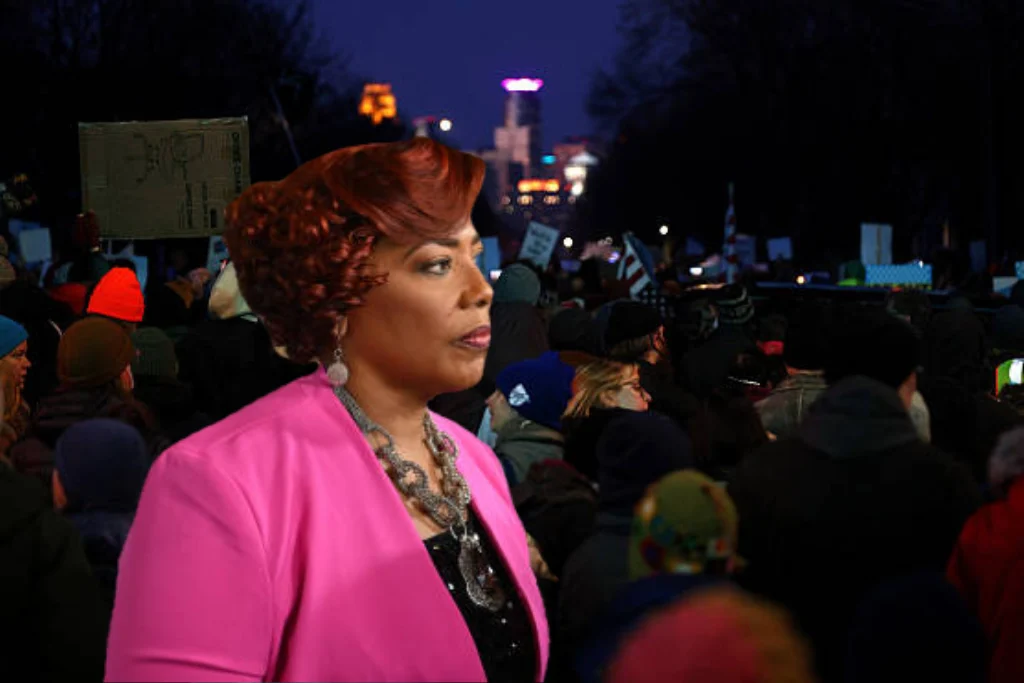
The Impact of ICE Violence: Dr. Bernice A. King’s Response to Tragedy
In a poignant and powerful statement, Dr. Bernice A. King has condemned the recent violent action taken by an Immigration and Customs Enforcement (ICE) agent in Minneapolis. The incident, which resulted in the tragic death of 37-year-old Renee Nicole Good, has sparked outrage and calls for accountability from community leaders and activists alike. Dr. King, the daughter of civil rights icons Martin Luther King Jr. and Coretta Scott King, has vocalized concerns over the increasing militarization of law enforcement agencies and how such actions undermine basic human dignity.
The Incident in Minneapolis
On a fateful day, Renee Nicole Good was shot and killed by an ICE agent during a confrontation in her vehicle. According to the Department of Homeland Security, the agent acted in self-defense, a claim that has been met with skepticism by local leaders. Minneapolis Mayor Jacob Frey passionately decried those assertions, labeling them as “bulls**t” in a press conference. Eyewitness video footage captured the tense moments leading up to the shooting, revealing the chaotic scene where officers demanded someone exit a Honda Pilot and subsequently fired shots as the vehicle moved.
The Broader Context of Violence
Good’s death is not an isolated incident. Since the initiation of aggressive immigration policies under the previous administration, at least five individuals have been killed by ICE agents. Just days before Good’s tragic fate, in a different incident, an off-duty ICE agent fatally shot 43-year-old Keith Porter in Los Angeles. These events raise serious questions about the roles and responsibilities of federal agents, especially in communities already fraught with tension.
Dr. King’s Reflection on Nonviolence
In her response to Good’s killing, Dr. Bernice A. King invoked her father’s commitment to nonviolence, emphasizing that the murder stands in stark opposition to the principles of dignity and justice. “Every life has dignity and that justice is love correcting everything that stands against love,” she stated, reinforcing the moral tenet that violence fundamentally contradicts the mission of love and community building.
King’s emphasis on the appropriation of law and order to justify lethal force highlights a critical discourse around societal values. For many, the current reality of increased federal force in urban centers fuels distrust and fear among residents, especially marginalized communities. “A system that deploys overwhelming force in our communities erodes trust, deepens fear, and diminishes our shared humanity,” she expressed in her statement.
The Role of Militarism in Society
In her continued critique of ICE’s activities, Dr. King articulated a broader understanding of systemic issues in the U.S. She referenced her father’s concept of the “Triple Evils,” namely Racism, Militarism, and Poverty, suggesting that these issues are not only interconnected but also reinforce one another. “Militarism is often used to enforce bigotry, racism, and other systemic violence,” she wrote, pointing to the ongoing struggles faced by many Americans.
This identification of militarism as a tool of oppression sheds light on the chilling effects of aggressive law enforcement tactics on vulnerable populations. The presence of ICE in communities often results in heightened fear and anxiety, making it challenging for individuals to seek help or report crimes.
A Call for Change
Dr. King’s statements serve as a rallying cry for those advocating for justice and reform within the immigration and law enforcement systems. By rejecting violence, whether overt or institutionalized, King emphasizes the need for a justice system that embodies compassion and accountability.
The dialogue surrounding ICE’s presence and the violent tactics employed by its agents raises critical questions about the future of immigrant rights, community safety, and the principles of justice that underpin American society. Dr. Bernice A. King’s stand against the murder of Renee Nicole Good exemplifies the ongoing fight for dignity, justice, and humanity in the face of violence.