


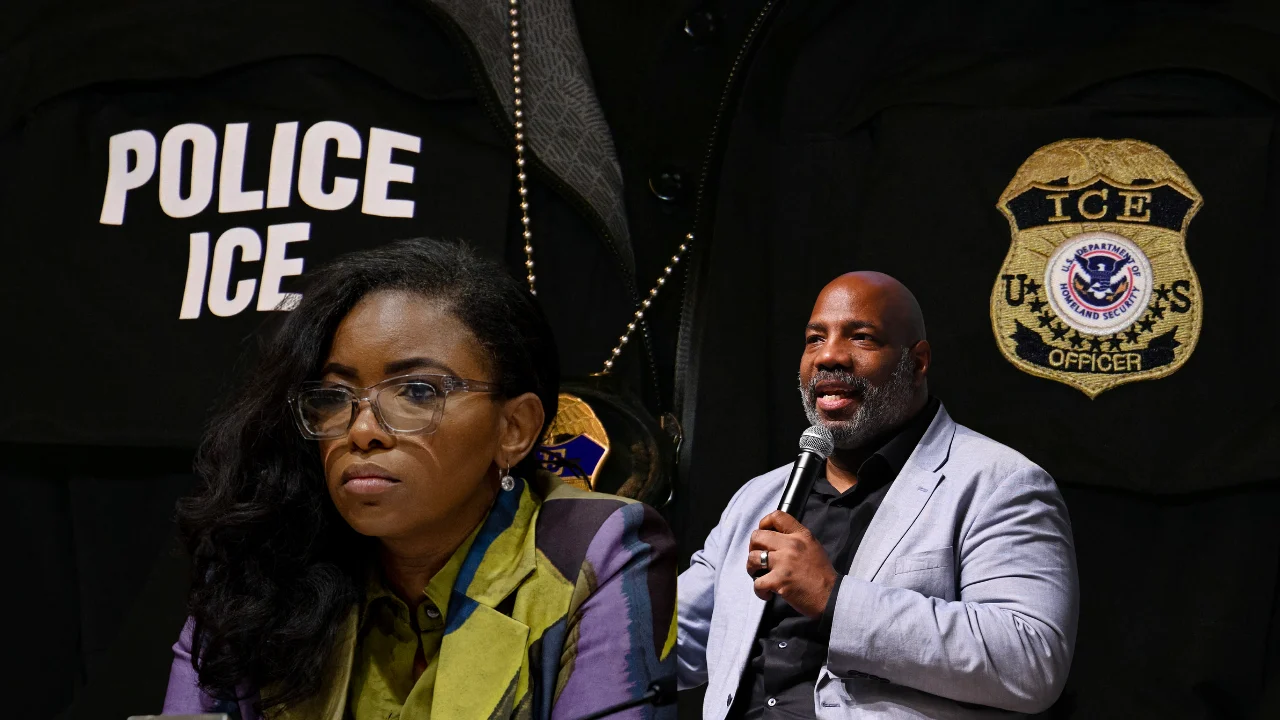
Texas Rep. Jasmine Crockett’s Bold Statements on Immigration and Justice
Texas Representative Jasmine Crockett recently stirred up significant discussion with her provocative remarks regarding immigration enforcement, the Supreme Court, and broader issues of social justice. Her comments, made during a field hearing in St. Paul, Minnesota, equated President Donald Trump to a “domestic abuser” and claimed that Immigration and Customs Enforcement (ICE) was executing tactics reminiscent of “Nazi raids.” Furthermore, she accused the Supreme Court of authorizing “modern-day slave patrols.”
ICE and Racial Profiling
Crockett’s criticisms stem from a Supreme Court ruling that allowed ICE agents to consider race as valid grounds for conducting immigration stops. She questioned the morality of a judicial system that legitimizes such actions, asking, “Whoever thought we would live in a country that progress looks like having the Supreme Court that says, ‘Yes, it is OK to kill somebody or listen to their accent and give permission to grab them?’” This statement challenges the very foundations of justice and equality, indicating a deep concern about the ramifications of systemic racism embedded within national policies.
As these legal justifications unfold, interactions between ICE agents and everyday citizens have escalated. This increase often results in highly publicized incidents, where families are torn apart and individuals are unjustly detained, fed by controversial policing practices. Critics argue that these actions evoke historical images of oppression, drawing parallels to oppressive regimes of the past.
Historical Context: Slave Patrols and Community Response
In discussing the contemporary implications of ICE’s practices, Jelani Cobb, Dean of the Columbia School of Journalism, offered insights on a recent episode of Stacey Abrams’ “Assembly Required” podcast. He recalled the public’s reaction to the presence of slave patrols in Northern states, noting that while opinions on slavery were divided, most people opposed their neighbors being yanked from their homes.
Cobb emphasized a similar sentiment today regarding ICE actions. Despite a spectrum of views on immigration policy, communities often unite against the inhumane treatment of their long-standing neighbors. “What will people be united on,” Cobb stated, “is Joe, or Brenda or Lisa, or a person who has been in their community for 10, 12, 15 years, being dragged out of their homes.” This highlights the profound emotional and ethical dimensions of immigration enforcement in local contexts.
Legal Actions Against ICE and Community Strain
Amidst these tensions, the state of Minnesota along with Minneapolis and St. Paul have taken legal action against the Department of Justice (DOJ) in response to the surge of ICE agents in the area. The lawsuit claims that the presence and tactics of ICE agents are inflicting harm on the community, culminating in tragic incidents such as the recent death of 37-year-old Renee Nicole Good.
Minnesota Attorney General Keith Ellison asserted that ICE’s operations are less about public safety and more about political retribution linked to the Trump Administration. “People are being racially profiled, harassed, terrorized, and assaulted,” he stated, capturing the distress felt across communities pressured by aggressive federal enforcement policies. The implications of ICE’s activities extend far beyond law enforcement; they disrupt daily life, forcing schools into lockdowns and closing businesses.
Disturbing Detentions and Misidentifications
An alarming incident further underscored the tension between ICE practices and community safety when a U.S. citizen, ChongLy Thao, was mistakenly detained by ICE under grave circumstances. Thao was held in freezing temperatures outside his home, wrongly identified as a suspect in serious criminal charges. This egregious error not only raises concerns about ICE’s operational protocols but also the human cost of such aggressive enforcement strategies.
The Broader Implications
The surge of ICE’s actions and the accompanying legal battles in Minnesota reflect a larger, nationwide conversation about the treatment of immigrants and the role of law enforcement in upholding or undermining community safety. As the dialogue evolves, the voices of representatives like Jasmine Crockett provide a critical perspective on the intersection of race, justice, and human rights. Their comments serve not only as a critique but also as a clarion call for a re-examination of societal values concerning immigration and the treatment of fellow human beings.