


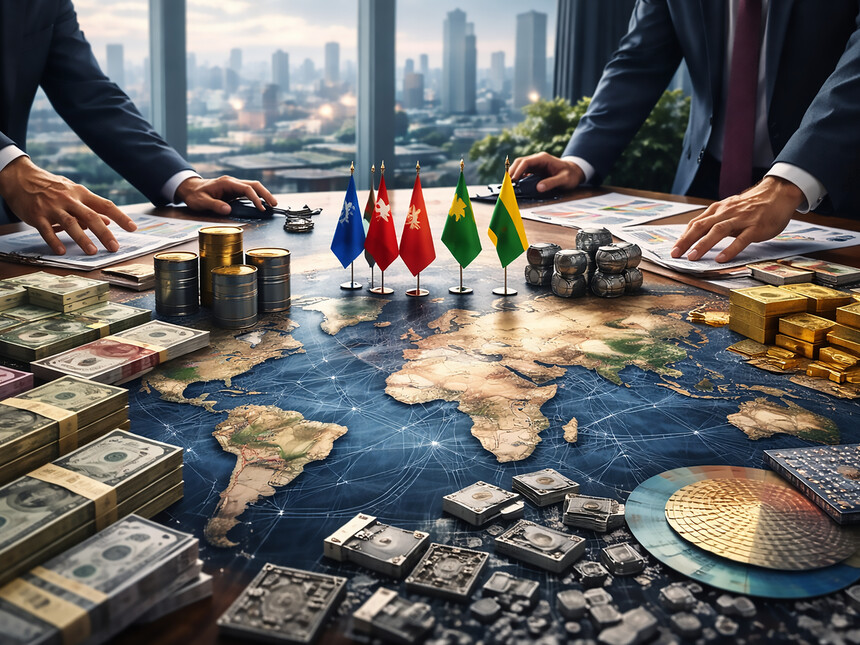
The Rise of BRICS++: A Challenge to US Hegemony
The formation of BRICS++ emerges as a strategic maneuver by Moscow and Beijing in response to a perceived encroachment by NATO and the EU into their dominions. Particularly significant was NATO’s expansion post-1997 and military interventions, such as the 1999 air war over Kosovo, which targeted their ally, Serbia. This coalition marks a concerted effort to counterbalance U.S. influence, fundamentally aiming to establish a “multipolar” global order that challenges the hegemony of American-led institutions, such as the IMF and G-7.
Shared Goals Amidst Differences
Despite the pronounced geostrategic, political, economic, and cultural differences among BRICS++ members, they coalesce around a common objective: asserting their interests against the perceived dominance of the United States and the G-7. However, a critical query lingers: Will the Chinese influence dominate BRICS++, fostering deeper polarization between the U.S. and China? Alternatively, could the coalition experience fragmentation? The role of India as a pivotal power becomes especially crucial as it may shift allegiance toward either the Russia-China axis or the U.S.-led alliance.
Historical Miscalculations: The Biden Misstep of 1997
Reflecting on the past, we note significant miscalibrations from U.S. policymakers. After the NATO-Russia Founding Act in May 1997 — supposed to foster cooperation — then-Senator Joe Biden addressed the Atlantic Council, dismissively forecasting that a strategic partnership between Russia and China was implausible. This perspective was rendered increasingly ironic just weeks after the signing of a declaration for a “multipolar world” by Boris Yeltsin and Jiang Zemin, amidst the evolving “Primakov doctrine” advocating for a strategic partnership among Russia, India, and China. Contrary to Biden’s assumptions, cooperation between Russia and China has flourished since, bolstered by structures such as the Shanghai Cooperation Organization (SCO) and the Eurasian Economic Union (EAEU).
The Evolving Sino-Russian Partnership
The evolution from the Shanghai Five to the SCO illustrates a growing alignment, particularly after NATO’s intervention in Kosovo, where both Russia and China felt pressured. Their 2001 treaty solidified a strategic partnership and provided a framework for collaboration, which further intensified post-2014, following Russia’s annexation of Crimea. As relations soured between Moscow and the West, economic ties between China and Russia deepened, setting the stage for their participation in BRICS.
BRICS Expansion: A Continental Coalition
BRICS, formed in response to the 2008 financial crisis, rapidly expanded its influence. During the 2022 summit, Russian President Putin proposed developing an alternative international reserve currency to challenge the dominance of the U.S. dollar. The inclusion of nations like Argentina and Saudi Arabia into BRICS during the 2023 summit marked a significant expansion of influence, with Xi Jinping advocating for an independent foreign policy shielded from external pressures.
By early 2025, BRICS+ had grown to 10 full members and 10 partner countries, representing nearly 44% of global GDP. This growing coalition’s influence poses a substantial challenge to the existing global economic order.
Response from the U.S.: Trump’s “BRICS is Dead”
In confrontational rhetoric, President-elect Trump interpreted the expansion of BRICS as a threat, demanding members forgo currency alternatives or face tariffs. His declaration of “BRICS is dead” implied a strategy aimed at isolating BRICS members by exploiting existing tensions within the group. However, this harsh stance risks miscalculating the potential for BRICS++ to solidify as a formidable counterweight against U.S. influence.
The Challenge of De-dollarization
A full-blown alternative currency isn’t necessary for BRICS++ to undermine dollar supremacy. Countries within the coalition have increasingly engaged in trade using national currencies, especially the Chinese renminbi (RMB). While the U.S. dollar dominates, ongoing Western sanctions against Russia may catalyze broader adoption of the RMB, fostering a gradual shift in currency dynamics.
Additionally, numerous nations, including Turkey and Mexico, are exploring BRICS+ membership, indicating a potential reconfiguration of the global economic landscape. Countries are not only increasing trade in local currencies but also exploring innovative financial mechanisms, such as gold-backed currencies, to further diminish the dollar’s role.
Internal Dynamics of Key Members
The dynamics within BRICS++ are complex.
-
Brazil: Under President Lula da Silva, Brazil has embraced BRICS and the push for de-dollarization, positioning itself advantageously in the new geopolitical landscape.
-
South Africa: Despite facing political pressures, South African businesses see the transition towards de-dollarization as a pathway to economic resilience, despite the transitional challenges involved.
-
Russia: The double-edged nature of sanctions has hurt Russia’s economy while increasing its reliance on Chinese support. Moscow’s needs may dictate shifting alliances but full independence from China seems unlikely without a significant geopolitical shift.
-
India: A central player in this equation, India has adeptly navigated its position between global powers, balancing relationships with both Washington and Moscow. Current defense partnerships with the U.S. coexist with ongoing economic negotiations with China and Russia.
China’s Strategic Calculations
China envisions the intricate tapestry of BRICS, SCO, EAEU, RCEP, and the Belt and Road Initiative as vital frameworks for countering U.S. hegemony. Control over significant global rare earth mineral reserves provides an edge in technological innovation, with the potential to threaten U.S. industrial capabilities in critical sectors.
Through strategic trade links, China endeavors to minimize its reliance on U.S. markets while penetrating them through intermediaries. This dual strategy seeks to challenge U.S. dominance without overtly antagonizing its economic juggernaut.
A Complex Future
The trajectories of BRICS++ and U.S. foreign policy are inherently entwined. Historical oversights from past administrations echo into present-day geopolitics, with actions to isolate nations like Russia and China revealing risks of further unification among them. As BRICS nations seek alternative trade and financial avenues, a new multipolar reality is emerging — one that sees challenges to established hegemonies and innovative responses to global power dynamics.
As the world analyses the unfolding strategies and alliances within BRICS++, it remains to be seen how the landscape will evolve amidst rising tensions and shifting allegiances, making it an era rife with potential challenges and opportunities.