


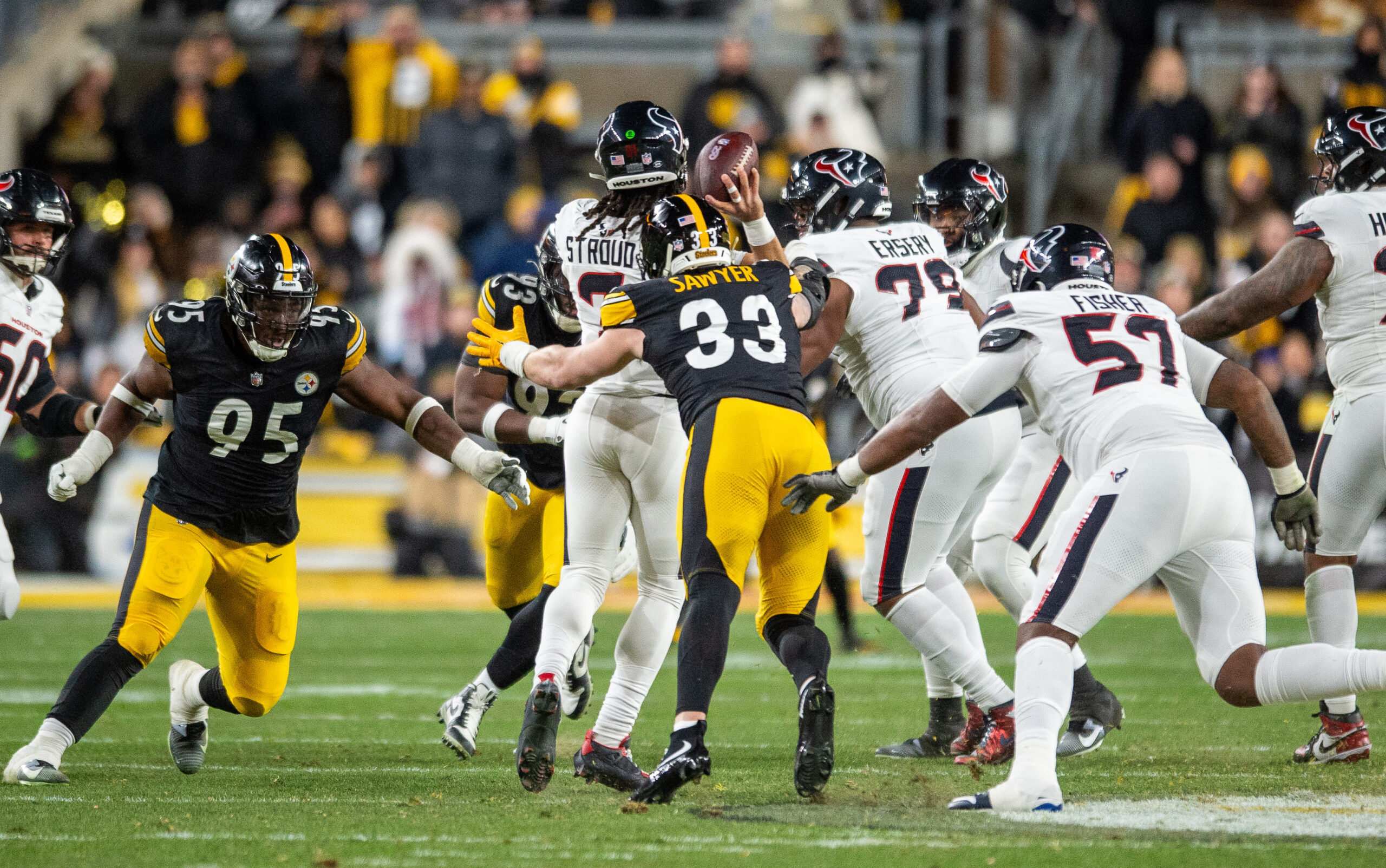
JACK SAWYER STRIPS TEXANS QB C.J. STROUD OF THE FOOTBALL IN THE STEELERS’ PLAYOFF LOSS TO HOUSTON, 30-6, JAN. 12. (PHOTO BY MARLON MARTIN)
The NFL playoffs often evoke high hopes for fans and teams alike, but for the Pittsburgh Steelers, their recent outing against the Houston Texans was a brutal reality check. The final score, a devastating 30-6 loss, left fans reeling and searching for answers. Key to the Texans’ victory was the relentless defense that capitalized on shortcomings in the Steelers’ game plan, particularly concerning the veteran quarterback Aaron Rodgers. Despite the Steelers’ defense generating three turnovers, the lack of offensive firepower, particularly in converting crucial third downs, hamstrung any chance the team had at mounting a comeback.
Rodgers, a touted veteran and future Hall of Famer, appeared less like the franchise quarterback the Steelers expected and more like a shadow of his former self. Although there were fleeting moments of promise during the season, particularly against weaker defenses, when faced with a formidable opponent like the Texans, he struggled significantly. Regrettably, it seemed that when the stakes were highest, Rodgers often succumbed to pressure, resembling a caricature of a player stuck in a tough game of poker, unable to find his footing against seasoned adversaries.
This playoff performance ignited discussions amongst the fanbase. While some blamed the coaching staff or even suggested potential changes at the top, it was hard not to question whether the time had come for Rodgers to consider retirement. The narrative surrounding his future has become increasingly polarized; should he bow out gracefully, or could there be a resurgence in his performance? For many faithful fans, the song “bye, bye, Blackbird” encapsulated the sentiment about Rodgers’ future as the inevitable change loomed large over Heinz Field.

Coaching Carousel
The disappointment stemming from the Steelers’ playoff exit isn’t the only narrative making waves in the NFL this season. The coaching landscape is once again under scrutiny, particularly when it comes to diversity and representation within the league. As several head coaching vacancies arise, names of potential candidates flood the conversation, but it often seems that the diversity of that pool is more of an afterthought rather than a genuine priority. Black coaches appear sporadically on the radar, leading many to question the consistent consideration of candidates from historically marginalized backgrounds.
Historically, the NFL has made strides, but the systemic biases remain entrenched. Over its 106-year existence, the league has only featured a handful of Black head coaches, with only a single hire, Fritz Pollard, in its first 69 years. This glaring gap in representation reflects a broader issue facing professional sports: an ongoing struggle against deeply rooted prejudices in hiring practices. The hiring of Art Shell in 1989 marked a shift, but it was only a small step toward addressing long-standing disparities.
The lack of opportunities extends beyond initial hiring; the legacy of head coaches—many of whom are white—often includes a looping network of family ties and connections within the league. As seen with Brian Schottenheimer and Nate Carroll, familial relationships can fortify a coach’s career path, offering a unique mentoring experience that remains elusive for many coaches of color. Black coaches rarely have the chance to groom successors, creating a cycle where their impact is often diminished to mere footnotes in NFL history.
This double standard amounts to a narrow pathway for Black coaches, often framed as “affirmative action” to create opportunities—while white coaches seem to glide through based on “confirmative action,” perpetuating the status quo of privilege. For fans of color, the absence of a powerful Black presence leading teams sparks frustration. The anticipation of seeing a Black head coach win games has unfortunately turned into a painful cycle of disappointment.
The path ahead remains uncertain, with many asking whether systemic change is possible. The disheartening reality is that even as we approach the year 2100, the same patterns could persist. A landscape where the status quo remains unchallenged only reinforces the urgency and necessity for authentic change in the hiring practices of the NFL. The grassroot efforts from fans and advocates will play an essential role in ensuring that this narrative evolves and that future cycles do not repeat the past.