


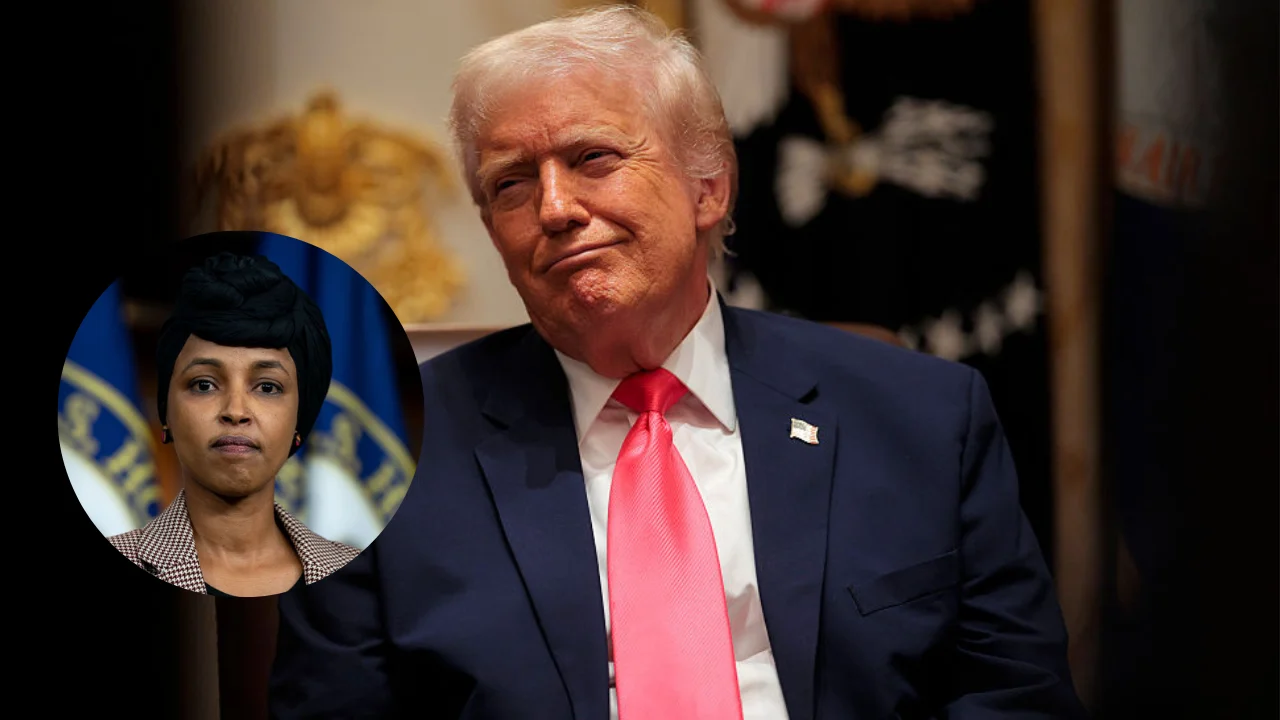
The Congressional Black Caucus (CBC) recently issued a scathing response to President Donald Trump’s derogatory comments regarding U.S. Rep. Ilhan Omar, a Democrat from Minnesota. This interaction underscores a broader dialogue on race, rhetoric, and the political landscape in the U.S., particularly concerning the treatment of immigrants and marginalized communities. The CBC’s reaction not only targeted Trump’s harsh language but also highlighted the systemic challenges faced by these communities.
In a joint statement led by Chairwoman Rep. Yvette D. Clarke of New York, the CBC expressed disbelief at the President’s fixation on making “hateful attacks” rather than focusing on significant governance issues. “Between falling asleep in his own Cabinet meeting, President Trump somehow finds the time to launch hateful attacks against Congresswoman Ilhan Omar and Somali immigrants,” the statement read. The CBC advocated that if Trump dedicated his energy towards effective governance rather than spreading hate, the country would benefit immensely.
President Trump’s comments came during a Cabinet meeting where he referred to Somali immigrants as “garbage,” directly targeting Omar, a former Somali refugee. This rhetoric is not only offensive but raises questions about the President’s views on diversity and inclusion in a nation built on immigration. His remarks, portraying Omar and her community as unworthy, take aim at her identity, highlighting the systemic dehumanization often faced by immigrants in the U.S. “Ilhan Omar is garbage. She’s garbage. Her friends are garbage,” Trump stated, further fueling a contentious and divisive political climate.
Omar, known for her outspoken stance against Trump’s policies—including the controversial travel ban affecting predominantly African nations and aggressive immigration enforcement—has become a symbolic figure for many who oppose Trump’s administration. Her experiences as a child refugee give her a unique perspective on the power of rhetoric and its real-world implications, making her an easy target for backlash from the Trump administration.
The CBC’s response also pointed out that, instead of addressing critical issues such as healthcare access and rising living costs, Trump seems to consistently revert to a strategy of division. They argued that by targeting Black and immigrant communities, the President attempts to deflect attention from his administration’s shortcomings, particularly when it comes to health care and the economy. This tactic, they maintain, represents a distressing pattern of racial and social targeting that compromises the fabric of inclusive governance.
Contextually, the rhetoric emanating from the Republican Party has increasingly been scrutinized for its racial undertones. The CBC referenced leaked communications among Republican officials that included racist language and troubling praises of historical figures like Hitler. Such incidents suggest that the President’s comments are part of a larger culture of intolerance within the party, further complicating the race relations discourse in the U.S.
The CBC emphasized that Omar has continuously worked diligently to uplift the lives of her constituents since arriving in Congress in 2019. They articulated that no member of Congress—or any community—warrants such targeted rhetoric. “President Trump’s comments are disgusting and pathetic,” they noted, underscoring the alarming lack of dissent from Republican figures regarding these statements, suggesting a troubling complicity in the continuation of harmful stereotypes and dehumanizing narratives.