


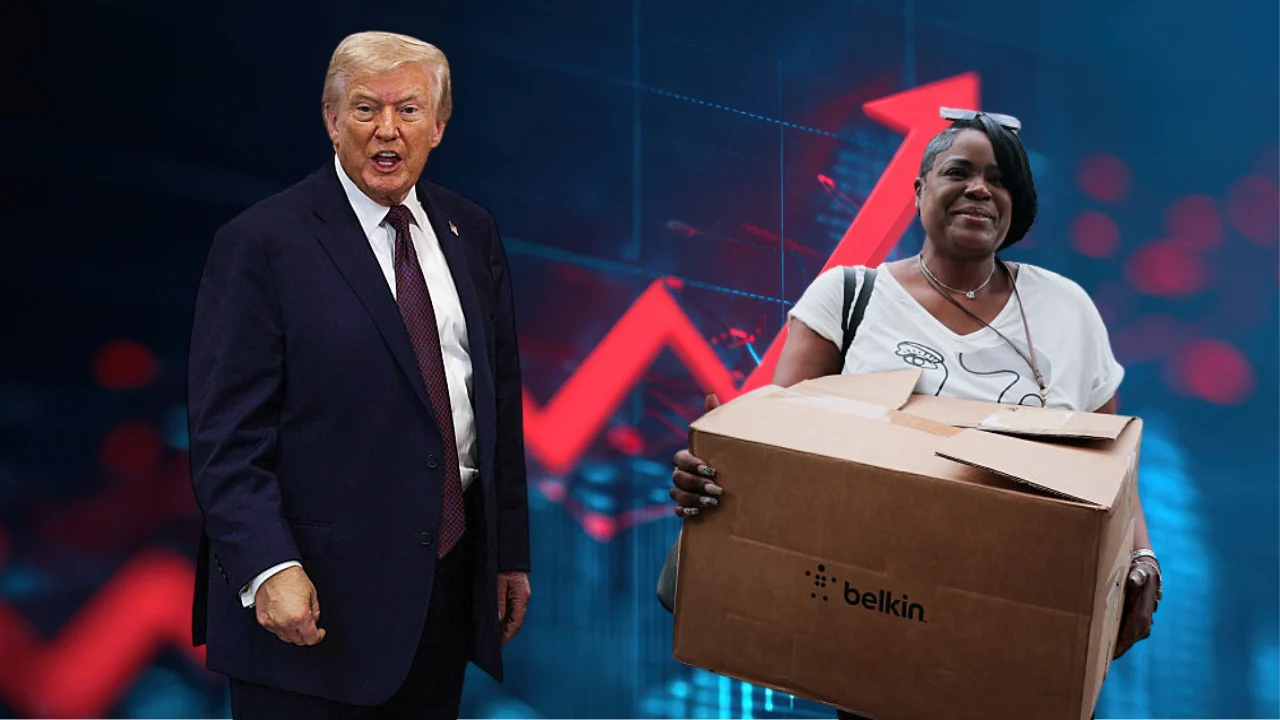
Understanding Trump’s Economic Assertions Amid Rising Unemployment
In a recent post on Truth Social, former President Donald Trump addressed mounting criticisms regarding his management of the U.S. economy. Following the publication of the latest unemployment figures, which indicated a rate of 4.6% for November, Trump attempted to provide a retort that has drawn considerable attention. He erroneously stated that the unemployment rate had ticked up to 4.5% because of a drastic reduction in the government workforce, claiming that “100% OF OUR NEW JOBS ARE IN THE PRIVATE SECTOR!”
Misstatements on Unemployment Rate
Trump’s assertion about the unemployment rate being 4.5% illustrates a miscalculation that has not gone unnoticed. The actual unemployment rate is not just a matter of numerical accuracy; it represents real people and real lives affected by economic policies. By simplifying complex economic data into soundbites, Trump may unintentionally downplay the challenges many Americans face in the job market.
The Impact of Federal Workforce Reductions
As Trump defended his push to cut federal jobs, he also hinted at the potential impact these reductions have on various demographics, particularly Black Americans. Analysts have pointed out that federal job cuts often disproportionately affect vulnerable groups. Notably, Black women, who constitute a significant segment of the federal workforce, have faced challenges due to these layoffs.
In Trump’s words, “I could reduce Unemployment to 2% overnight by just hiring people into the Federal Government, even though those Jobs are not necessary.” This raises critical questions about the value of employment in sectors that may not directly contribute to community well-being or economic stability.
Job Losses Beyond the Public Sector
Contrary to Trump’s claims, recent data from the U.S. Department of Labor Statistics reveals that job losses extend beyond the public sector. The overall unemployment rate for nonagricultural workers stands at 4.1%, and for agricultural workers, it rises to 11.6%. The statistics highlight that while federal job losses are significant, they represent only a portion of a broader economic landscape struggling to recover.
Moreover, Black Americans currently face an unemployment rate of 8.3%, starkly higher than the national average. This discrepancy emphasizes the disproportionate impact of economic downturns on minority communities, raising alarms about the long-term implications of Trump’s policies.
Voices of Concern from Political Figures
Political commentators have been quick to respond to Trump’s assertions. Brandon Weathersby, a spokesperson for American Bridge 21st Century, remarked, “Only Donald Trump could brag about firing federal workers while misreporting the unemployment rate.” This sentiment underscores a growing disconnect between political rhetoric and the lived experiences of everyday Americans, particularly those in marginalized communities.
Barbara Lee, the Mayor of Oakland and a former U.S. Congresswoman, further contextualizes the issue, stating, “What you see with Donald Trump in terms of the bias and the racism in his policies… he is rolling back the clock to the days before Jim Crow.” Her comments reflect a broader sentiment among various leaders about the systemic impacts of Trump’s policies on economic and racial equity.
The Reality of Rising Costs for Working Families
The economic reality for many families is not just one of unemployment numbers but also of rising costs for essential goods and services. Weathersby points out that families are struggling with stagnant wages and escalating prices. As wages fail to keep pace with inflation, the comforts of middle-class life seem less attainable for many working-class families.
“In every dollar families struggle to stretch is a reminder that Trump’s priorities are luxury and spectacle, not the people who keep the country running,” Weathersby added, emphasizing a growing concern over economic priorities under Trump’s leadership.
A Community in Crisis
The compounded effects of Trump’s economic policies have resulted in a crisis for various communities across the U.S. Cities like Oakland have seen heightened unemployment rates among Black residents, creating a sense of urgency among local leaders. Lee noted that Black mayors are “standing in the gap” to protect their constituents from the adverse effects of current political decisions.
As these discourses unfold, the ramifications go beyond simple statistics; they delve into issues of equity, representation, and the rights of all Americans to a fair shot at economic stability and growth.
The Bigger Picture
Trump’s recent claims and their subsequent pushback highlight the complexities of economic policy in the U.S. today. They open up important conversations about the balance between job creation, the health of communities, and the ethical implications of political leadership. The dialogue surrounding employment, equity, and the real-world implications of economic theories reflects critical junctures in American political and social life.
As the nation navigates these challenging times, it becomes increasingly crucial for both political leaders and citizens alike to remain informed, engaged, and outspoken about the trajectory they desire for their economy and society.