


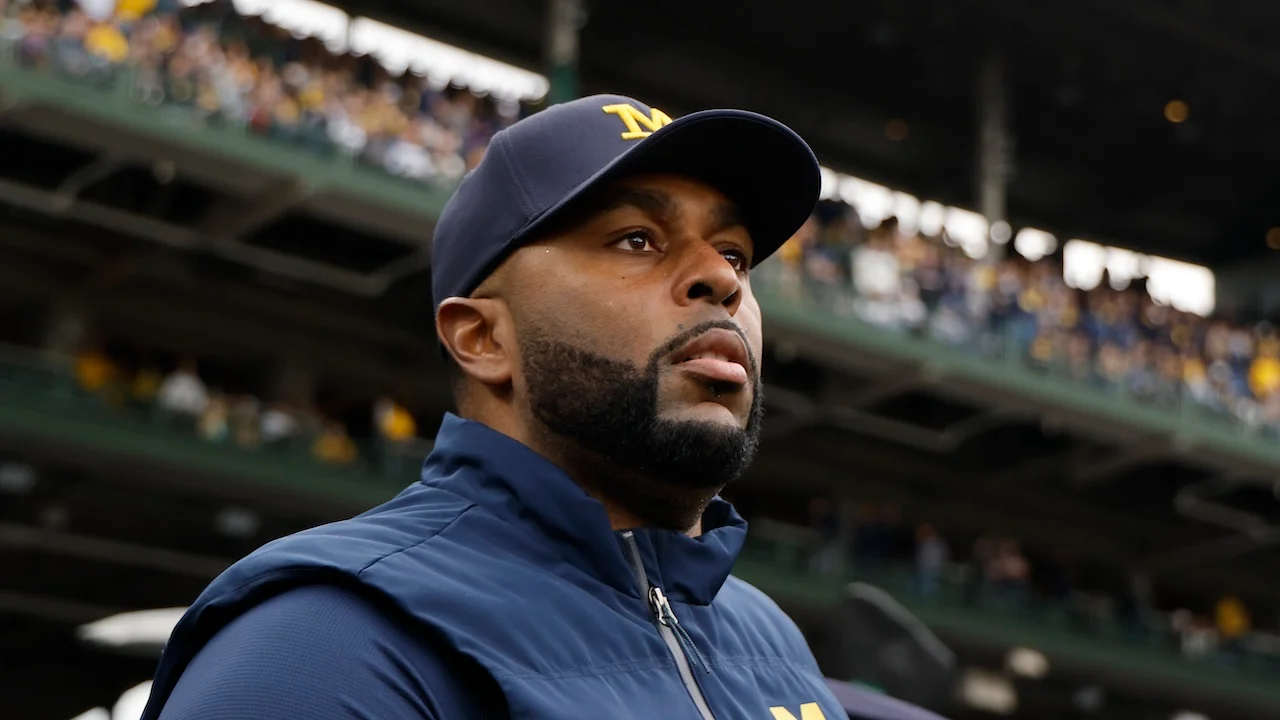
Former Michigan Football Coach Sherrone Moore Fired Amid Serious Allegations
Former Michigan football coach Sherrone Moore was fired with cause on December 10, 2025, following a series of alarming incidents that have since led to criminal charges against him. This shocking news has taken the sports community by storm, revealing layers of complexity around personal relationships and professional accountability.
The Charges Filed Against Moore
Moore, now 39, is facing multiple charges that include a felony count of third-degree home invasion, alongside misdemeanor charges of stalking in a domestic relationship and breaking and entering. Authorities set his bond at $25,000, highlighting the gravity of the situation. These allegations arose after an incident that reportedly escalated after his termination from the University of Michigan.
The Incident Following His Termination
According to court documents, the turmoil began when Moore allegedly broke into the apartment of a staff member with whom he had maintained an “intimate relationship” for several years. After she broke off the relationship on December 8, Moore reportedly bombarded her with calls and texts that went unanswered. His actions culminated in a frightening confrontation, during which he allegedly threatened to take his own life, declaring, “I’m going to make you watch. My blood is on your hands. You ruined my life.”
University’s Response and Dismissal
The University of Michigan acted swiftly, dismissing Moore for what they described as an “inappropriate relationship with a staff member.” Interim University President Domenico Grasso characterized Moore’s conduct as a “breach of trust” and emphasized the institution’s commitment to a culture of respect and accountability. Grasso hinted at the larger implications of Moore’s actions, asserting that the university’s investigation would continue to hold all involved parties accountable.
Legal Proceedings
During his arraignment on December 12, prosecutors painted a vivid picture of the escalating tensions. First assistant prosecutor Kati Rezmierski described Moore’s conduct as “very, very threatening and intimidating,” underlining the severity of his statements and behaviors. Moore’s attorney, Joe Simon, stated that his client is willing to undergo any necessary mental health evaluations mandated by the court, reflecting a possible acknowledgment of the underlying issues at play.
Contractual Implications
The fallout from Moore’s termination extends beyond personal repercussions. Due to violations of university policies and contract terms, the University of Michigan is not obligated to pay him the remaining $12.3 million on his five-year contract. This serves as a stark message about the standards expected from those in positions of power, especially in a high-stakes environment like college athletics.
Background and Personal Life
Moore’s personal life adds another layer of complexity to the incident. He is married and has three children, which raises serious questions about his decision-making and accountability—to his family, the university, and his professional obligations. The pressure cooker of high-level sports often brings with it scrutiny not just of performance, but also of personal behavior, which appears to be a critical factor in this case.
Continuing Investigation
Rumors surrounding Moore’s conduct had circulated within the university, with an anonymous tip about his inappropriate relationship having been received prior to his termination. While the university previously lacked sufficient evidence to act, the recent events have triggered an internal investigation and a reassessment of workplace relationships within the football program.
Conditions of Release
As a condition of his release, Moore is required to wear a monitoring device and is prohibited from contacting the staff member involved in the case. This highlights not only the individual aspects of the case but also the broader implications for workplace conduct in collegiate athletics.
Potential Penalties
Should Moore be convicted, he faces serious repercussions. The felony charge of home invasion could result in up to five years in prison and a $2,000 fine, while the misdemeanor charges of stalking and breaking and entering carry additional potential penalties. The legal ramifications of this case serve as a cautionary tale for those in positions of authority, especially in environments driven by passion and personal connections.
This incident serves as a crucial reminder of the intersection between personal behavior and professional responsibilities, leaving many in the community to reflect on the moral and ethical obligations inherent in such roles. The unfolding story of Sherrone Moore will likely serve as a critical case study in navigating these challenging dynamics within collegiate sports.