


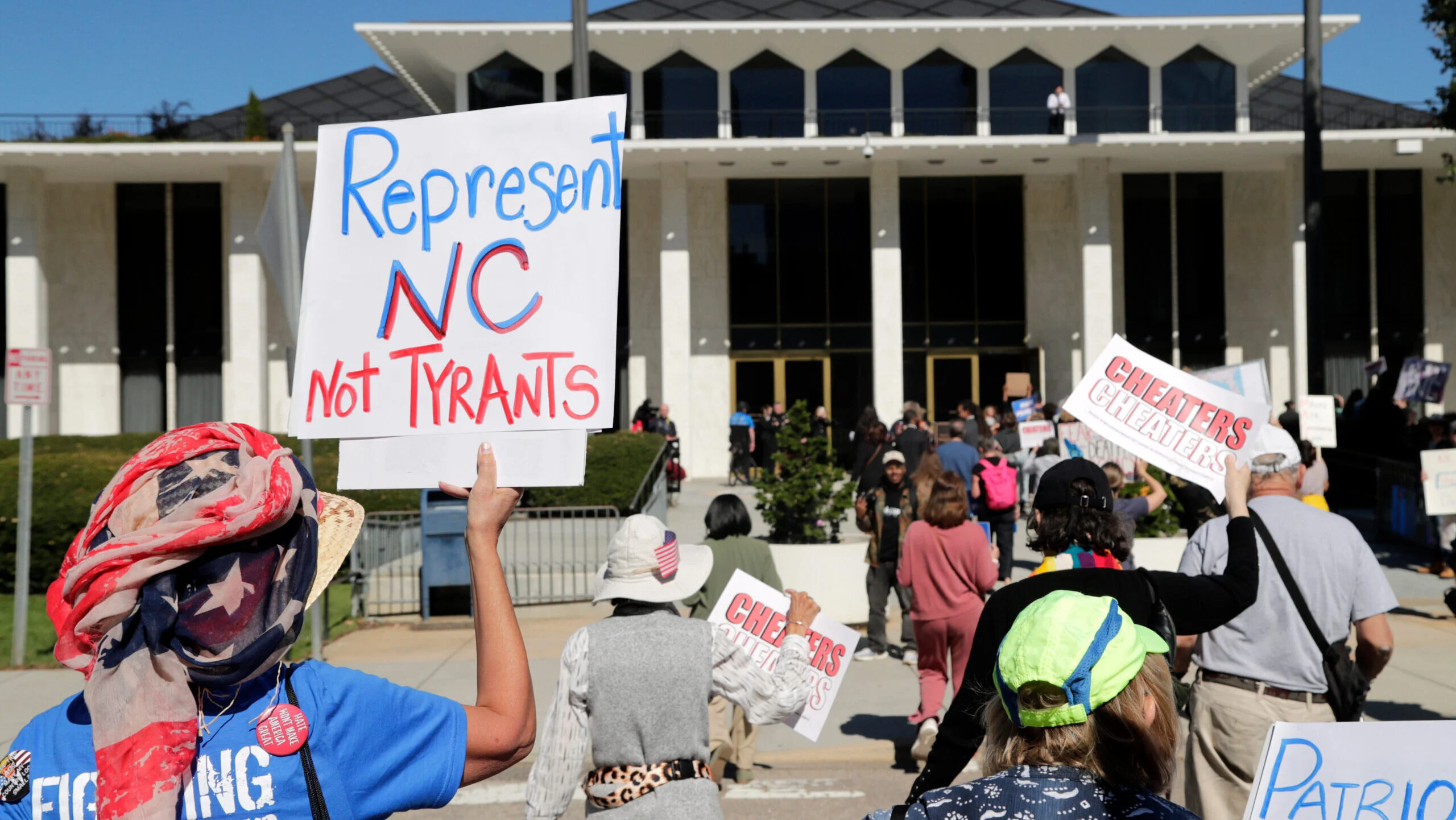
Federal Judges Uphold Controversial North Carolina Congressional Districts
On Thursday, a federal court made significant waves in North Carolina politics by upholding several congressional districts that were redrawn by Republican lawmakers in 2023. This decision came amidst allegations from various groups, including the state NAACP and Common Cause, that the new district lines unlawfully fractured and diluted Black voting power.
The Judges Behind the Ruling
The ruling was handed down by a panel of three judges: Judge Allison Rushing of the 4th U.S. Circuit Court of Appeals, along with District Judges Thomas Schroeder and Richard Myers. Notably, all three judges were nominated by Republican presidents, likely influencing the panel’s decision. Their ruling did not address recent amendments made to the 1st Congressional District, which aim to unseat Democratic Rep. Don Davis in the upcoming 2026 elections.
Ongoing Legal Considerations
The recent alterations to the 1st District, which were reportedly advocated by former President Donald Trump as part of a broader national redistricting strategy, remain a point of contention. The judges held hearings in Winston-Salem but postponed ruling on whether to block the new district configurations ahead of the candidate filing deadline on December 1.
Claims of Racial Discrimination
The plaintiffs raised serious allegations of racial discrimination and voter dilution that violate both the U.S. Constitution and the Voting Rights Act. They contended that the 2023 congressional map allowed Republicans to transform a previously balanced 7-7 North Carolina delegation into one that favored the GOP, resulting in Republicans winning 10 of the 14 available seats in 2024.
The Impact on Black Representation
The judges dismissed claims that the GOP-drawn lines intentionally weakened the electoral power of Black voters, suggesting instead that Republican legislators used legal partisan considerations when redistricting. The 181-page ruling stated, “We conclude that the General Assembly did not violate the Constitution or the VRA in its 2023 redistricting.” This finding underscores a challenging environment for Black representatives in North Carolina, with some opting not to run for reelection due to perceived disadvantages in the new districts.
Insights on Redistricting Procedures
The defense presented by attorneys for the Republican lawmakers emphasized that the decision-making process for the 2023 map was largely informed by traditional districting criteria and partisan performance—not racial demographics. Interestingly, a 2019 ruling from the U.S. Supreme Court has made it increasingly difficult to challenge gerrymandering on the basis of partisan biases, setting a precedent that has been notably influential in many states.
Local Districts Under Scrutiny
The judges specifically analyzed five congressional districts in their ruling, primarily focusing on the Greensboro and Charlotte areas. Testimony indicated that lines drawn in the Greensboro region were designed to disperse the concentrated Black voting population across multiple districts, a strategy seen by critics as detrimental to fair representation.
Future Legal Options
While the current ruling is a win for GOP lawmakers, it is important to remember that the decision can be appealed to the U.S. Supreme Court. Mixed reactions have emerged, with Republican spokespersons remaining silent at the moment, while representatives for the NAACP and allied groups voiced disappointment over the panel’s decision.
The Stakes Ahead
As the political landscape continues to evolve, the changes to the 1st and 3rd Congressional Districts are particularly critical. Following over three decades of Black representation in the 1st District, the upcoming elections will be closely watched as candidates navigate a complex and sometimes contentious electoral environment.
In addition to North Carolina, other states have seen similar maneuvers aimed at altering congressional maps mid-decade, with varying degrees of success. For instance, a recent federal ruling blocked a GOP-engineered map in Texas, sparking further discussion about the implications of redistricting on fair representation.