


Controversy Erupts in Clay County: School Board Member’s Remarks Under Fire
Background of the Incident
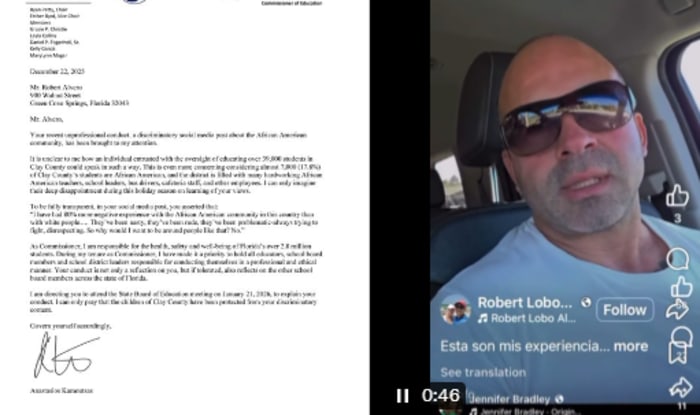
In Clay County, Florida, a social media post made by school board member Robert Alvero has stirred significant controversy, drawing attention from the Florida Commissioner of Education, Anastasios Kamoutsas. The situation escalated on December 21, 2025, prompting a demand for Alvero to explain his remarks in an upcoming State Board of Education meeting.
The Disputed Remarks
Alvero’s comments, shared during a Facebook Live session, took a stark and divisive turn when he claimed that he has experienced “80% more negative experiences” with the African American community compared to white individuals. While he did acknowledge having positive interactions with African Americans, he characterized the majority negatively, stating, “the other 80%… they’re being nasty. They’re being rude.”
These statements immediately raised eyebrows and faced backlash as many viewed them as discriminatory and unprofessional, especially from someone in a position of authority overseeing the education of approximately 39,000 students in the district.
Commissioner Kamoutsas’ Response
In response to Alvero’s remarks, Commissioner Kamoutsas expressed his disappointment and concern in a formal letter. He stated, “It is unclear to me how an individual entrusted with the oversight of educating over 39,000 students in Clay County could speak in such a way.” With nearly 7,000 students in the district identifying as African American, the remarks hit especially close to home for many families and staff members.
Kamoutsas’ letter highlighted the importance of representation within education and the impact that such rhetoric can have on the community. He expressed concerns not only for the students but also for the many African American employees within the school system who may find Alvero’s comments disheartening during the holiday season.
Public Reaction and School Board’s Stance
The fallout from Alvero’s statement sparked a wave of outrage within the community. Several prominent figures, including Erin Skipper, the Clay County School Board chair, condemned the remarks. Skipper affirmed that Alvero’s comments do not reflect the values of the school district, signaling that they would address the issue in a board meeting scheduled for January.
Alvero’s Apology
In the face of criticism, Alvero later expressed deep regret for his comments, stating they “did not represent what he was trying to say.” He acknowledged that his remarks were wrong and offensive, emphasizing that they do not reflect his values or how he treats people. The apology was a response to the intense backlash and highlighted the necessity for self-reflection following his comments.
Implications for Future Conduct
Kamoutsas has directed Alvero to appear before the State Board of Education on January 21, 2026, to clarify his remarks and address the concerns raised. This step underscores the accountability expected from educational leaders and highlights the importance of respectful discourse in positions of authority.
In his communication, Kamoutsas emphasized his hope that students in Clay County have been shielded from the harmful effects of Alvero’s remarks, indicating that educational leaders must prioritize creating a safe and inclusive environment for all students.
Legislative Attention
Local state senator Jennifer Bradley, who represents Clay County and the surrounding areas, brought Alvero’s Facebook post to Kamoutsas’ attention, demonstrating the reach of this issue beyond local politics into wider legislative discourse. The involvement of state officials illustrates how serious the implications of such comments can be within a community tasked with shaping the future of its youth.
As this story continues to unfold, it raises vital questions about race, representation, and accountability in education, highlighting the critical role of school board members in fostering a respectful and supportive learning environment for all students.