


Building the 2026 World Junior Rosters: A Mock Analysis of Team Canada and Team USA
On this week’s episode of The Athletic Hockey Show Prospect Series, a notable panel including Corey Pronman, Scott Wheeler, Max Bultman, and Chris Peters gathered to engage in a comprehensive mock meeting aimed at constructing rosters for Team Canada and Team USA for the upcoming 2026 World Juniors. This discussion offered insights into the nuances and strategic decisions involved in assembling competitive teams for this prestigious tournament.
The Projected Depth Chart for Team USA
Our deliberations ventured into assessing the potential depth chart for Team USA, expected to line up in Minnesota. The current chicken-and-egg scenario faced is that while the Canadian roster will depend heavily on the availability of NHL players, the American lineup will rely upon a tighter, yet skill-specific pool of athletes—highlighting both strengths and notable weaknesses in critical areas.
The Center Dilemma
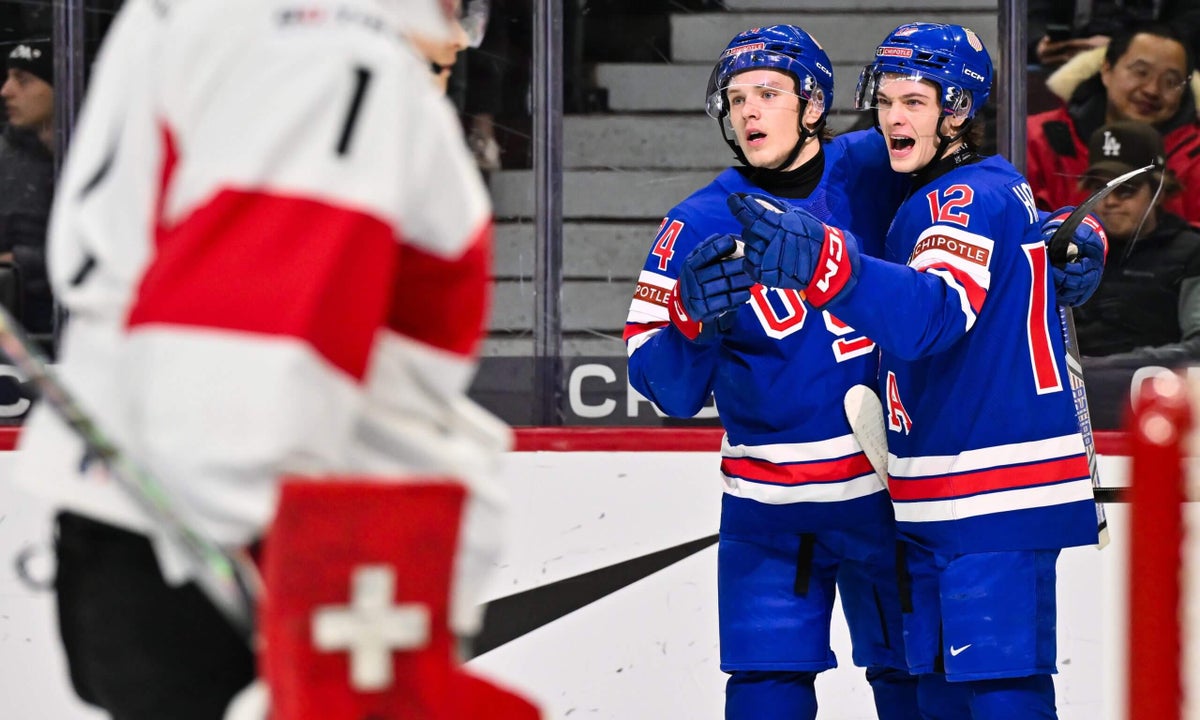
A focal point of the discussion rested on the center position, a topic of significant contention. James Hagens, projected to be the No. 1 center, stood out as the best player for this age cohort at the U18s and was instrumental in the World Junior team last season. Nonetheless, his performance at Boston College has raised eyebrows; he hasn’t consistently centered a line. While his skill set could drive the team’s offense, there’s uncertainty regarding his fit in a traditional center role.
Addressing the second-line center role, Will Horcoff emerged as the preferred choice. Despite Pronman voicing skepticism—believing Horcoff’s strengths lie more in wing play—the consensus among the panel leaned towards anchoring a robust second line. They argued that if Horcoff were pushed to the wing, it would compromise the top nine’s overall quality and elevate players like Kamil Bednarik or Cole McKinney into positions for which they’re less suited. Ultimately, the arrangement led to a balanced lineup, with Horcoff at 2C, Cole McKinney at 3C, and Bednarik at 4C.
Secondary Scoring Depth
The analysis turned towards the wings, where Team USA boasts skillful players. However, this advantage is offset by the lack of depth at center, raising concerns about secondary scoring. If the primary lines falter, the team may struggle to find the back of the net. Horcoff’s potential success in the second-line role is critical to elevating the overall scoring capability.
One notable exclusion from the roster discussion was J.P. Hurlbert, a leading scorer in the WHL and a potential lottery pick for the 2026 NHL Draft. While his numbers suggest he could enhance the team, complications arose due to his recent departure from the U.S. NTDP, which could create a less-than-ideal narrative for his inclusion.
The Blue Line: The Cole Hutson Show
Shifting focus to the defensive corps, Cole Hutson emerged as the centerpiece of the blue line, touted as potentially the best defenseman in the tournament. Much like his brother Lane, Cole is lauded for his breakout capabilities and serves as a dynamic power-play quarterback. Some discussions even contemplated double-shifting him to run both power-play units due to the steep drop-off in offensive skills beyond his presence.
The remaining defense lineup includes Adam Kleber, Luke Osburn, Dakoda Rheaume-Mullen, EJ Emery, and Logan Hensler. While competent, this group doesn’t necessarily offer the same depth of skill. The panel did examine Chase Reid, another potential lottery pick; however, his earlier cut from the U18 team made his immediate inclusion less likely.
The Achilles’ Heel: Goaltending Woes
One of the starkest issues for Team USA is the goaltending situation, which appears weaker than in past tournaments. Traditionally, the U.S. has boasted reliable netminders like Trey Augustine, Jacob Fowler, and Spencer Knight. This year, however, the options look precarious, with Nick Kempf likely taking the leading role based on his average college performance.
Behind Kempf, Caleb Heil and Harrison Boettiger find themselves with junior experience but lacking dominance. Notably, Heil is set to participate in a separate junior tournament shortly before the World Juniors kick off, which could hinder his readiness.
Chris Peters aptly pointed out that Team USA’s trajectory in the tournament might hinge on luck if one of these goaltenders fails to elevate their performance.
Summary of Team USA’s Potential
Team USA’s assembly reflects a blend of talented offensive players along with glaring concerns at the center position and in goal. Players like Hagens and Hutson offer the promise of brilliance amidst a roster anchored by experienced wingers such as Teddy Stiga, Brodie Ziemer, and Cole Eiserman. While the current roster has potential for medal contention, the pathway to gold in 2026 appears significantly more challenging than in prior years, given the current landscape of talent.