


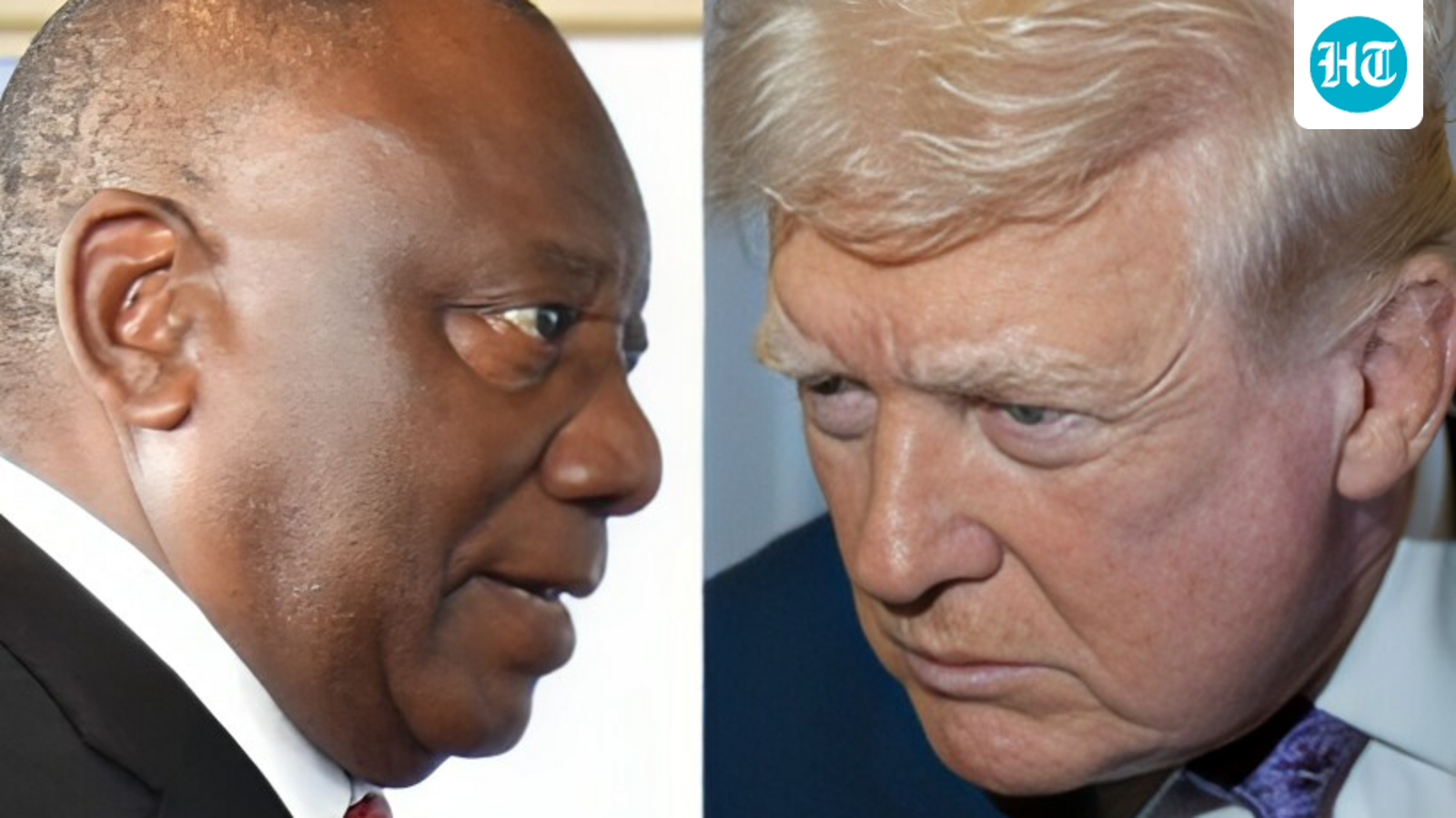
Rising Diplomatic Tensions: The US vs. South Africa at G20
As international diplomacy twists and turns, the relationship between the United States and South Africa finds itself in an increasingly fraught position. Tensions flared over the recent G20 summit, where South African President Cyril Ramaphosa found himself compelled to respond to allegations made by former President Donald Trump regarding the treatment of the white minority in his country.
Trump’s Controversial Claims
In a series of social media posts, Trump made headlines by asserting that South Africa’s predominantly black government “persecutes the white minority.” He claimed that white Afrikaners are facing violent persecution, and he repeated long-debunked assertions of genocide against this demographic as well as land grabs linked to white farmers. These statements have drawn sharp criticism, described by many, including Ramaphosa, as “blatant misinformation.”
Trump’s remarks come on the heels of significant developments at the G20 summit held in Johannesburg, where he announced via a press conference that he would bar South Africa from participating in next year’s summit hosted at his Mar-a-Lago estate. He justified this harsh stance by stating that South Africa had failed to adequately transition its G20 presidency to a senior representative from the US Embassy, an assertion that prompted an emphatic rebuttal from South African officials.
Ramaphosa Hits Back
In response to Trump’s allegations, President Ramaphosa firmly addressed the nation, emphasizing the “blatant misinformation” behind the claims. He stressed that South Africa, as a founding member of the G20, would continue to assert its role on the global stage. The subsequent pushback from Ramaphosa encapsulated South Africa’s long-standing struggle against the legacy of apartheid and a commitment to multilateralism.
He stated, “South Africa is and will remain a full, active and constructive member of the G20.” This statement served not only as a defense of his government’s actions but also as a rebuke against the growing narrative that seeks to paint South Africa’s governmental policies in a negative light.
The G20 and its Significance
As we analyze the intricate dynamics of the G20, it’s pivotal to understand its role as an international forum for economic cooperation. The group includes 19 countries and the European Union, representing a substantial portion of the world’s economy. South Africa’s inclusion reflects its importance as an emerging market, and any threats to its participation could have wider implications for global economic discussions, including critical issues like climate change.
The controversy over Trump’s claims escalated regarding the transitioning of the G20 presidency. While Trump implied that South Africa had been disrespectful in the handover of leadership, Pretoria countered by stating that the transition was handled with due diligence, even if they perceived the US’s choice of representation as an insult.
Historical Context and Current Repercussions
Trump’s assertions are deeply rooted in a long history of racial tensions in South Africa. White Afrikaners, who played a central role in the apartheid regime from 1948 to 1994, find their narratives tangled in the complex socio-political landscape of a post-apartheid nation. While some continue to express concern over safety and land ownership, many in the Afrikaner community contest the narrative that they are systematically persecuted.
Additionally, the Trump administration’s approach towards South Africa has taken on a distinctly anti-American tone, influenced by perceptions of Pretoria’s growing relations with nations like China and Russia. This geopolitical maneuvering has resulted in South Africa being portrayed in a negative light by some factions within the US government.
A Divisive Refugee Policy
Amid this diplomatic strife, the Trump administration announced plans to reduce the number of refugees admitted to the US, significantly reserving spots for white South Africans. This decision has stirred further controversy, as it appears to suggest a selective approach to asylum that aligns with the unsubstantiated claims of widespread persecution against Afrikaners, reigniting racial debates that many hoped were being put to rest.
The Trump administration’s selective refugee policy could exacerbate internal divides, not only between communities but also between political factions both in South Africa and within the US.
Moving Forward
The ongoing discussion surrounding South Africa’s G20 membership and the allegations from Trump is shaping into a broader narrative about race, history, and global diplomacy. As both nations navigate these complicated waters, the implications of such confrontations may ripple through international relations, potentially influencing commerce, security, and collaborative efforts on pressing global issues.
President Ramaphosa has made it clear that South Africa will not shy away from participating in discussions that affect the future of global governance, setting the stage for an evolving dialogue that transcends mere accusations. As the situation develops, the world watches closely, understanding that the outcomes could redefine not just relations between these two nations but also broader geopolitical alliances.