


Gavin Newsom Blocked from Speaking at Davos: A Political Drama Unfolds
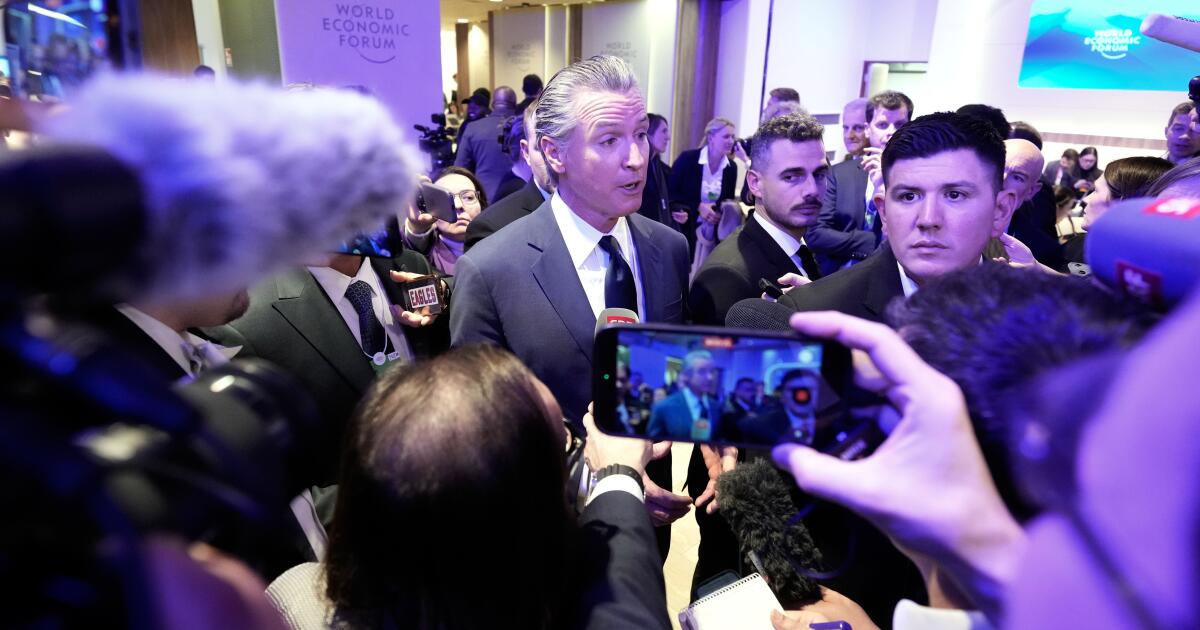
Recently, California Governor Gavin Newsom found himself at the center of a political kerfuffle when he was reportedly barred from speaking at the World Economic Forum in Davos, Switzerland. This annual gathering, known for its high-profile leaders and discussions on global issues, took a turn towards contention when it was revealed that his invitation had been rescinded. Newsom’s office stated they received a notification that a “venue-level decision” was made to exclude any elected U.S. official from the programming—an unusual move considering the prominence of the event.
The Backdrop: An Anticipated Address
Newsom was slated to engage in a fireside chat at USA House, the American pavilion at the event, where he intended to respond to President Donald Trump’s speech, which had occurred earlier that day. In his address, Trump made headlines by discussing ambitions related to Greenland and criticizing European allies, all while promoting a sort of American expansionism that appeared to ruffle diplomatic feathers. Newsom aimed to provide a counter-narrative, making his absence from the event even more significant.
Newsom’s Response and Social Media Commentary
In light of the situation, Newsom took to social media platform X, expressing his frustration. “How weak and pathetic do you have to be to be this scared of a fireside chat?” he quipped, encapsulating his feelings about being sidelined. His comments painted a picture of a governor eager to engage in dialogue about pressing global issues, only to be obstructed by a political landscape that seems acute and contentious.
The White House’s Reaction
The White House did not directly confirm the claims of blocking Newsom from the event. Instead, a spokesperson, Anna Kelly, offered a scathing critique of the California governor. She referred to him using a derisive moniker, dismissing his relevance and suggesting that he should focus more on the challenges facing California rather than attending an international forum. This response underscored the combative nature of political discourse between the two leaders.
A Political Showdown at Davos
During his speech at the World Economic Forum, Trump mentioned Newsom, highlighting their past rapport and offering assistance for California’s issues. While some may have interpreted this as a reconciliation, Trump’s critique of California’s governance resonated against the backdrop of Newsom’s thwarted speaking engagement. The interplay of their remarks showcased the tangled dynamics of state and national politics, with each leader keenly aware of the other’s presence and impact.
Newsom’s Impressions of Trump’s Speech
After the president’s address, Newsom characterized it as “remarkably boring,” pointing to a lack of new insights for the American public. This remark drew garnering attention, as it contrasted sharply with Trump’s earlier statements expressing camaraderie with the governor. Newsom’s dismissive tone hinted at deeper ideological rifts and a refusal to align with Trump’s vision, despite previous cordial interactions.
Criticism of Newsom’s Leadership
Adding another layer to this political saga, Treasury Secretary Scott Bessent weighed in on Newsom’s leadership, criticizing his economic policies and highlighting problems such as California’s budget deficit and homelessness crisis. Bessent’s commentary underscored the Republican perspective on California’s governance, which has become increasingly focal in national discussions, especially as Newsom’s potential presidential ambitions grow clearer.
Newsom’s Stance Against Global Complicity
Amid this backdrop, Newsom positioned himself as a counter to Trump’s influence on the global stage. Addressing fellow world leaders in Davos, he called out what he perceived as their “complicity” in dealing with the president’s aggressive rhetoric. Urging them to adopt a firmer stance, Newsom emphasized the importance of standing up against Trump—a message he clearly intended to amplify through his rejected speaking opportunity.
Tensions Over Federal Assistance
The friction extended to notable issues concerning federal disaster relief as well, with Newsom accusing the Trump administration of stalling crucial funding that California needs for recovery from devastating wildfires. This ongoing battle over resources has added to the already strained relationship between state and federal leadership, further complicating the narrative of cooperation and governance.
In this politically charged atmosphere, Newsom’s aspirations for a future presidential run appear increasingly intertwined with his efforts to position California as a progressive counterweight to the White House. With the landscape changing rapidly, the relevance of this incident will likely resonate as both leaders navigate their paths forward in the political arena.