


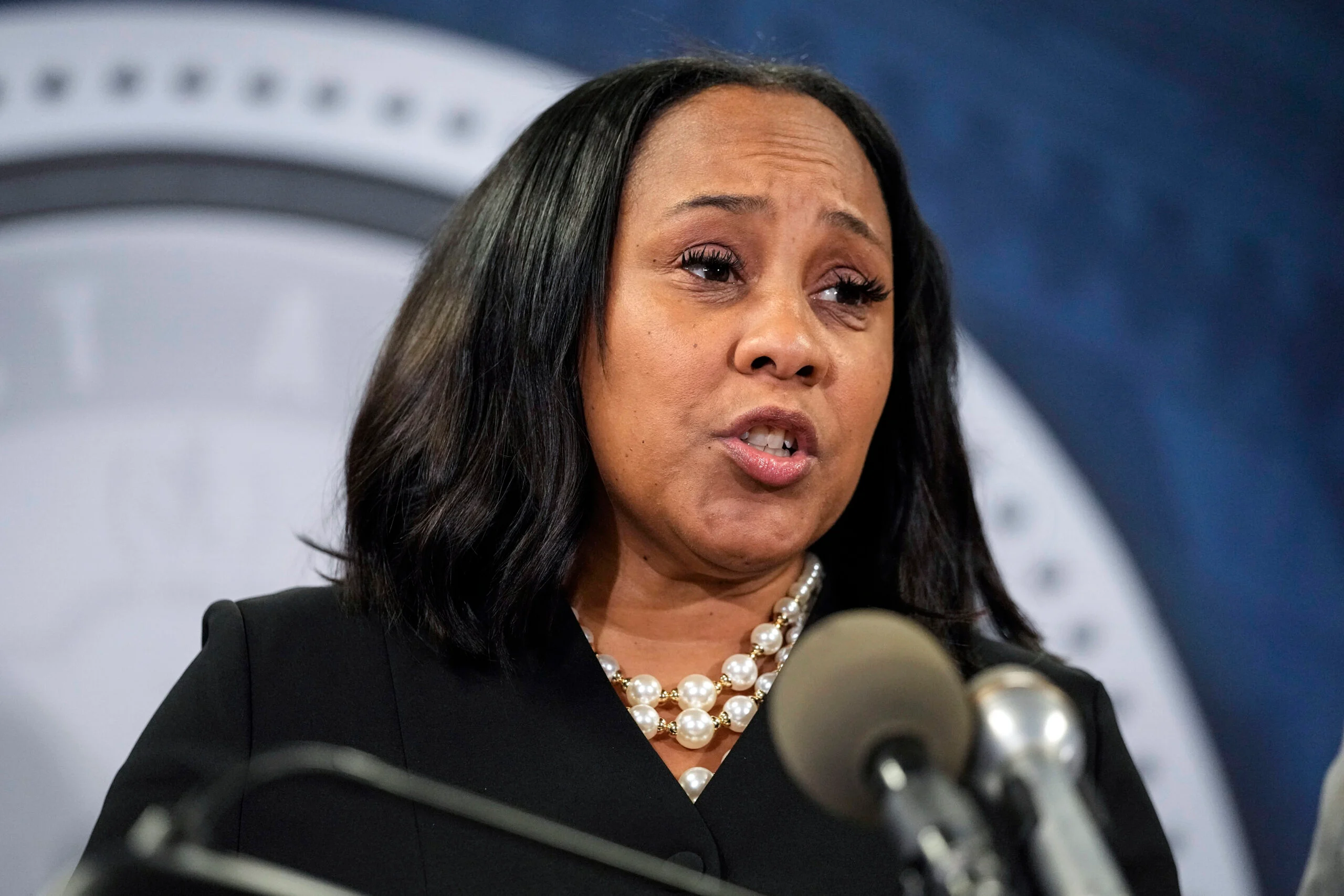
The Legal Saga of Fani Willis and Donald Trump: A Closer Look
Background: The Prosecutor’s Role
Fani Willis, the Democratic District Attorney of Fulton County, has become a central figure in the ongoing legal drama surrounding former President Donald Trump. Her prosecution aims to hold accountable those who allegedly sought to overturn the 2020 election results in Georgia, a state that swung narrowly in favor of Joe Biden. Her approach, backed by the state’s anti-racketeering law, has generated significant media attention, political division, and controversy.
The Senate Committee’s Investigation
In January 2024, the Republican-controlled Georgia state Senate created a Special Committee on Investigation focused on Willis. This committee was established to probe allegations of misconduct linked to her efforts in the Trump case. The scrutiny intensified following Willis’s August 2023 indictment of Trump and 18 others, which marked a significant milestone in the pursuit of justice regarding election interference in Georgia.
The Republican members of the committee have been vocal critics of Willis’s approach and have initiated the investigation despite the legal and political complexities. There is a backdrop of political ambition at play, as several committee members are preparing to launch their own statewide campaigns for office in 2026.
Allegations Against Willis
One of the key issues surrounding Willis’s prosecution involves her hiring of special prosecutor Nathan Wade. Allegations of a romantic relationship between the two have raised questions about potential conflicts of interest. The committee’s resolution pointed to this relationship as a significant ethical breach, terming it a “fraud upon the taxpayers.” However, in a surprising turn, the investigation into this matter has mostly fizzled out, especially after the case against Trump was dismissed.
Despite numerous inquiries, the committee has struggled to unearth substantial new information about Willis’s actions or motives. In light of Trump’s vocal criticisms of Willis—labeling her a “criminal” deserving of prosecution—her participation in the committee’s questioning becomes fraught with risks.
Democratic Response to the Inquiry
Democrats, including those aligned with Willis, have denounced the inquiry as a politically motivated stunt designed to undermine her credibility and the prosecution itself. With allegations that the investigation serves purely as a partisan tactic, critics within the Democratic Party see it as a distraction rooted in political maneuvering. Four members of the committee are actively campaigning for statewide office, further clouding their motivations.
Previous Subpoena and Legal Maneuvers
The legal dance between Willis and the state Senate has already seen its share of dramatic moments. Last year, when the committee initially subpoenaed her to testify, she did not appear. Following this, a judge ruled that Willis could not simply disregard the subpoena, leading her legal team to secure a new agreement for her appearance.
Amidst this turbulent legal landscape, Roy Barnes, Willis’s attorney and a former governor of Georgia, emphasized that the committee’s grilling may not yield full cooperation from her. He expressed that the inquiry might face objections on various grounds, hinting at a strategic approach to protect Willis from what he perceives as harassment.
Implications of the Relationship Controversy
The scrutiny over the alleged personal relationship between Willis and Wade became public when a defense attorney sought to highlight it as a reason for disqualification. This led to an extraordinary court hearing in which both Willis and Wade provided testimony. They denied any allegations of impropriety but acknowledged the unconventional circumstances surrounding their connection.
The trial judge ultimately decided that while the relationship presented a lapse in judgment, Willis could continue her role in the case if Wade resigned, which he did shortly after the ruling. However, the ripple effects of this decision would be felt in the ongoing legal disputes surrounding the case.
The Court’s Decision and Future Prospects
In a little-understood twist, the Georgia Court of Appeals found grounds to remove Willis from the prosecution, citing an “appearance of impropriety” that strained her position. This decision was bolstered by the state Supreme Court’s refusal to hear her appeal, effectively sidelining her from this high-profile case.
As the Senate committee prepares to question Willis again, public interest remains high, and the stakes are elevated. Each development in this case feeds into larger narratives regarding legal ethics, political accountability, and justice in the high-pressure post-Trump political landscape. As the inquiry unfolds, both sides remain ensconced in a broader battle over their narratives, influencing public perception and future elections.
In this complex and evolving saga, the intersection of law, politics, and personal conduct continues to resonate, making Fani Willis’s upcoming testimony a focal point for observers on both sides of the political spectrum.