


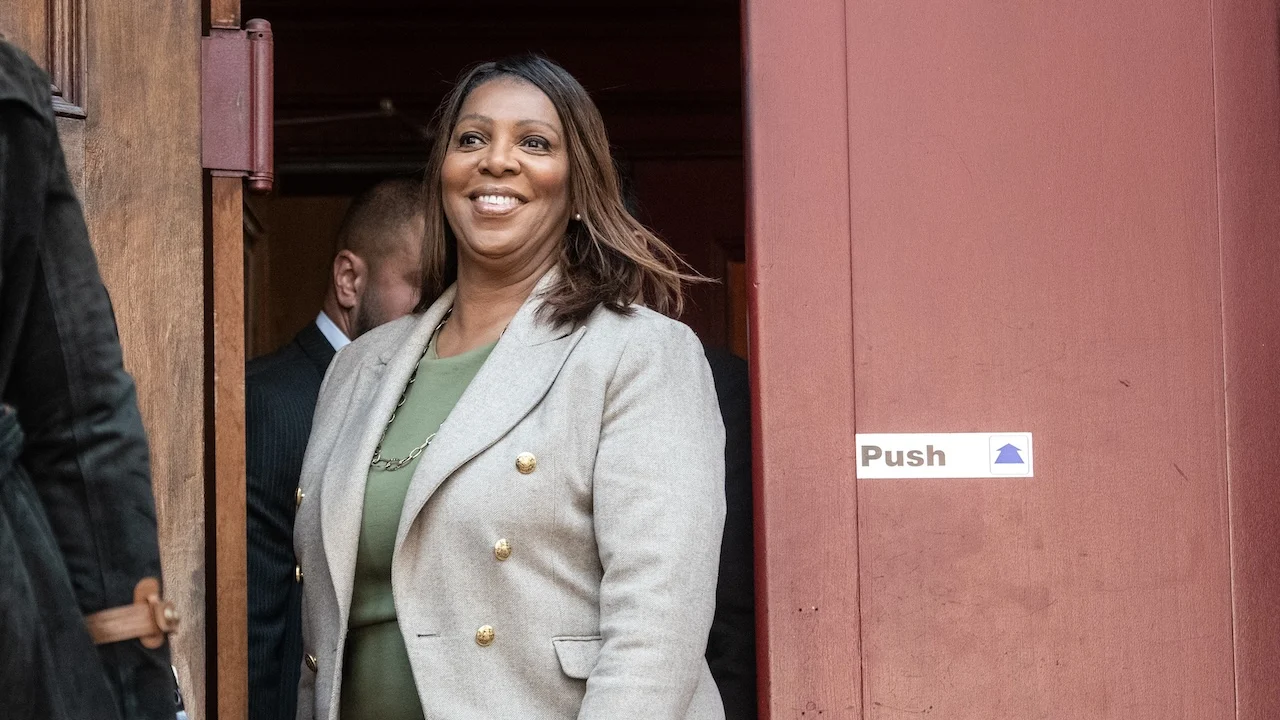
The recent legal battles surrounding New York Attorney General Letitia James have brought a spotlight on the intersection of politics and the justice system, revealing deep divisions within American society. As a prominent figure known for her vocal criticism of former President Donald Trump, James has now found herself in the crosshairs of federal prosecutors.
On December 4, a grand jury in Virginia made a significant decision: they declined to indict James on charges of bank fraud and making false statements to a financial institution. This decision arrives less than two weeks after U.S. District Judge Cameron Currie dismissed previous indictments against both James and former FBI director James Comey, primarily due to questions surrounding the legality of the prosecutor’s appointment.
In the aftermath of the grand jury’s decision, James expressed her relief, stating, “As I have said from the start, the charges against me are baseless. It is time for this unchecked weaponization of our justice system to stop.” Her remarks highlight a growing concern about the ways in which legal institutions can be influenced by political agendas. She emphasized her commitment to the rule of law and the people of New York, underscoring her role not just as a legal figure, but as a staunch advocate for justice.
Nonetheless, James may not be out of the woods entirely. Federal prosecutors have the option to seek new indictments against her. The crux of the Justice Department’s allegations centers on claims that she misrepresented her living situation regarding a property in Norfolk, Virginia, using it as a second residence to gain favorable loan terms. Prosecutors allege that this could have saved her approximately $50 a month on her loan, a relatively minor sum that casts a shadow on the seriousness of the indictment.
The controversy is layered further by preceding events leading up to the latest grand jury’s decision. The original charges against James and Comey were deemed invalid when it was discovered that Lindsey Halligan, a former Trump personal attorney and the acting U.S. attorney for the Eastern District of Virginia, had been appointed unlawfully. Even after the case was reintroduced with different prosecutors, it resulted in the same outcome.
The political undertones of this case cannot be overlooked. James has long been viewed as a political adversary of Trump, especially after she spearheaded a 2022 fraud case against him and the Trump Foundation. Political analysts have posited that the ongoing legal troubles represent a “revenge tour” orchestrated by Trump against figures he perceives as threats. “He’s now put people in place to investigate his perceived enemies, whether it’s justified based on the facts and the law or not,” noted Anthony Coley, a former Department of Justice official.
Further complicating matters, Trump himself took to social media, specifically Truth Social, to publicly urge Attorney General Pam Bondi to pursue charges against James, Comey, and Senator Adam Schiff. In a moment that blurred personal grievances with public duties, Trump issued a post intended for private messaging but shared it to his vast following instead, reigniting discussions about the nature of accountability in today’s political climate.
“Pam: I have reviewed over 30 statements and posts saying that, essentially, ‘same old story as last time, all talk, no action… They’re all guilty as hell,’” he wrote, underscoring a sentiment among his supporters that legal consequences for political adversaries are overdue. This sets the stage for ongoing tensions between political figures and the justice system, as many Americans continue to scrutinize how laws are enforced based on political allegiances.