


Military Coup in Guinea-Bissau: A New Prime Minister Amidst Political Turmoil
BISSAU, Guinea-Bissau (AP) — A wave of uncertainty has swept over Guinea-Bissau as soldiers seized power after disputed national elections earlier this week. The military’s intervention has raised questions about the country’s future, particularly with the appointment of a close ally of the deposed president as the new prime minister.
The new military leader, General Horta Inta-a, appointed finance minister Ilídio Vieira Té as prime minister, signaling a continuation of the previous administration’s influence. Té played a significant role in the recent elections, serving as the campaign director for the ousted President Umaro Sissoco Embaló, who faced allegations of electoral impropriety.
The Coup and Allegations of Electoral Fabrication
The soldiers seized control on Wednesday, just days after a highly contested presidential election. Opposition leaders allege that Embaló orchestrated the coup to evade a potentially unfavorable election result, with rival Fernando Dias claiming he was the true victor of the vote.
The political landscape in Guinea-Bissau has been marred by instability, characterized by numerous coups and attempted seizures of power since the country gained independence from Portugal over 50 years ago. The nation, with a population of 2.2 million, is often described as one of the world’s poorest and has gained notoriety as a drug trafficking hub, a situation that has fueled enduring political crises.
Calm Returns to the Capital
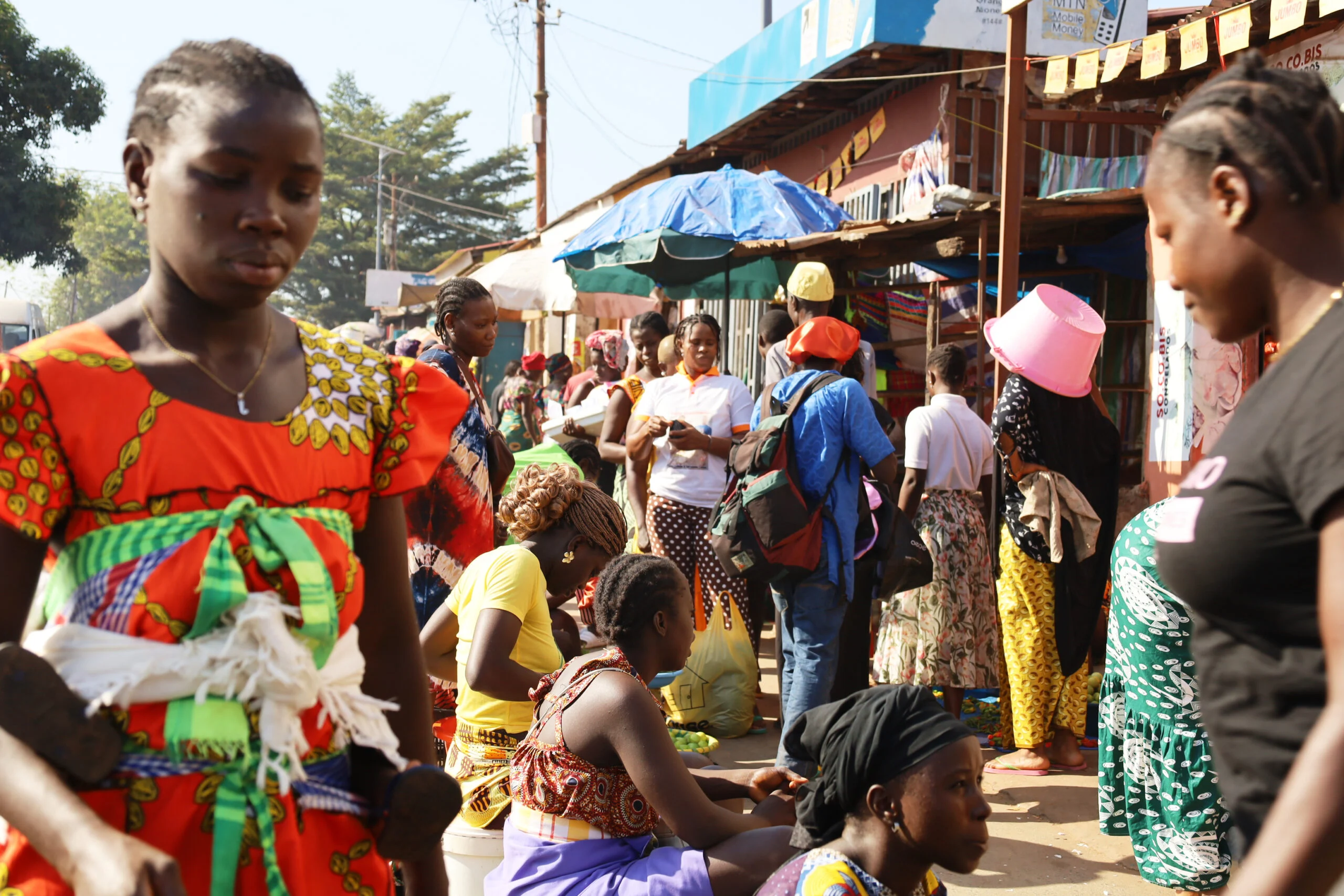
In the wake of the takeover, the High Military Command has lifted a curfew that restricted movement in the capital, Bissau. Normalcy appears to be gradually returning, with streets filling with people and vehicles as army checkpoints have been removed. Commercial activities, including markets and banks, have resumed operations.
Meanwhile, ousted President Embaló was reported to have fled to neighboring Senegal, arriving on a chartered flight organized by the Senegalese government. This development has drawn attention as Senegal aims to facilitate communication among involved parties in Guinea-Bissau, with a focus on restoring democratic governance.
Regional Responses and the Role of ECOWAS
In response to the military coup, the Economic Community of West African States (ECOWAS) announced the suspension of Guinea-Bissau from its decision-making bodies. The bloc emphasized that it will only consider reinstating Guinea-Bissau once full constitutional order is reestablished.
ECOWAS has not ruled out the potential for sanctions against those responsible for undermining the electoral process. A mediation team, comprising the bloc’s leaders, is set to travel to Bissau to engage in discussions aimed at restoring constitutional order.
As a significant political authority in West Africa, ECOWAS has faced challenges in navigating the complex landscape of military interventions. The bloc’s recent experience with coups in Mali, Niger, and Burkina Faso has made it cautious. Observers note that ECOWAS might be more judicious in its approach to sanctions in Guinea-Bissau to avoid exacerbating an already fragile situation.
Uncertain Future Ahead
The current state of affairs in Guinea-Bissau remains ambiguous, with ongoing investigations into the electoral process and the implications of military rule. Experts like Bakary Sambe from the Timbuktu Institute for Peace Studies underscore the need for patience and careful analysis before any decisive actions are taken by regional organizations. The intersection of an unfinished electoral process and a military coup creates a landscape fraught with uncertainty, and many await clarity on the nation’s path forward.