


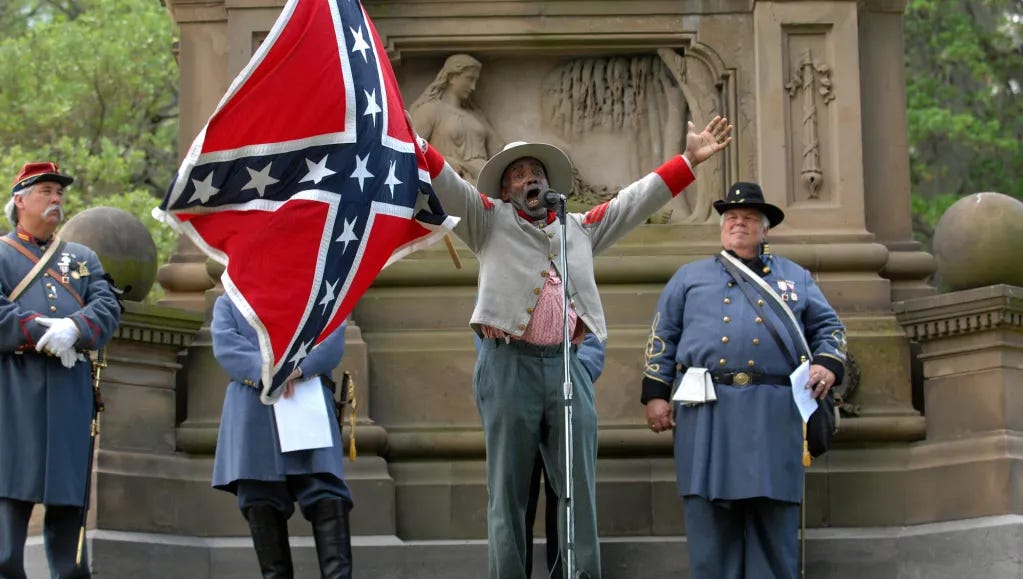
The Complex Legacy of H.K. Edgerton
Introduction to H.K. Edgerton
H.K. Edgerton has recently made headlines, captivating the interest of both supporters and critics alike. Known for being one of the most visible African American figures to embrace the Lost Cause narrative, Edgerton’s journey is a compelling chapter in the ongoing conversations surrounding race, history, and memory in America.
Background and Public Persona
Once the president of the Asheville, North Carolina chapter of the NAACP, Edgerton has drawn attention for his striking choice of attire: a Confederate uniform. He engages predominantly white audiences at various events promoting Confederate heritage. In 2002, he garnered significant media attention when he marched across the southern U.S., carrying a large Confederate battle flag, a symbol that elicits strong emotions and opinions. His public appearances often intertwine historical narratives with personal identity, making him a focal point for discussions about race and historical memory.
Protests Against Confederate Monument Removals
In recent years, Edgerton has actively protested the removal of Confederate monuments and flags, positioning himself as a defender of what he regards as Southern heritage. His activism has sparked both support and antagonism, as many question the motives behind his allegiance to symbols of the Confederacy.
Incident at Veterans Day Ceremony
A notable incident occurred during a Veterans Day celebration in Hillsborough County, Florida. Edgerton attended the event and initially participated peacefully by placing a wreath at the Missing Man Table. However, he was later asked to leave by a sheriff’s deputy who deemed his attire and flag inappropriate for the occasion. This incident not only illustrates the contentious nature of Confederate symbolism but also highlights the complex intersections of identity and public memory in America. In the aftermath, Edgerton filed a lawsuit, claiming his First Amendment rights were violated.
Humor and Irony in Representation
There’s a peculiar irony in an African American man donning Confederate attire at a ceremony meant to honor U.S. veterans. The juxtaposition has led to a variety of interpretations—from outright laughter to deep reflection on the state of racial and historical discourse in America. Edgerton’s situation echoes broader themes found in historical discussions about Black figures who aligned themselves with the Confederacy.
Parallel to Historical Figures
Edgerton’s narrative can be likened to that of William Mack Lee, who claimed to be the personal body servant of General Robert E. Lee. Lee attended numerous Confederate veterans’ reunions, gaining a cult-like status before being outed as a fraud. This history illustrates the complicated ways some African Americans have been integrated into Confederate narratives, often used to bolster white Southern identity and the erroneous lore of the Lost Cause.
The Desire for ‘Loyal’ Black Servants
There is a historical yearning among certain segments of white Southern society for narratives featuring “loyal” Black servants who remained devoted to their enslavers. This desire has fueled Edgerton’s acceptance within Confederate heritage circles, allowing him to serve as a living manifestation of the Lost Cause ideology—an identity crafted to soothe contemporary racial anxieties while validating a romanticized past.
The Role of the NAACP in Edgerton’s Identity
Interestingly, Edgerton is frequently introduced as a former NAACP president, a point he emphasizes in his public appearances. This juxtaposition highlights the appropriation and redefinition of Black historical memory by Confederate heritage groups. Just as in the past, the narratives surrounding figures like Edgerton are often crafted to suit the contemporary needs of those within the Confederate heritage community.
Reception of Edgerton’s Activism
Despite his passionate advocacy, Edgerton’s efforts have not successfully halted the removal of Confederate symbols from public spaces. His protests, although visibly stirring, have had minimal tangible impact on the larger cultural shifts toward addressing the legacy of slavery.
Continuing Presence in Public Discourse
At 77 years old, Edgerton remains an active voice within Confederate heritage discussions, yet his audience is gradually diminishing. The nature of his engagement does attract a niche but dedicated following, reflecting persistent divisions within American society regarding race and historical memory.
Final Thoughts
Overall, Edgerton serves as a complex representation of the intersection between race, history, and cultural identity in contemporary America. His journey invites ongoing dialogue about the meanings and implications of the symbols we choose to uphold or challenge in public discourse.