


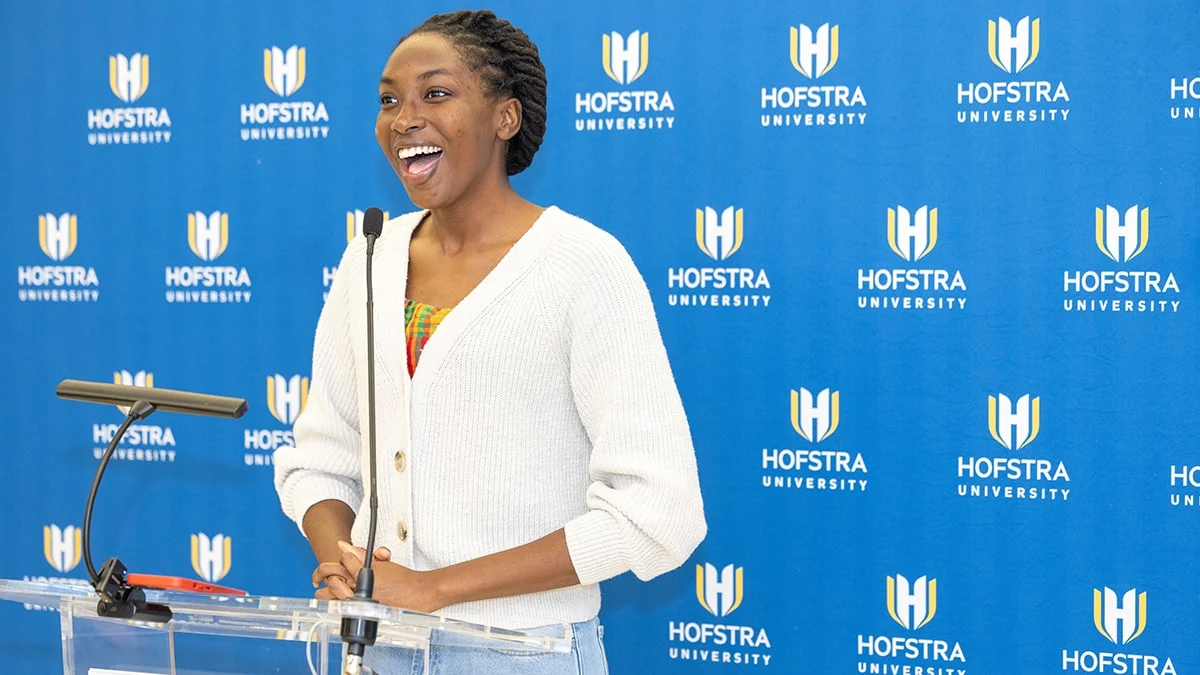
The landscape of academia is often peppered with headlines that highlight struggles, especially in communities like that of Black women who face systemic challenges. However, shining through these narratives is hope and inspiration. A significant milestone has recently emerged from Hofstra University—its first-ever Rhodes Scholarship recipient, Resa Nelson, a Black woman who embodies resilience and determination.
Resa Nelson, a dedicated biology major, made history not only for Hofstra but also as the second student from Antigua to achieve this prestigious award. Her journey reflects a commitment to addressing complex problems existing on her island and beyond. As a finalist among nine representatives from the Commonwealth Caribbean, Nelson’s selection emphasizes her dedication to impactful scientific exploration.
With a keen interest in sustainable solutions, Nelson has been conducting groundbreaking research on converting seaweed into biofuel, collaborating closely with Hofstra Biology Professor Dr. Javier Izquierdo. This innovative approach highlights her engagement with pressing environmental issues while establishing her as a forward-thinking scholar. “I would not be surprised if we’re talking about Resa becoming not only a Rhodes Scholar, but the president of a corporation or a Nobel Prize winner at some point,” Professor Izquierdo remarked in a recent press release. His endorsement sheds light on the immense potential he sees in Nelson’s capabilities.
Initially, Nelson’s aspirations lay in the medical field, but a transformative journey during her studies led her to embrace the act of discovery. The thrill of inquisition—“the process of asking questions, and finding answers”—has reshaped her academic path. This newfound passion underscores the importance of flexibility in career trajectories and the profound impact of curiosity in intellectual pursuits.
Reflecting on her identity, Nelson brought attention to the need for better representation of Afro-Caribbean individuals in scientific fields like cell biology and research. “I know what it’s like to grow up where your options feel limited,” she explained candidly. Her experience reinforces the idea that visible role models can profoundly influence the ambitions of young scholars, particularly those from underrepresented backgrounds.
Resa’s academic journey has also seen her delve into cancer immunology and neurobiology, showcasing her interdisciplinary interests. Despite these achievements, she remains open to various possibilities for her future. Regardless of the path she ultimately chooses, Nelson is committed to embodying servant leadership—a principle instilled by her father. “Jesus served people by washing their feet. My research is how I serve and how I plan to contribute to the world in a meaningful way,” she articulated, blending her personal philosophy with her scientific goals.
Looking ahead, Nelson is set to further her studies at the University of Oxford in the U.K. She articulates a bold vision for her future, aiming to develop the first Afro-Caribbean stem cell line. “That’s my big dream that we can take a stem cell and turn it into anything and then that can be used as a diagnostic tool,” she concluded. This ambition not only speaks to innovation in the medical field but also underscores the importance of diversity in research that benefits all communities.
This structured article aims to encapsulate Resa Nelson’s journey, highlighting her achievements, aspirations, and the broader implications for representation in academia. Each paragraph focuses on a distinct aspect of her story, creating an engaging narrative.