


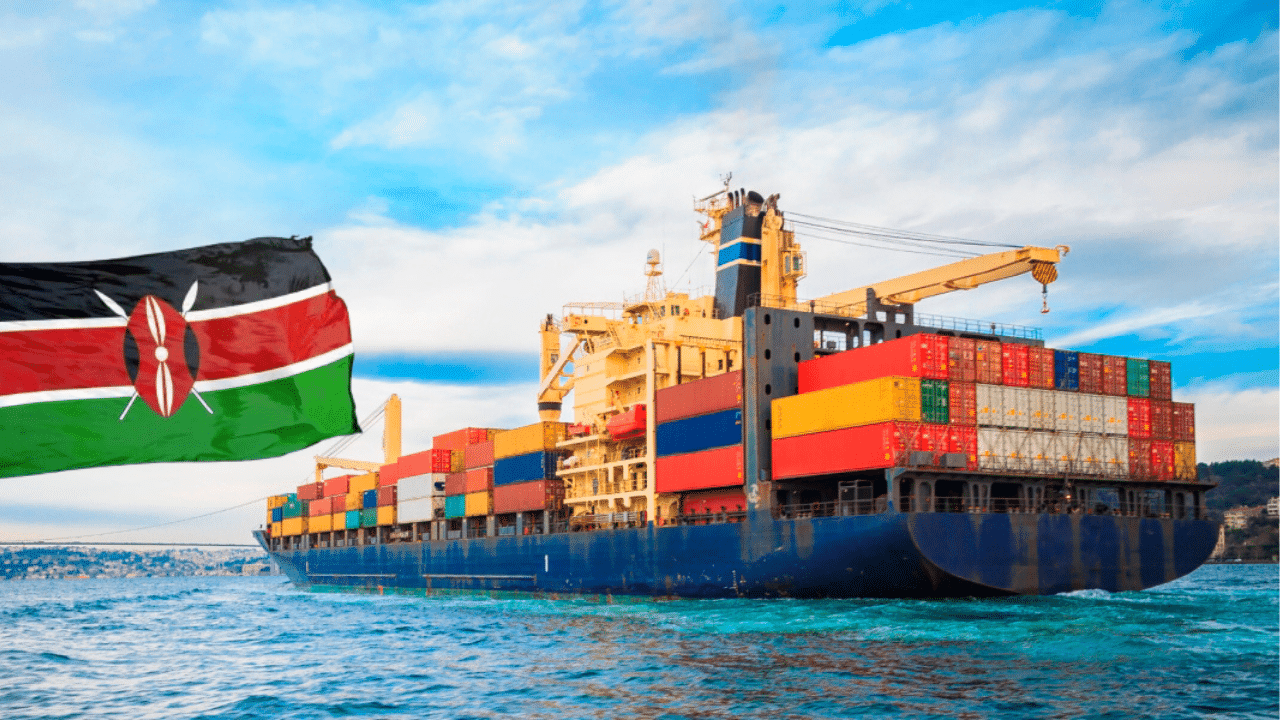
Kenya and China Forge Ahead with Tariff-Free Trade Agreement
Kenya has recently made headlines by reaching a preliminary agreement with China, granting tariff-free access to an impressive 98.2% of locally produced goods. This strategic move comes as the country seeks to bolster foreign earnings while grappling with a widening trade deficit.
The Trade Landscape
The announcement was made by the Ministry of Trade and has significant implications for Kenya, East Africa’s largest economy. Presently, the nation is contending with a mounting trade deficit, which recently exceeded $9.3 billion (KSh1.2 trillion) during the first three quarters of 2025—an increase of approximately $400 million (KSh50 billion) compared to the previous year.
A closer examination of the Balance of Payments report from the Kenya National Bureau of Statistics reveals a stark reality: total imports surged to $16.3 billion (KSh2.1 trillion), compared to $15.5 billion (KSh2.0 trillion) a year prior. On the flip side, export revenues fell to $6.5 billion (KSh846.1 billion), a slight decrease from $6.6 billion (KSh855.0 billion). This imbalance highlights Kenya’s heavy reliance on imports, underscoring the urgency for remedial action.
Early Harvest Arrangement Explained
This preliminary agreement is technically referred to as an Early Harvest Arrangement. It allows Kenyan exports to enjoy duty-free entry into China while formal negotiations for a comprehensive trade agreement are underway. Officials are optimistic, asserting that this development could unlock “vast economic potential” for the nation, particularly in expanding agricultural exports.
The trade ministry emphasized that the new arrangement is expected to generate considerable employment opportunities and yield tangible benefits for the economy. Agriculture has always been a cornerstone of Kenya’s economy, with food and beverages consistently contributing significantly to foreign earnings.
Rising Imports and Trade Deficit with China
The trade relationship between Kenya and China has seen rapid expansion over the past couple of decades, reaching approximately $4.7 billion in 2024, an increase from $3.8 billion in 2023. Major exports to China include tea, coffee, and scrap metal, while imports primarily consist of textiles, electronics, and construction machinery. However, this flourishing relationship has not come without challenges, as Kenya continues to register a substantial trade deficit with China.
During the review period, the import expenditure on Chinese goods rose 14.5% year-on-year to $3.8 billion (KSh488.9 billion), whereas earnings from outbound shipments plummeted to a mere $103 million (KSh13.3 billion). This translates into a staggering shortfall of approximately $3.7 billion (KSh475.6 billion). The new trade arrangement aims to bolster exporters’ access to China’s vast $19 trillion economy, potentially aiding in narrowing the trade deficit.
Stagnation in US Trade
While Kenya forges stronger ties with China, its trade with the United States is experiencing stagnation. Exports to the US decreased to $465.1 million (KSh59.9 billion) in the first nine months of 2025, down from $508.5 million (KSh65.5 billion) last year. This decline is largely attributed to reduced demand stemming from recent tariff hikes imposed under the “America First” agenda.
The 10% import duty that took effect on August 7, 2025, was part of broader efforts by the US to address trade imbalances, contributing to a muted overall trade volume of $1.3 billion (KSh179.2 billion). Conversely, despite the challenges faced, Kenya remains committed to strengthening its bilateral relationship with Washington, with negotiations for a separate trade agreement ongoing.
Growth in Intra-African Trade
Interestingly, as demand from China and the US softens, African markets are absorbing a larger portion of Kenya’s exports. Shipments to the continent reached $2.6 billion (KSh336.7 billion) in the same nine-month period, almost 40% of total foreign earnings and marking a 4.1% increase year-on-year. This rise in intra-African trade is empowering Kenya to maintain a trade surplus with neighboring countries, nearing $1 billion (KSh121.7 billion).
The momentum further strengthened in Q3 2025, with intra-African exports burgeoning by 15.3%, solidifying the continent’s position as Kenya’s largest export market. While certain markets like Sudan and Somalia witnessed steep declines, higher foreign exchange inflows from nations such as Egypt and Rwanda have provided a cushion against these losses.
Broader Implications of China-Kenya Agreement
China’s recent trade concession to Kenya signifies a larger strategy aimed at deepening economic relationships with African nations, especially in light of global trade uncertainties. Following Beijing’s pledge to eliminate tariffs for imports from 53 African countries, including Kenya, this agreement exemplifies the growing diplomatic engagement on the continent.
Beyond tariff eliminations, China’s ambitions extend to enhancing its influence in East Africa through key investments in trade routes and shipping lanes. Foreign Minister Wang Yi’s tour through multiple African countries is a testament to this commitment, aiming to establish China as a pivotal player in African trade at a time when US relations are strained due to increasing protectionism.
The moves by both Kenya and China are poised to reshape the trade dynamics in East Africa, setting the stage for greater economic collaboration and opportunities.