


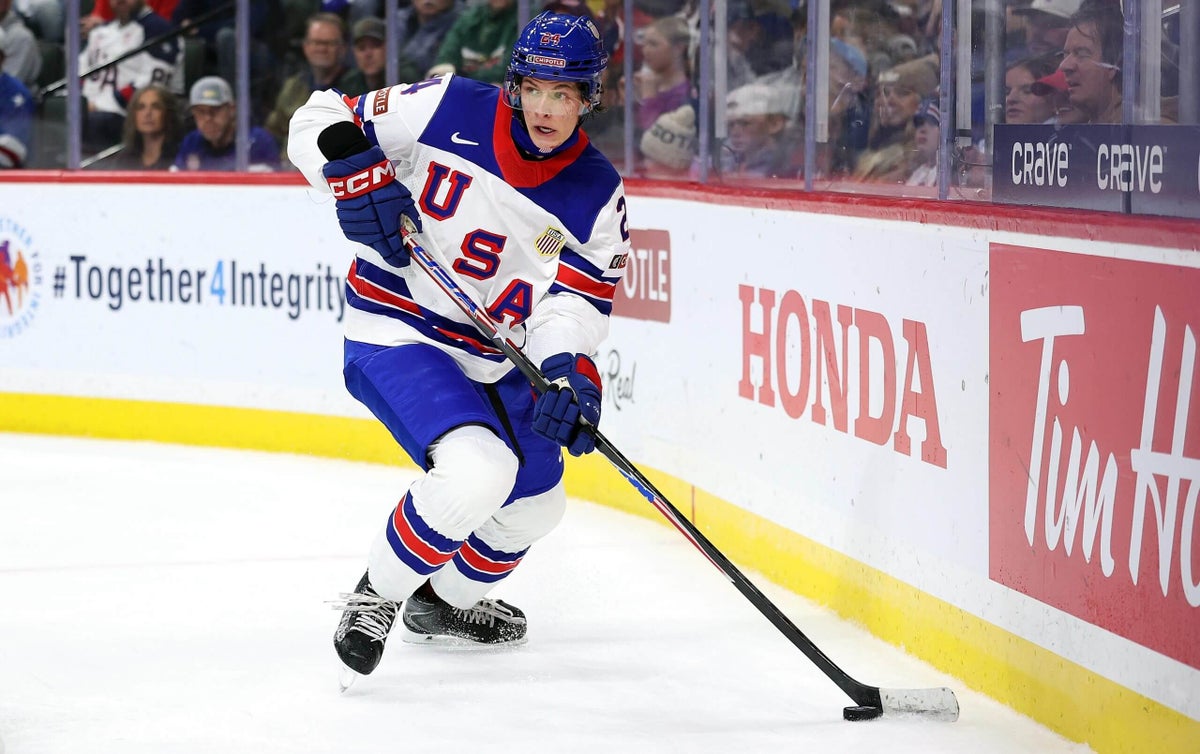
ST. PAUL, Minn. — Brandon Naurato’s enthusiasm shines through as he reflects on Will Horcoff’s remarkable journey over the past year. Their story began on December 23, 2024, when Naurato, head coach of the University of Michigan Wolverines, reached out to Horcoff, who was then navigating a challenging draft year while playing for USA Hockey’s National Team Development Program (NTDP). Naurato saw potential in Horcoff, setting the stage for a transformative opportunity.
Initially, the Wolverines hadn’t planned to bring Horcoff in until after his draft year. However, sensing a pressing need for a strong presence at the net-front on the power play and armed with an open scholarship, Naurato made the strategic choice to call Horcoff. He laid out a potential path for Horcoff to join them mid-season, emphasizing the recognition of his unique talents even amid draft uncertainties. Just weeks later, Horcoff debuted in a high-pressure environment at Wrigley Field, making a notable impact with a goal and an assist in front of a crowd of 60,000.
Upon arriving at Michigan, Horcoff was anticipated to be a solid third-round pick, according to NHL Central Scouting. Fast forward to June, and the Pittsburgh Penguins selected him with the 24th overall pick, a testament to his rapid development. Now, as a sophomore embarking on his first full college season, Horcoff has emerged as a standout, leading the college hockey scene with 19 goals in just 20 games and contributing swiftly to Team USA’s performance in the World Junior Championships.
Naurato describes Horcoff as a “6-5 unicorn,” reflecting on his transformation from a slightly awkward teenager to a promising player. A unique dynamic binds these two: before coaching the Wolverines, Naurato worked alongside Horcoff’s father, Shawn, a former NHL captain and now an executive with the Detroit Red Wings. This connection added a layer of personal commitment to the decision to offer Horcoff early admission, betting on both his capabilities and character.
“He’s academically intelligent, a worker, and always striving to improve,” Naurato remarks, highlighting the importance of Horcoff’s mentality. Throughout Horcoff’s career, Naurato has followed his development closely, admiring his offensive instincts despite the distractions of draft evaluations. The key to Horcoff’s success, according to Naurato, lies in his relentless work ethic, which has now culminated in an impressive breakout season.
Horcoff’s journey has not been without challenges. The coaching staff noted some growing pains during his initial transition to college hockey, but both Naurato and Assistant Coach Kevin Reiter sensed that a breakthrough was on the horizon. Reiter admired Horcoff’s evolving coordination and skill, which became evident during the NHL Scouting Combine when Horcoff shattered the long jump record—a moment of pride captured through a triumphant display of self-acknowledgment.
Despite scrutiny surrounding his skating and acceleration, Reiter asserts that Horcoff’s athletic prowess is undeniable. His commitment to improvement manifested through rigorous training under the guidance of new assistant coach Max Pacioretty. The collaborative efforts between coaching staff and Horcoff allowed him to hone his skills in pre-scouting opponents and find optimal scoring positions on the ice.
The lively atmosphere Horcoff brings to Michigan practices is infectious. Naurato and Reiter draw comparisons between Horcoff and former Wolverine and current Penguins teammate Rutger McGroarty, noting their shared energy and enthusiasm. This vigor also piqued the interest of the Penguins during the draft process; Horcoff’s connections with the organization run deep, stemming from his father’s history in the league.
NHL executives noted that while Horcoff embodies some traits of his father, he possesses distinct skills that set him apart. Jason Spezza, the Penguins’ assistant general manager, points out Horcoff’s “untapped athleticism” and impressive hockey sense. These attributes, paired with Horcoff’s willingness to put in the work, convinced the Penguins that he could become a significant asset to their organization.
Horcoff’s evolution into a reliable goal-scorer mirrors the trajectory many have anticipated since his youth hockey days. His coaches highlight that his size and skill were always apparent, enabling him to score in a multitude of ways, which they view as essential for success at the next level. As he continues to develop, his versatility allows him to occupy multiple roles on the ice, contributing to Team USA in various ways during tournament play.
Reflecting on the past year, Horcoff acknowledges a whirlwind of experiences, filled with lessons learned alongside both triumphs and tribulations. Although he is currently thriving, he remains grounded, understanding that his rapid ascent does not signify a completed journey. Both Naurato and Reiter recognize the potential within Horcoff to evolve further, particularly regarding his gameplay dynamics in transitioning back to a wing position from center.
As he works to refine his skills further, the goal of one day donning a Penguins jersey is a vivid aspiration that motivates him. Coaches see plenty of room for improvement, particularly in hunting the puck, forechecking with tenacity, and overcoming contact in competitive scenarios. The focused attention on his ongoing development aligns with the overarching objective: to mold Horcoff into a versatile and impactful player ready for the NHL stage.