


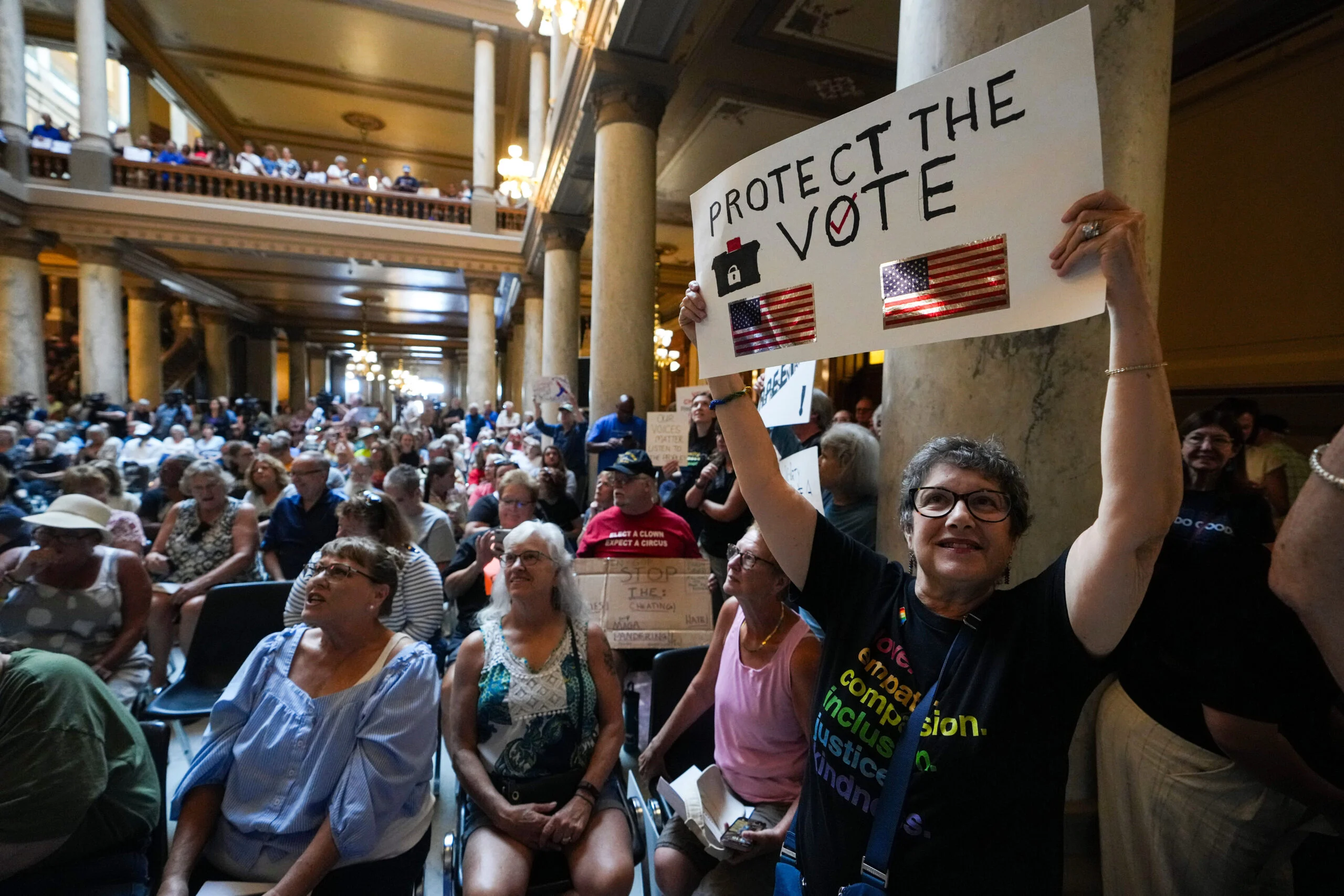
Indiana’s Congressional Redistricting: A Controversial Move
The Indiana state House recently passed a contentious new congressional map, prompting significant discussion and debate among lawmakers and constituents alike. This move, fueled by Republican support and pressure from former President Donald Trump, has taken center stage as the state navigates the complex terrain of political redistricting.
The Vote and Its Implications
On a Friday afternoon, Indiana House Republicans voted 57-41 in favor of a congressional map that notably disrupts the political landscape of Indianapolis. By dividing the city into four distinct districts, the proposal aims to bolster the GOP’s chances of winning all nine congressional seats in Indiana. While this development has garnered applause from Trump and other Republican figures, the real test awaits in the state Senate, where dissent exists among GOP lawmakers regarding mid-decade redistricting.
Criticism from the Opposition
House Democrats have raised alarms about the pace at which this new map was introduced. Unlike the previous mapping process in 2021, which involved extensive public hearings and stakeholder engagement, this new proposal was unveiled in just one week. Criticism has been particularly focused on how the map could dilute the influence of marginalized communities, especially in Indianapolis, as expressed strongly by Democratic Rep. Greg Porter. He argued that the redistricting would disenfranchise Black and brown voters, saying, “What we’re doing today…takes away the rights of Black and brown people in Indiana.”
Political Pressures and Strategies
The urgency behind this initiative stems from pressures facing Republican-led states like Indiana to act swiftly in favor of redistricting. Trump’s influence looms large; the former President has urged Republican lawmakers to redraw districts in their favor ahead of critical midterm elections. With Democrats needing to flip only a handful of seats to alter the balance of power in Congress, the stakes are high. The House’s approval of the map amplifies the pressure on Senate Republicans to act quickly and decisively.
Influences from the National Level
The map’s authorship is tied closely to national Republican strategies. State Rep. Ben Smaltz revealed that the legislation was crafted in collaboration with the National Republican Redistricting Trust, suggesting a coordinated effort to influence congressional maps across various states. This indicates a potential trend where mid-decade redistricting becomes commonplace as both parties seek to outmaneuver each other strategically.
The Senate’s Pivotal Role
As the legislation progresses to the Senate, its fate remains uncertain. The state Senate requires a minimum of 25 Republican votes to pass, with additional support potentially needed from Lt. Gov. Micah Beckwith. Notably, Senate president Rodric Bray has expressed skepticism about securing enough votes, highlighting the division within Republican ranks. This internal discord is exacerbated by reported threats and agitation directed at legislators, signaling just how charged the atmosphere around this issue has become.
Ongoing Controversy and Community Concerns
The proposed map also has the potential to impact individual representatives, such as U.S. Rep. André Carson, who faces the risk of losing his seat due to the reshaping of district lines. As the political landscape shifts, community engagement and awareness become vital. The swift movement of this redistricting proposal underscores the increasing concentration of power among incumbents and the possible disenfranchisement of voters who may not have had a chance to voice their opinions during the rapid legislative process.
Urging Swift Action
As discussions progress, Republican Gov. Mike Braun has joined calls for the Senate to act quickly, emphasizing the need for Indiana to move forward with confidence. Meanwhile, Trump remains vocal in his support of the map, encouraging GOP senators to embrace the proposal without significant changes. This echoes the broader trend of political alliances and loyalties shaping the legislative process in states across the country.
The Map’s Design and Future Outlook
The approved map transforms the landscape of Indianapolis from a singular Congressional district into four quadrants blending urban and rural influences. This approach could notably challenge existing Democratic representation, particularly in areas that have historically leaned Democratic, such as those represented by U.S. Rep. Frank Mrvan. The consequences of such changes will unfold as the new map is scrutinized and debated in the coming days.
In the broader context of congressional redistricting, Indiana’s recent actions reflect the escalating political maneuvering that both parties are increasingly resorting to in the quest for control and influence heading into a pivotal election cycle. As legislative chambers prepare for critical discussions about this new congressional map, the implications for Indiana’s voting landscape could reverberate far beyond state lines.