


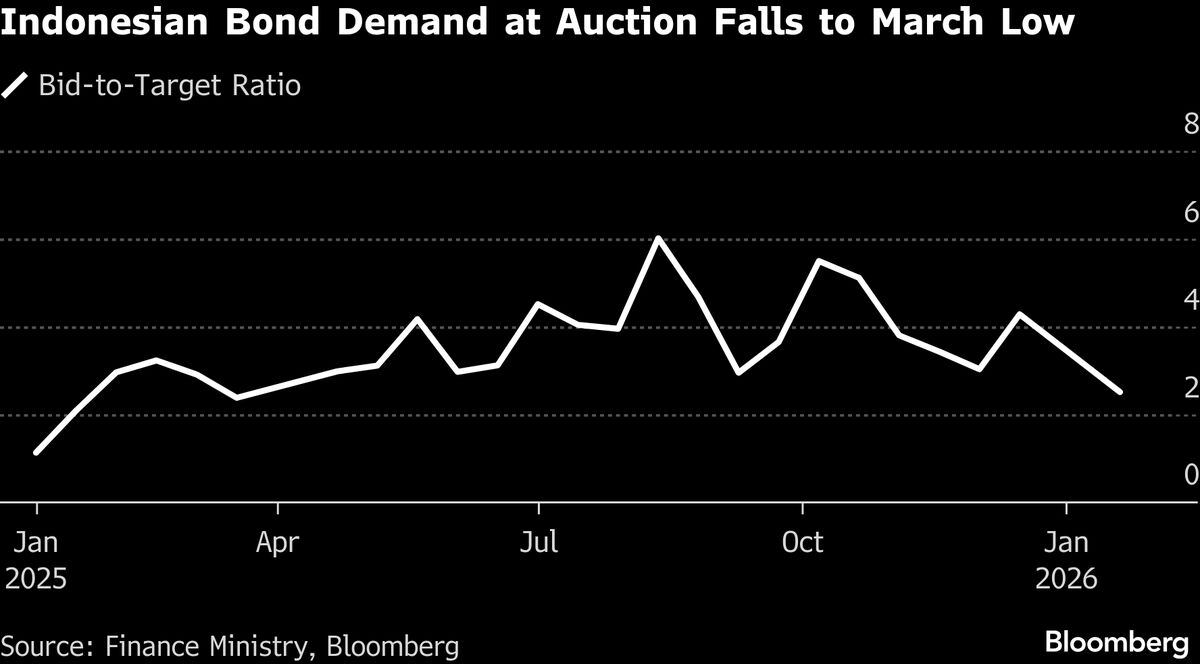
Demand for Indonesian Bonds Hits Ten-Month Low: Analyzing the Recent Auction
In the ever-evolving landscape of global finance, the latest auction for Indonesian bonds has highlighted pressing issues facing the nation’s economy. Just recently, demand for these bonds fell to its lowest level in ten months, marking a significant downturn that investors and economists alike are keenly observing. The roots of this decline can be traced to a combination of currency fluctuations, fiscal concerns, and broader market sentiment.
Currency Instability: The Rupiah’s Troubling Selloff
At the heart of the bond auction’s lukewarm reception is the recent selloff of Indonesia’s currency, the rupiah. Typically, when a currency weakens, it raises questions about the underlying economic stability of a country. In Indonesia’s case, the rupiah has been struggling, prompting investors to reconsider the risk associated with Indonesian assets. A weaker currency can lead to higher inflation and reduced purchasing power, which are alarming signals for both local and foreign investors.
Investor Sentiment: The Ripple Effect
The decline in bond demand isn’t solely about currency fluctuations; it reflects broader investor sentiment about Indonesia’s fiscal health. Concerns are mounting regarding the government’s financial management, particularly as global interest rates rise and economic uncertainties loom. When investors perceive that a country may struggle to meet its fiscal obligations, they become hesitant to invest, leading to lower demand at bond auctions. This shift in sentiment can be further exacerbated by international economic tensions, which can place additional pressure on emerging market bonds like those from Indonesia.
Fiscal Health: Navigating Financial Challenges
Indonesia’s fiscal landscape has faced scrutiny for some time now. Factors such as increasing government spending, limited revenue growth, and rising debt levels have created an environment where fiscal sustainability is questioned. Investors are increasingly looking for assurance that the government can effectively manage its debts and maintain economic stability. The recent auction results underscore the need for Indonesia to address these fiscal health concerns through prudent economic policies that inspire investor confidence.
Economic Outlook: Reassessing Growth Projections
Emerging economies like Indonesia are often at the mercy of both domestic and international pressures. With inflation rates fluctuating, the global economy displaying volatility, and commodity prices unpredictably swinging, the outlook for growth in Indonesia has become more uncertain. Analysts argue that a reassessment of growth projections is necessary, especially in light of dwindling bond demand. Investors are now looking for signs of resilience in Indonesia’s economic strategy to justify a renewed interest in its bond market.
Policy Implications: A Call to Action
The current state of the bond market serves as a pivotal moment for Indonesian policymakers. There needs to be a concerted effort to communicate the government’s strategy for restoring fiscal health. Whether through proposed reforms, measures to stabilize the rupiah, or steps to ensure a more robust economic environment, decisive actions are necessary to regain investor trust. Without clear policies to address these fears, Indonesia risks being viewed as a less favorable investment destination.
Conclusion: What Lies Ahead
As bond demand continues to falter amid these challenges, the focus will undoubtedly shift to how Indonesia navigates this period of uncertainty. Investors will be closely watching for policy announcements and economic indicators that signal a reversal of the current trend. With many eyes on Indonesia’s financial stability, the coming months may prove crucial for its bond market and broader economic health.
The dynamics of the bond market are never static, and Indonesia’s ability to adapt to both local and international challenges will be key to re-establishing confidence among investors.