


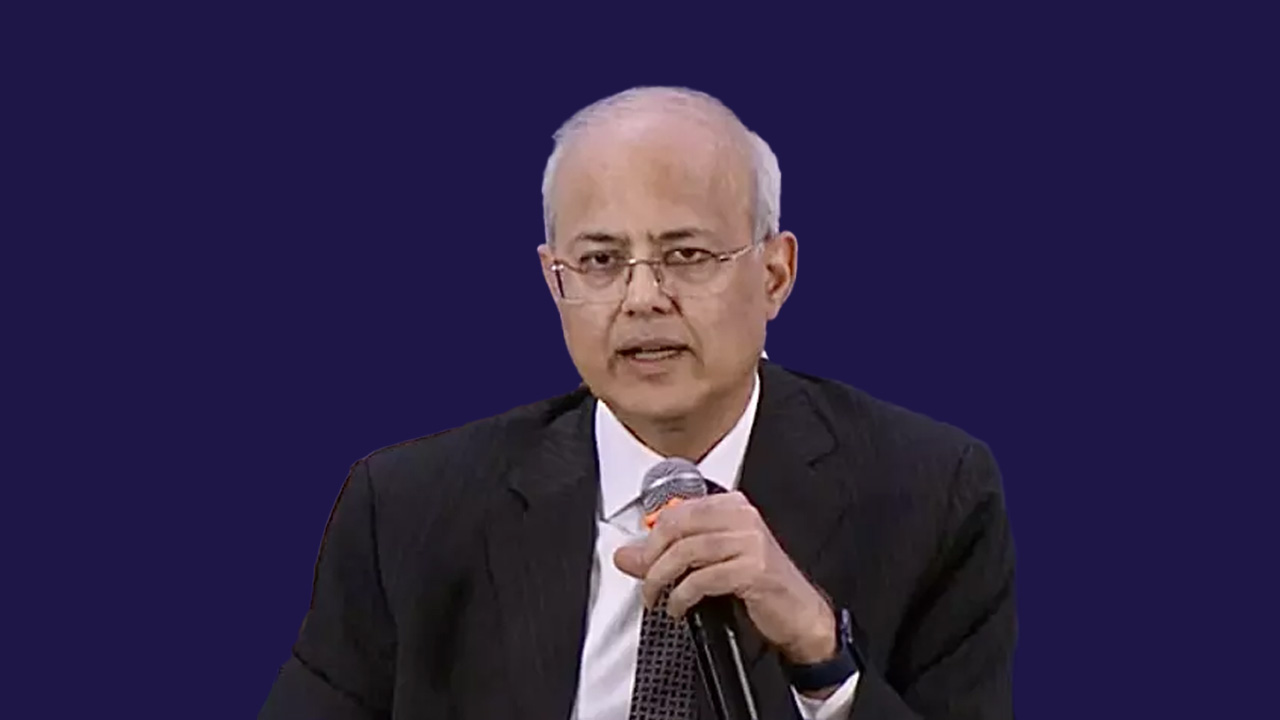
Embracing AI: A Transformative Leap for the Indian Judicial System
In a compelling address on November 29, 2025, Justice Manmohan of the Supreme Court of India articulated a vision that places the Indian judicial system at the brink of what is often referred to as the “fourth industrial revolution.” Amid the backdrop of an overwhelming backlog of over 50 million cases, he shed light on the pressing necessity to integrate Artificial Intelligence (AI) into the courts, while also signaling caution regarding potential pitfalls associated with unchecked technological advancements.
The Disconnect Between Law and Technology
Justice Manmohan’s discourse highlighted a significant gap in the current legal framework. While the global landscape continues to digitize rapidly, existing laws often remain anchored in a physical paradigm. This disconnect poses challenges, especially when addressing modern digital assets like non-fungible tokens (NFTs) or digital art. The judiciary, as the guardian of the Constitution and protector of citizens’ rights, must grapple with whether traditional procedural frameworks can adequately address the intricate, technology-driven disputes of the 21st century. He aptly remarked, “we cannot drive into the future while looking into the rearview mirror,” underscoring the urgency for reform.
The Need for Speed, Scale, and Access
During his address, Justice Manmohan emphasized that the adoption of technology is no longer a luxury but an absolute necessity. In a country with a population of 1.4 billion, the sheer volume of pending cases translates to millions of citizens seeking justice. The traditional model of adjudication suffers inherent limitations, particularly concerning working hours and an alarmingly inadequate judge-to-population ratio, currently at only 21 judges per million, which is far below global standards. Incremental changes will not suffice; what is required is a “force multiplier,” a role that technology can fulfill.
The COVID-19 pandemic acted as a catalyst for judicial modernization, showcasing the judiciary’s adaptability. Courts transitioned to virtual hearings almost overnight, demonstrating that innovative solutions can be effectively implemented even in dire circumstances.
From Automation to Augmentation with AI
Justice Manmohan pointed out that the judicial system is evolving from an era focused on information to one driven by intelligence. AI is set to play a critical role in enhancing judicial efficiency by understanding and analyzing data rather than merely storing it. Importantly, he clarified misconceptions surrounding AI, reinforcing that the aim is not to replace human judges with “Robo-Judges.” Instead, the goal is to promote augmented intelligence, where AI tools assist judges, empowering them rather than usurping their decision-making powers.
Innovations such as the Supreme Court’s SUVAS system exemplify this transition. By enabling rapid translations of judgments into vernacular languages, the system significantly broadens access to justice for countless litigants. Additionally, tools like SUPACE, an AI-driven research assistant, can process extensive case materials in mere moments, allowing judges to quickly identify relevant facts and precedents. The integration of AI has also led to real-time transcription of hearings, ensuring accurate records of oral arguments.
Learning from Global Examples of AI in Justice
Justice Manmohan stressed the value of examining global trends and practices as India shapes its AI framework for the judiciary. Countries worldwide have embraced varying degrees of technological integration, providing both success stories and cautionary tales. For instance, in China, the establishment of Internet Courts allows for the resolution of millions of cases online, utilizing AI for routine tasks, although this raises concerns regarding the impersonality of justice.
In the United States, AI tools like COMPAS are deployed to gauge the risk of re-offending and inform bail and sentencing decisions. However, he cautioned against a blanket replication of these models in India, emphasizing the nation’s unique constitutional values and socio-cultural diversity. A tailored, human-centric approach is essential, ensuring that AI facilitates rather than replaces judicial discretion under a “human-in-the-loop” framework.
Addressing Ethical, Bias, and Constitutional Concerns
While AI’s transformative potential is encouraging, Justice Manmohan raised important ethical and constitutional issues that must be navigated before integration into the justice system can proceed. One primary concern is algorithmic bias. AI systems that learn from historical data can unintentionally reinforce existing prejudices based on caste, religion, gender, or economic status. He cited the example of the COMPAS tool, which has faced criticism for disproportionately flagging African-American defendants as “high risk,” illustrating how technology designed to aid justice can also perpetuate injustice.
Justice Manmohan reinforced India’s commitment to substantive equality, asserting that any algorithm utilized by the judiciary must be transparent and explainable, ideally open-source. Further challenges include privacy and data protection, as the judiciary handles sensitive personal information. AI systems must safeguard confidentiality while aligning with principles such as the Right to be Forgotten.
Moreover, he highlighted the issue of the digital divide, noting that many lawyers and litigants in rural regions grapple with connectivity and digital literacy. Technology should serve as a tool for democratizing access to justice, rather than establishing a system that favors the urban elite.
The Indispensable Human Element in Adjudication
Justice Manmohan poignantly asserted that adjudication is inherently an art, not a mere mechanical task. The essence of judging involves balancing competing principles, empathizing with human frailty, and applying equitable judgment. While AI can efficiently analyze large volumes of legal texts, it lacks the capacity to capture the spirit of the law or detect human emotional nuances, particularly in sensitive criminal cases. This delicate balance of justice—retribution, deterrence, and rehabilitation—remains an intrinsically human endeavor.
While AI may streamline repetitive, administrative functions, the core role of judges will remain vital. Technology is poised to liberate judges from mundane tasks, providing them with more time for complex reasoning and constitutional interpretation, ultimately enhancing the delivery of empathetic and principled justice.
Envisioning a Hybrid Judicial System
Justice Manmohan articulated a forward-thinking vision for a “Hybrid Justice System” that marries physical and digital processes to optimize efficiency while upholding judicial values. He advocates for significantly reducing administrative burdens on judges, enabling them to focus predominantly on substantive judicial responsibilities. In high-volume scenarios—like minor civil disputes or traffic offenses—enhancing Online Dispute Resolution (ODR) and deploying AI-assisted mediation platforms could expedite dispute resolution, alleviating courthouse pressure.
He outlined the potential of predictive justice tools that can analyze past precedents to estimate the likelihood of success for litigants. This could encourage early settlements and promote dialogue, significantly reducing the caseload for the courts.
To realize this vision, Justice Manmohan emphasized the need for transformative changes in legal education, advocating for curricula that blend procedural law with technology and programming fundamentals to prepare future lawyers for an AI-enhanced justice system.
In closing, he underscored an essential truth: technology is a tool, not a talisman. It must uphold the rule of law rather than supersede it, ensuring that the integrity and independence of human judges remain the cornerstones of justice in the rapidly evolving landscape of the Indian judiciary.