


Keystone
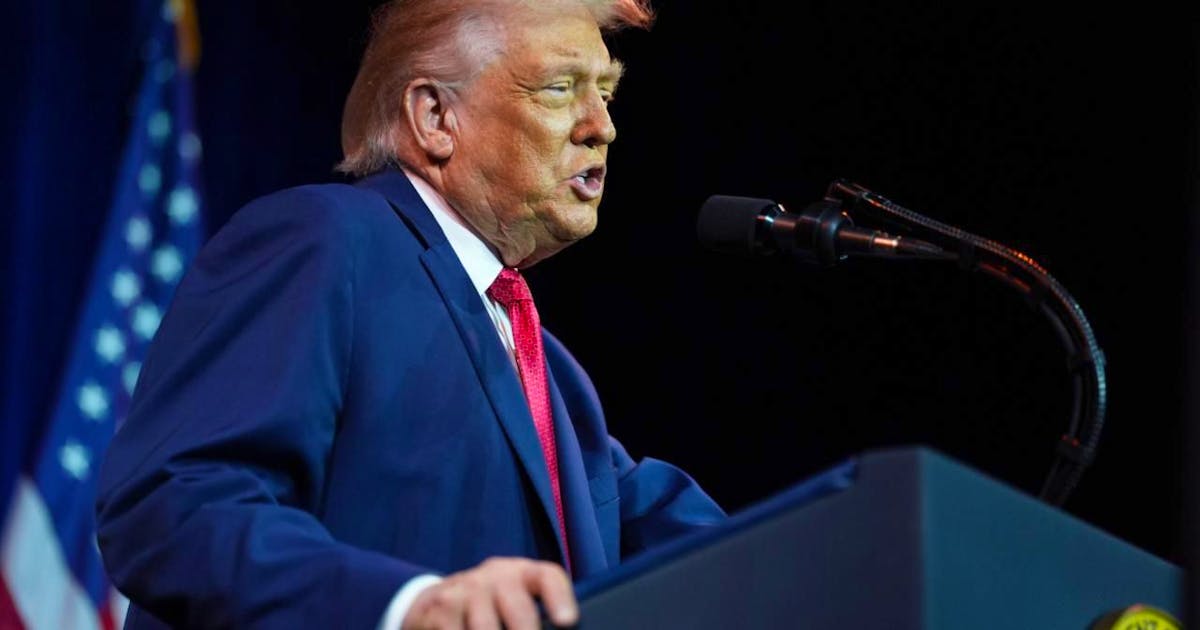
Amid rising global tensions, US President Donald Trump recently reaffirmed America’s commitment to NATO, asserting, “We will always be there for NATO, even if it won’t be there for us.” This statement, shared on his online platform Truth Social, highlights a complex relationship between the United States and its NATO allies.
However, Trump’s confidence in NATO’s reliability has been questioned. He expressed concerns that nations like Russia and China would not fear NATO if the US weren’t a part of it. The insinuation here is clear: without America’s military might standing alongside NATO’s collective defense strategy, the alliance could falter in its purpose. Trump underscored a sense of skepticism about NATO allies’ readiness to support the US in dire situations, posing a question about the unity of purpose that defines the alliance.
This commentary on NATO dovetails with broader discussions about territorial claims and national interests. Recently, America’s interest in Greenland raised eyebrows, particularly given its status as a territory of Denmark, a NATO partner. Trump’s proclamation that the US “needed” Greenland was met with firm rejection from Danish Prime Minister Mette Frederiksen, who stated, “If the USA attacks another NATO country, then everything stops.” This exchange encapsulates the delicate balance of international relations, rooted in history and evolving geopolitical priorities.
NATO, which boasts 32 member countries, is more than just a military alliance; it’s a commitment to mutual defense based on shared democratic values. Founded in the aftermath of World War II, NATO operates fundamentally on Article 5 of its treaty—the principle of collective defense. This stipulates that an armed attack on one member is tantamount to an attack on all. Thus, when a member state finds itself in peril, the expectation is that allies will rally to its defense, thereby reinforcing the notion of solidarity among nations.
In light of current events, it is critical to assess not only America’s strategic military alliances but also the underlying trust and commitment that bind these nations. When doubts arise about whether allies would come to the aid of one another, the effectiveness and credibility of the alliance itself are called into question. Such dynamics represent the complexities of international diplomacy, where relationships between nations can rapidly reshape the landscape of global security.
In conclusion, the statements made by Trump not only reflect his views on NATO but also illuminate the shifting perceptions of security among member nations. As geopolitical tensions persist, the question of alliance fidelity and the actual mechanics of mutual defense will prove essential in determining how NATO navigates the challenges ahead.