


Sinner’s Hard-Fought Victory Under Extreme Heat at the Australian Open
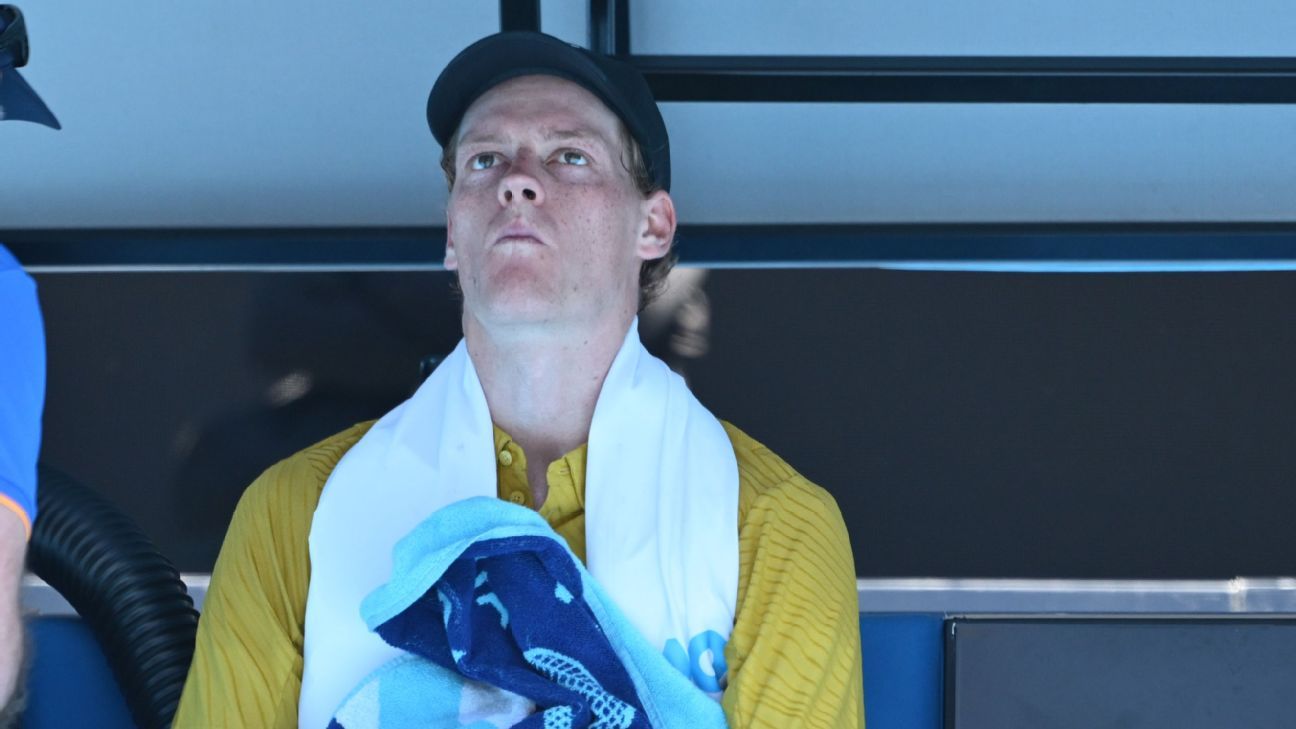
On January 24, 2026, Jannik Sinner found himself in a battle not just against his opponent, Eliot Spizzirri, but also against the oppressive heat at the Australian Open. As temperatures soared to around 35 degrees Celsius (95 Fahrenheit), the extreme conditions played a crucial role in shaping the match dynamics on Rod Laver Arena.
The Heat Takes Its Toll
Early in the match, Sinner appeared to be struggling physically. Limping and grappling with severe cramps in his arms and legs, his performance was visibly affected. His coach, Darren Cahill, even encouraged him to hang on a bit longer as Sinner faced a break early in the third set. The heat was relentless, and it seemed that Sinner’s chances of advancing in the tournament were slipping away.
A Life-Saving Break
Just when it appeared that Sinner might be facing an early exit, the extreme heat policy came into play, and the roof on Rod Laver Arena was closed. This pivotal moment provided a brief respite from the sizzling conditions, allowing him to recuperate. After the delay, he returned to the court reinvigorated, quickly shifting the momentum of the match in his favor, winning five of the next six games to secure the third set.
The Importance of the Cooling Break
As the match progressed, a 10-minute “cooling break” between the third and fourth sets offered Sinner another opportunity to recover. With the roof closed, the indoor conditions were much more conducive to his playstyle. Reflecting on this, Sinner admitted, “I got lucky with the heat rule,” acknowledging the stark contrast in his physical state before and after the break.
Matching Toughness with Strategy
Despite his struggles, Sinner’s determination remained steadfast. He expressed the mental fortitude required in tennis, stating, “I tried to stay as calm as possible. I’m here to fight, to play every point the best possible way.” By focusing on surviving until he could get a break, he demonstrated a deep understanding of the game’s psychological demands alongside its physical challenges.
A Display of Sportsmanship
The match also showcased an incident that highlighted both players’ sportsmanship. During the second set, Sinner was issued a rare time violation while preparing to serve. Spizzirri, displaying integrity, stepped in to tell the umpire that he wasn’t ready to receive. This act endeared him to the crowd, who were eager to see an upset as the underdog faced off against the No. 2 seed.
Sinner’s Resilience and Forthcoming Matches
Having regained his composure, Sinner ultimately took the match with a scoreline of 4-6, 6-3, 6-4, 6-4, showcasing his resilience in the face of adversity. His next challenge will be against fellow Italian Luciano Darderi, who secured a spot in the next round after defeating No. 15 Karen Khachanov.
Italian Contingent on the Rise
Sinner isn’t the only Italian player making waves in the tournament. Alongside him, No. 5 seed Lorenzo Musetti advanced after a grueling five-set match against Tomas Machac, while No. 8 seed Ben Shelton expressed relief over the roof closure, emphasizing how it amplified the crowd’s energy.
The Bigger Picture: Explaining the Heat Policy
Saturday’s events were marked by the invocation of the extreme heat policy, which halted play on outside courts for at least three hours. Such measures are crucial in maintaining player safety as temperatures on the tournament’s heat scale reached a maximum of 5, with forecasts predicting a peak temperature of 40 degrees Celsius (104 Fahrenheit). The policy is a testament to the tournament’s commitment to athlete welfare in challenging weather conditions.
Novak Djokovic’s Pursuit
As night fell, the spotlight shifted to 10-time champion Novak Djokovic, who continued his pursuit of an unprecedented 25th Grand Slam singles title. His match against Botic Van De Zandschulp marked another chapter in his storied career, adding excitement to a day filled with dramatic turns and challenges for players across the board.
Through it all, Sinner’s perseverance and strategic play demonstrated the essence of tennis: battling not just an opponent but also the elements that threaten to overshadow a player’s best efforts.