


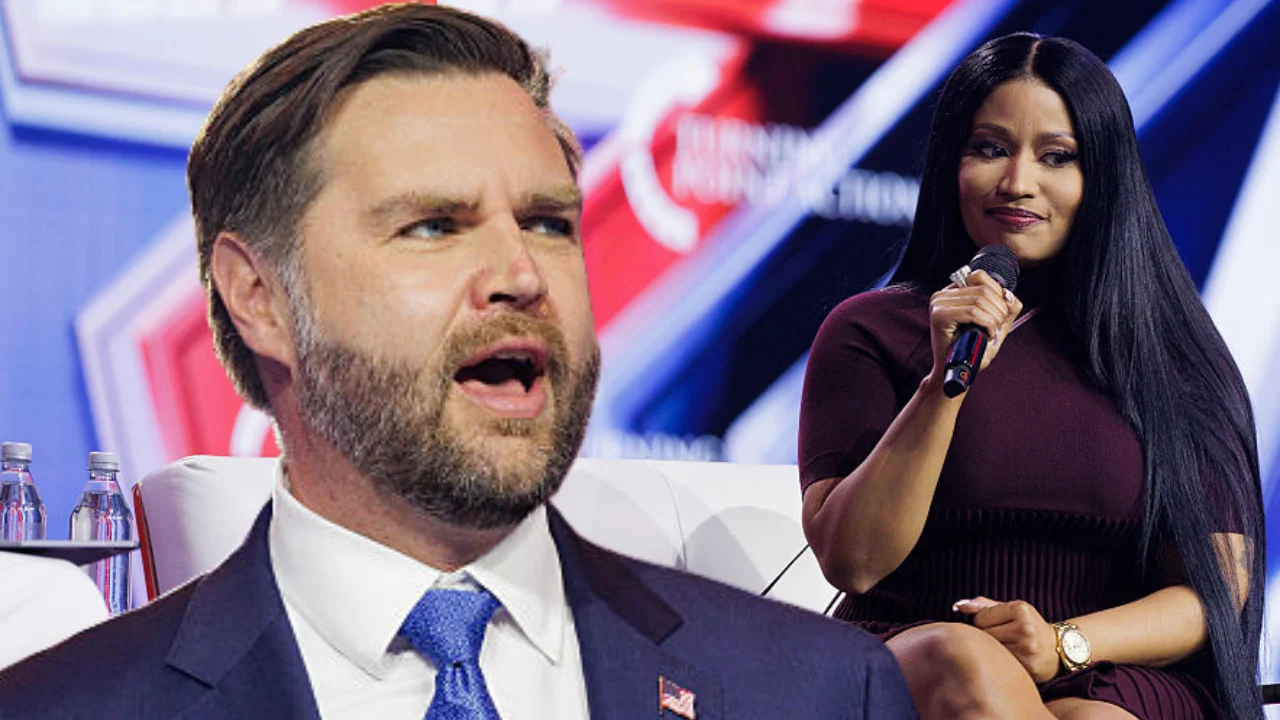
JD Vance’s Controversial Remarks at Turning Point USA’s AmFest
In a recent speech at Turning Point USA’s AmFest, Vice President JD Vance stirred significant controversy with his remarks regarding race and white grievance, focusing a considerable part of his address on the sentiments surrounding white Americans. His comments drew a rebuke from various commentators, including political analyst Reecie Colbert, who criticized Vance’s narrative and its implications.
Praise for Nicki Minaj
Vance’s speech featured praise for rapper Nicki Minaj, who had just participated in a sit-down interview at the conference. Minaj articulated a sentiment that resonated with Vance’s audience: that empowering Black Americans often seemed to come at the expense of white individuals’ feelings. She stated, “If we felt that we were not being represented… why would we want to do that to other women?” This perspective seemed to support Vance’s premise that promoting equality should not necessitate diminishing the pride of individuals from other racial groups.
The Context of White Grievance
Using Minaj’s comments as a springboard, Vance expressed a belief that discussions about race policy, particularly Diversity, Equity, and Inclusion (DEI) initiatives, should be reexamined. He proclaimed, “We don’t treat anybody different because of their race or their sex,” signaling a desire to dismiss DEI as an outdated concept. This rhetoric aligns with a broader trend in American politics where grievances among white constituencies are amplified as a response to the evolving conversations on race and equity.
Reactions to Vance’s Remarks
Reecie Colbert’s response to Vance’s comments was sharp and critical. She accused Vance and others of promulgating a fundamental disconnect between the lived experiences of marginalized communities and the grievances they present, emphasizing that white men, who already hold significant power, play the role of the oppressed. She lamented the way Minaj’s endorsing comments were used to lend credibility to views often held by white nationalists, providing a cover for discriminatory rhetoric.
The Political Climate: A History of Anti-Black Policies
The watershed moment of Vance’s speech comes against a backdrop of various policy decisions made during the Trump administration that have raised alarms among civil rights leaders and activists. Policies perceived as anti-Black, such as dismantling programs to promote racial equity and rolling back civil rights protections, have not only frustrated these communities but have also fed into larger narratives about societal inequity.
In a recent public service announcement, Andrea Lucas, chair of the U.S. Equal Employment Opportunity Commission, reassuringly addressed white males who believe they have faced discrimination. Her remarks highlight an unsettling focus on perceived grievances among white demographics, a narrative that has begun to permeate national conversations about race and discrimination.
Statistical Disparities: Unemployment Rates
Despite the administration’s narrative framing, the statistical reality tells a different story. The unemployment rate for Black Americans is significantly higher at 8.3% compared to the national average of 4.6%, while the unemployment rate for white men stands lower at 3.6%. This disparity raises questions about the validity of claims surrounding systemic discrimination against white individuals, especially when viewed against the economic challenges faced by marginalized groups.
International Implications of White Grievance
Vance’s remarks not only affect domestic policies but also ripple out into foreign policy, where the administration has tended to highlight grievances in international contexts, notably with white Afrikaners in South Africa. This approach may suggest a skewed prioritization in addressing racial disparities, often overlooking the complexities faced by those in predominantly Black nations.
A Distracting Narrative on Socioeconomic Issues
Colbert pointed out that Vance’s strategy might serve to distract from pressing socioeconomic issues that affect all Americans, including rising insurance premiums and the affordability crisis. By framing the conversation around racial grievances, Vance and his supporters potentially sidestep discussions of effective policy solutions that could alleviate economic hardship for all, including both white individuals and marginalized groups.
Navigating the Future of Racial Discourse
As narratives of white grievance continue to evolve in the political sphere, it raises critical questions. What does it mean to empower one group without undermining another? How can America navigate these complex issues of race, pride, and equity while fostering an environment of understanding and cohesive progress for all communities?
This moment invites deeper reflection on how societal narratives about race and privilege can obscure the intricate realities faced by various demographics. In a landscape increasingly defined by division, the discourse around race and identity will undoubtedly shape the future of American politics and social relations.